What it is
Davidsonia, the Davidson plums — slender understorey trees of the subtropical and tropical rainforests of eastern Australia, bearing deep-purple, plum-like fruit that are one of the most striking of Australian bush foods.
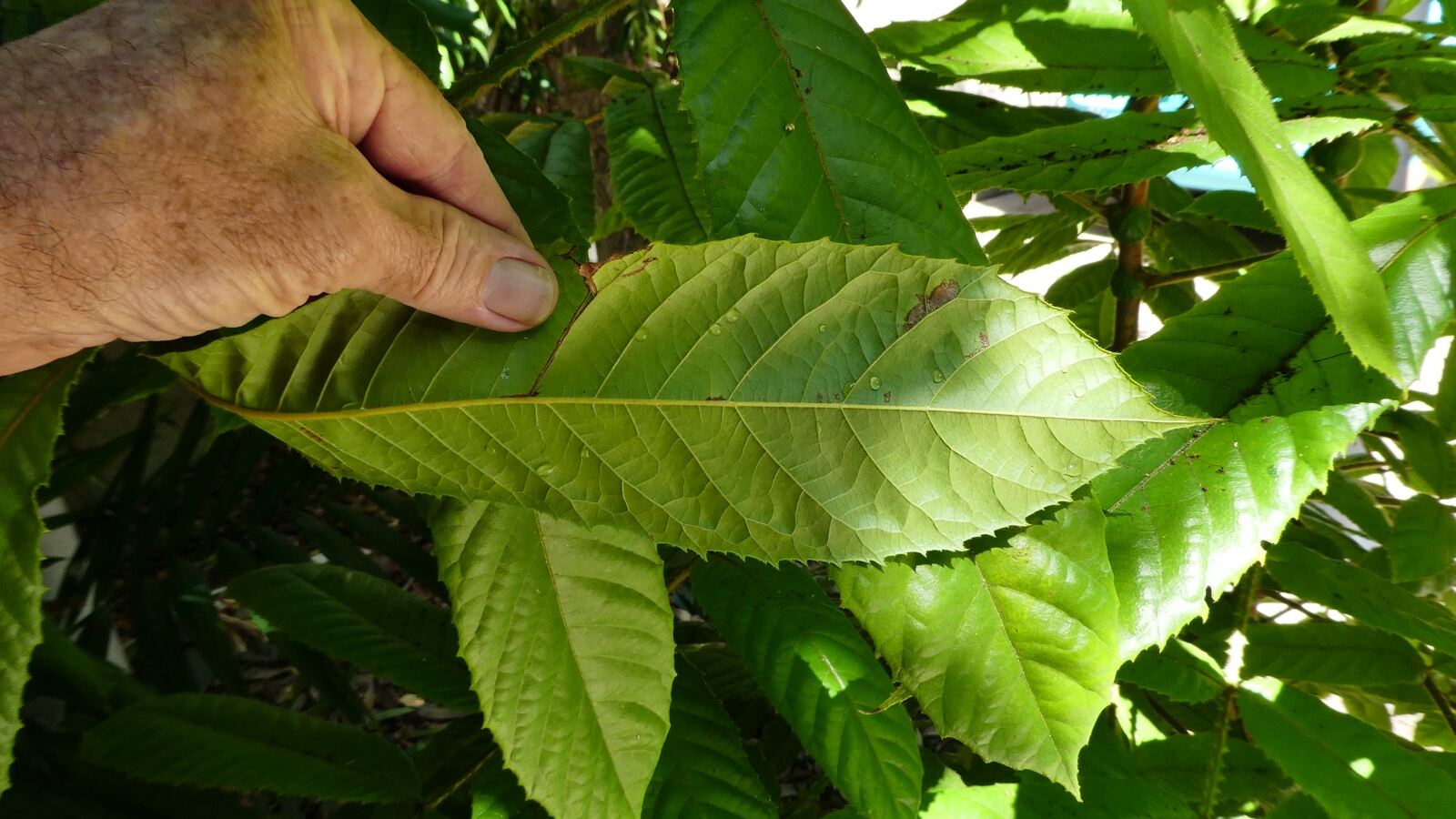
Despite the name, they are not true plums (which are stone fruit, in the rose family) — the Davidson plums belong to their own small family and only resemble plums in their dark, juicy, sour fruit. The trees are elegant and distinctive, with a single slender trunk, large ferny leaves flushing pink-red when young, and — most striking of all — their fruit borne in a particular way.
Fruit on the trunk
The Davidson plum bears its fruit by cauliflory — the flowers and then the fruit grow directly on the trunk and main stems, rather than out among the leaves — so the dark purple plums hang in clusters straight from the slender trunk, a dramatic and beautiful sight. This is the same trunk-fruiting habit that makes the jaboticaba, cannonball tree, and Judas tree so distinctive, and in the shady rainforest understorey it serves the usual purpose of presenting fruit low down for the ground- and lower-level animals that eat and disperse it.
Intensely sour, richly used
The fruit itself is deep purple to blue-black outside and a startling red-magenta inside, juicy, and intensely, mouth-puckeringly sour — far too sharp to eat raw in quantity, but wonderful cooked. It is rich in antioxidants, vitamin C, and other nutrients, in the way of so many tart bush foods.
The Davidson plum is prized as a bush food precisely for that sourness and its brilliant colour: it is made into superb jams, conserves, sauces, chutneys, and desserts, used to flavour and colour ice creams and drinks, and fermented into a striking magenta wine and into liqueurs. It was eaten by the Aboriginal peoples of its rainforest range, and it has become one of the more popular native fruits in modern Australian cuisine and bush-food enterprise, grown commercially and in gardens for its fruit and its ornamental beauty. See restoration economics and food forest design.
Growing it
Subtropical to tropical, frost-tender, and a rainforest-understorey tree, the Davidson plum wants warmth, humidity, ample moisture, and rich, moist, well-drained soil, and — being naturally a shaded understorey plant — it appreciates part shade and shelter, disliking drought, hot dry wind, and hard frost. It is slender and does not need much room, suiting a sheltered garden corner or the understorey layer of a warm-climate food forest.
It is grown from seed and from cuttings and suckers, and comes into bearing after a few years, fruiting on its trunk. As a beautiful, trunk-fruiting, intensely-sour native rainforest "plum" — superb in the jam pot and the wine bottle — the Davidson plum is one of the most distinctive and rewarding of Australian bush foods. See propagation.
See also
- Jaboticaba, Cannonball Tree, and Judas Tree other trees that fruit on the trunk
- Finger Lime, Quandong, and Kakadu Plum other Australian bush foods
- Stone Fruit the true plums it resembles but is not
- Food Forest Design the Davidson plum as a shade-tolerant understorey fruit
- Restoration Economics a rainforest fruit as a bush-food crop
- Lilly-Pilly another Australian rainforest fruit