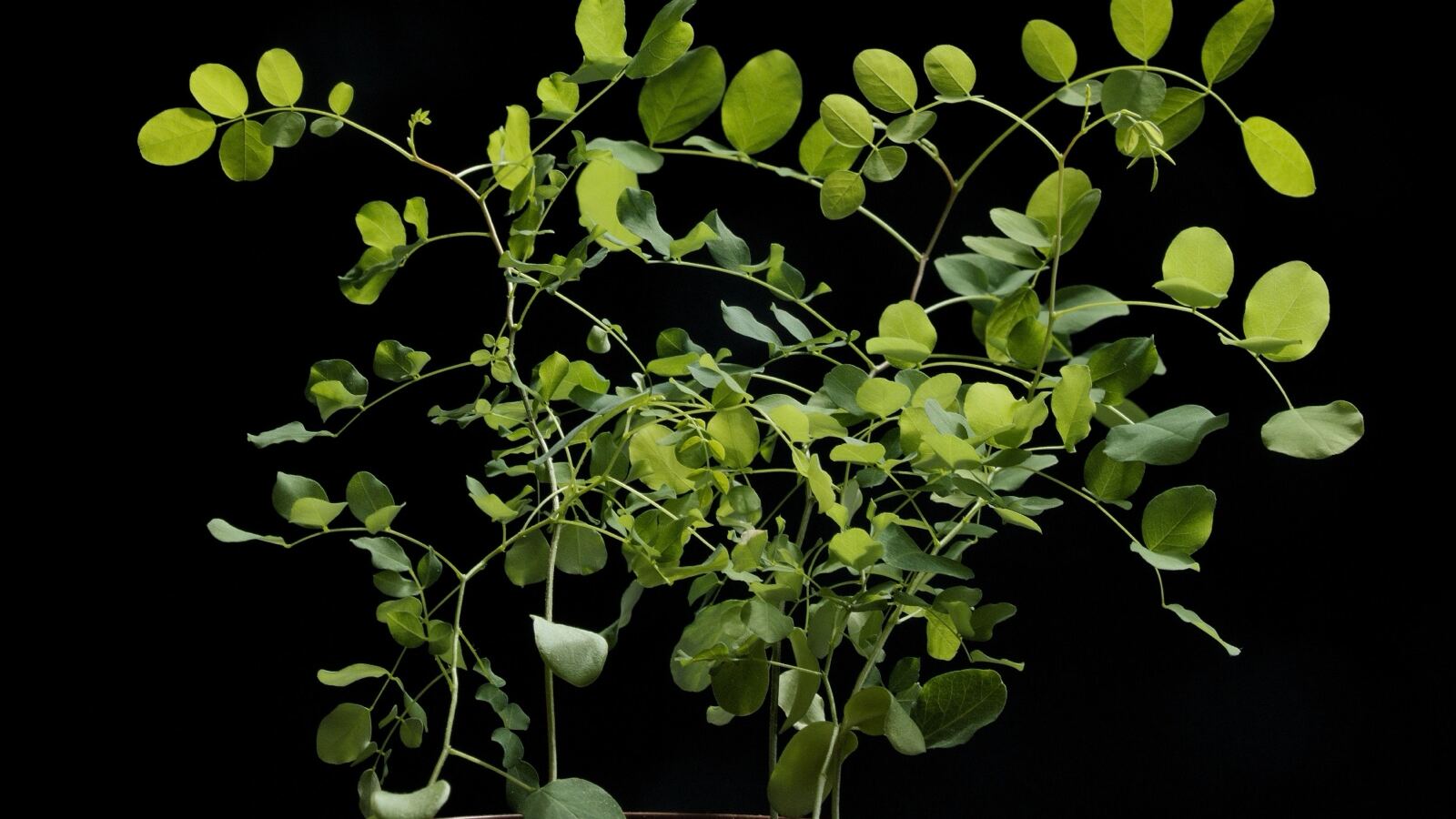
What it is
Robinia pseudoacacia, a legume, native to a surprisingly small area of the Appalachians and the Ozarks in the eastern United States.
From that limited range it has been planted across the world and is now naturalised on every continent except Antarctica — one of the most widely introduced trees in existence.
Fast, thorny, suckering, and nitrogen-fixing, with hanging racemes of intensely fragrant white pea flowers in early summer.
Not a true acacia, despite pseudoacacia and the common name false acacia. See acacia for the genus it is named after.
The timber
Black locust heartwood is among the most durable temperate timbers in the world — genuinely comparable to tropical hardwoods, and untreated.
Fence posts commonly last 50 to 100 years in ground contact, against 5 to 15 for untreated softwood. It is dense, extremely hard, stiff, and resistant to rot and insect attack because of high concentrations of flavonoids in the heartwood.
That makes it one of the few realistic temperate substitutes for pressure-treated timber and for imported tropical hardwood — a significant point, since it removes both the preservative chemicals and the deforestation from the supply chain.
Used for fence posts, decking, boatbuilding, tool handles, flooring, and traditionally for the trunnels — wooden pegs — that fastened wooden ships.
It is also excellent firewood, among the highest calorific values of any temperate wood, and it burns cleanly even when relatively fresh.
The catch is that it is difficult to work, blunts tools, and grows with a twist and multiple stems unless managed, so straight, clear timber requires deliberate formative pruning.
Nitrogen and speed
As a legume, black locust fixes nitrogen through root nodules, so it improves the soil it grows in rather than depleting it. See nitrogen-fixing bacteria and nitrogen fixers.
Combined with very fast growth — 1 to 2 m a year when young — extreme drought tolerance, and indifference to poor soil, that makes it a strong candidate for:
Reclamation of degraded and mined land, where it has been used at large scale, particularly on spoil heaps and eroded slopes.
Short-rotation coppice for biomass, since it resprouts vigorously and the wood has high energy density.
Fodder, since the foliage is high in protein.
Bee forage. Black locust honey — often sold as acacia honey — is a major commercial monofloral honey in Hungary, Romania, and Italy, pale and slow to crystallise. The flowering is brief but enormously productive. See native bees.
Erosion control, via the dense suckering root system. See erosion control.
The invasion problem
Every quality above is also what makes it a serious invasive outside its native range.
It suckers aggressively from roots, spreading outward into a clonal thicket. Cutting or damaging the tree stimulates far more suckering — the standard response of a cut Robinia is dozens of new stems.
It fixes nitrogen, which sounds beneficial and is precisely the problem in nutrient-poor habitats. Dry grassland, heathland, and sandy steppe communities depend on low fertility, and black locust enriches the soil, allowing nettles, brambles, and coarse grasses to take over. It does not merely occupy the ground, it changes the conditions so the original community cannot return. See grassland restoration, where stripping fertility is the whole task.
It casts light shade but dense root competition, and it produces allelopathic compounds that suppress neighbours.
It is listed as invasive across much of Europe, including on the EU list of species of Union concern in several assessments, and is a management problem in South Africa, Australia, Korea, and beyond.
Control is difficult. Cutting alone multiplies it. Effective approaches are cut-and-treat on the fresh stump, ring-barking, or repeated cutting over many seasons to exhaust the root reserves. See invasive species.
So should you plant it
It depends entirely on where you are, and this is a genuine judgement rather than a rule.
In its native range, it is a valuable native tree and unproblematic.
In Europe and other introduced ranges, treat it with real caution. Do not plant it near species-rich grassland, heath, dunes, or any nutrient-poor habitat. Do not plant it where it can spread into semi-natural vegetation. Check whether it is regulated locally — in some jurisdictions planting it is restricted.
Where it is already established and being managed as a crop, on degraded ground, spoil, or in a plantation with a containment plan, the case is much stronger. Thornless and non-suckering selected cultivars exist and are far better behaved.
The honest position is that this is a genuinely useful tree with a genuinely serious downside, and the deciding factor is the habitat next door rather than the tree itself. It is the same argument made in eucalyptus from a different direction.
Toxicity
Bark, leaves, and seeds contain robin and phasin, which are toxic to humans and livestock — horses are particularly susceptible, and poisoning from chewed bark is documented.
The flowers are edible and are traditionally fried in batter in Italy and central Europe.
Growing it
Almost indifferent. Tolerates drought, poor soil, compaction, pollution, and salt. Wants full sun and free drainage; dislikes waterlogging.
Fast, brittle, and prone to storm damage on exposed sites. Thorny when young, and less so with age.
For timber, prune formatively and early for a clear stem, and expect to manage suckers throughout.
See tree planting and coppice rotation.
See also
- Nitrogen Fixers the wider group of fixing trees
- Invasive Species control methods for a suckering tree
- Acacia the genus it is misleadingly named after
- Eucalyptus the same keystone-at-home, problem-abroad pattern
- Grassland Restoration why added nitrogen is damaging
- Coppice Rotation short-rotation biomass
- Larch
- Redbud and Sassafras
- Leucaena and Gliricidia
- Tree of Heaven
- Osage Orange
- Honey Locust
- Yellowwood
- Pagoda Tree