What it is
Styphnolobium japonicum (long Sophora japonica), the pagoda tree, Chinese scholar tree, or Japanese pagoda tree — a graceful, medium-to-large deciduous legume of China (despite the "japonica"), kin to the laburnum, black locust, and the other pea-flowered trees.
It is one of the most culturally revered trees of China, planted for millennia at temples, palaces, official buildings, and the tombs of scholars — the "scholar tree" (huai) was associated with learning, officialdom, and honour, and a pagoda tree marked places of study and administration. It is a classic street and avenue tree of Beijing and northern China, and it is grown as a fine, tough, late-flowering ornamental across the temperate world.
Cream flowers in the summer lull
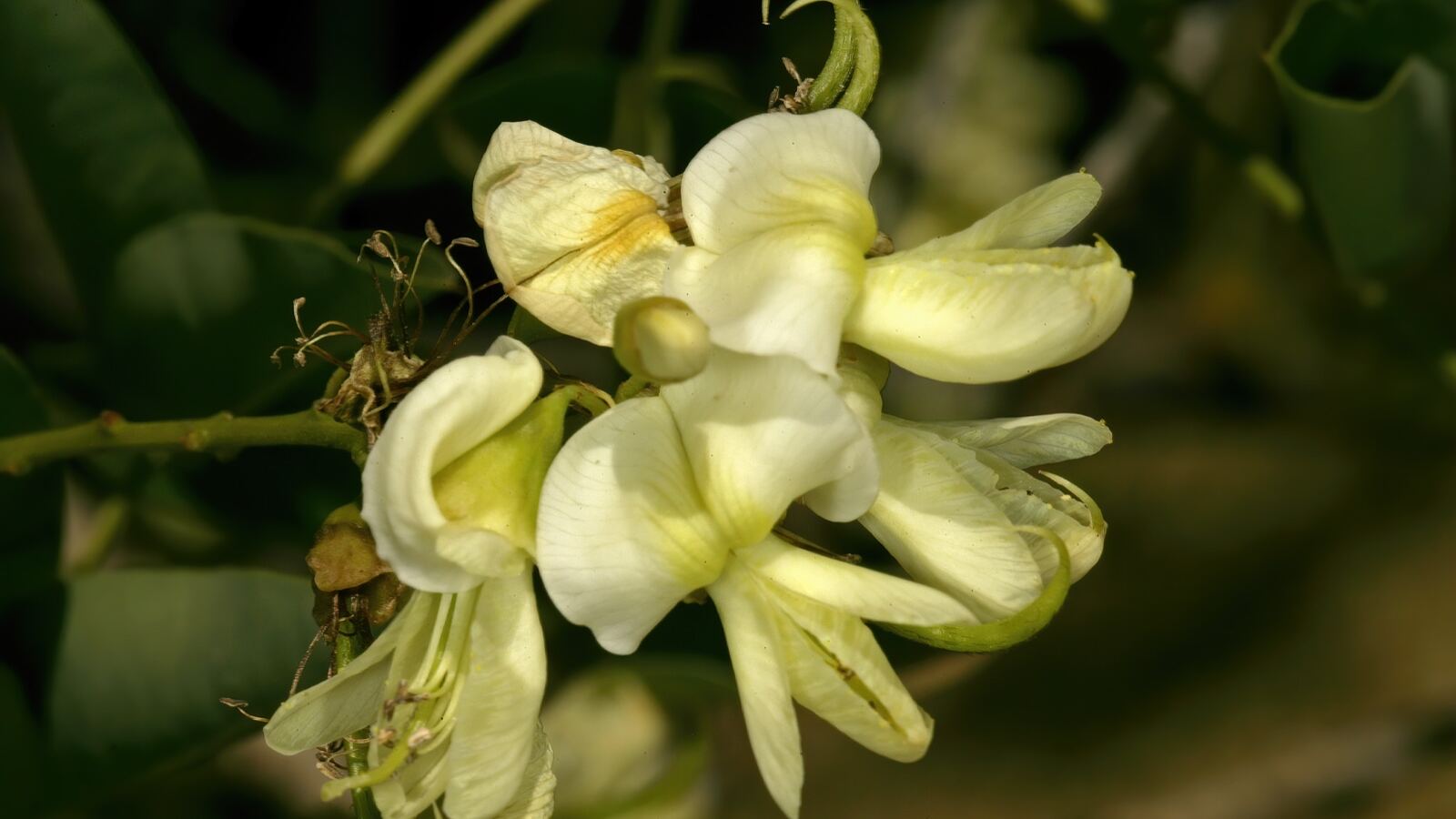
The pagoda tree's chief ornamental virtue is its timing. It flowers in late summer, in the August lull when almost no other tree is in bloom, opening large, loose, airy sprays of small, creamy-white, fragrant pea-flowers that cover the tree and then drop to carpet the ground below.
Coming when it does, this makes the pagoda tree a valuable late-season nectar source for bees (it is a good honey tree) at a time when forage is scarce, and a welcome splash of bloom in the dog days of summer. See pollinator habitat. The flowers are followed by curious bead-like pods, constricted between the seeds like a string of beads.
Dye, medicine, and an emperor's end
The pagoda tree has a long practical life beyond ornament. Its flower buds are rich in rutin (a flavonoid), and they have been used for centuries as a source of a yellow dye — the "huai" dye of Chinese textiles — and as an important traditional medicine (the buds, huai hua, and the pods used in Chinese medicine for bleeding and the blood vessels; rutin is still extracted from them as a supplement said to strengthen capillaries). So the tree gives, from its flowers, both a dye and a drug, in the tradition of the other useful dye-and-medicine trees. See historical ecology.
It also carries one of the more melancholy footnotes in Chinese history: a pagoda tree on Coal Hill (Jingshan), overlooking the Forbidden City in Beijing, is traditionally identified as the tree on which the last Ming emperor, Chongzhen, hanged himself in 1644 as rebels took the capital — the "guilty tree," which was for a time chained and mourned. It is a strange distinction shared, in legend, with the Judas tree of the Mediterranean.
Growing it
Hardy, tough, and adaptable, the pagoda tree wants full sun and tolerates a wide range of soils, heat, drought once established, pollution, and urban conditions — the qualities that made it such a successful street and temple tree — disliking mainly waterlogging. It is a handsome, broad, rounded tree, moderately fast then long-lived, with attractive ferny foliage and green young shoots.
It is grown from seed (scarified) and, for named forms (including a popular weeping cultivar, 'Pendula', and 'Regent'), by grafting; as a legume it fixes a little nitrogen and tolerates poor soil. Its toughness, its late flowers, and its grace make it one of the better large ornamental and street trees for temperate and warm climates. See propagation, grafting, and urban forestry.
See also
- Laburnum and Black Locust its pea-flowered legume relatives
- Maackia a close cold-hardy relative
- Judas Tree the Mediterranean tree of a similar dark legend
- Pollinator Habitat the valuable late-summer nectar
- Urban Forestry the pagoda tree as a tough street tree
- Historical Ecology the scholar tree of the Chinese temple