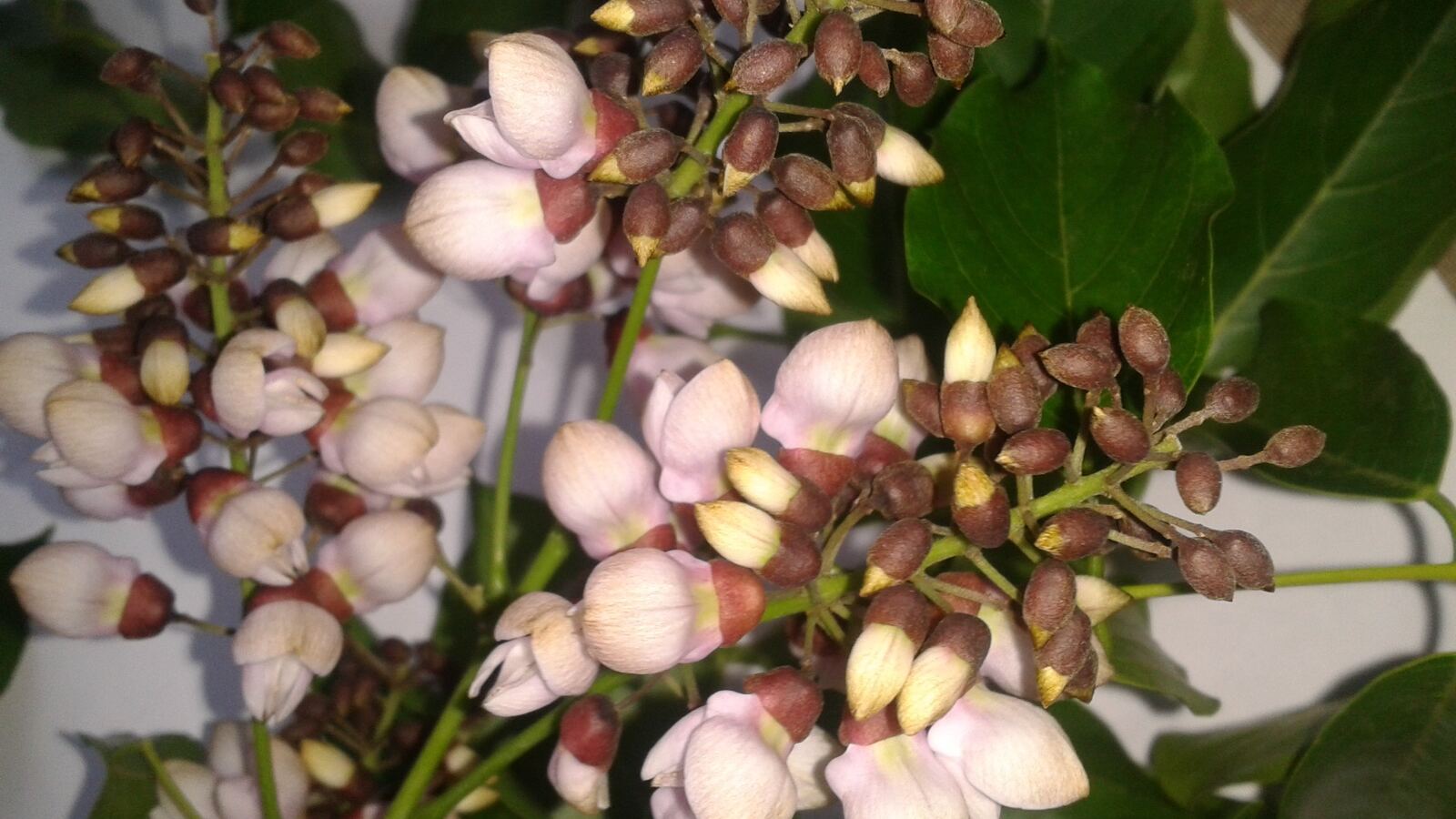
What it is
Pongamia pinnata (also Millettia pinnata), the pongamia, karanja, or Indian beech — a medium-sized, fast-growing, evergreen legume of the coasts and riverbanks of the Indian subcontinent, Southeast Asia, and northern Australia, kin to the silk tree, rain tree, and the other pea-flowered trees.
Long grown across India as a shade and avenue tree, a source of lamp oil, and a natural pesticide, pongamia has in recent years become one of the most seriously studied trees for biofuel — and, unlike the jatropha that preceded it, it may actually deliver.
The karanja oil
The key to pongamia is its oil-rich seeds. The tree bears hanging pods each containing a seed that is roughly a third oil, and this karanja oil has been used for centuries across India: as a lamp oil, as a lubricant, in soap-making, in tanning and dyeing, and — importantly — as a natural pesticide and medicine, the oil and seed cake having genuine insect-repellent and antimicrobial properties, in the same tradition as neem oil, with which it is often paired. The oil is not edible (it is bitter and mildly toxic), so, like jatropha, pongamia is grown for oil and utility, not food, which means it does not compete with the dinner table.
Biofuel — done right this time
Pongamia has become a leading candidate for sustainable biodiesel and aviation biofuel, and its story is instructive precisely because it comes after the jatropha bubble.
The pitch is similar to jatropha's — a hardy, non-food, oil-seed legume that can be grown on marginal land and fixes its own nitrogen — but pongamia arrives with the hard lessons learned: it is a genuine tree with a proven ability to survive and yield on tough sites, it is a real nitrogen fixer that improves rather than exhausts the soil, its yields and oil quality are better characterised, and modern efforts emphasise selected, high-yielding, elite cultivars and honest agronomy rather than the wishful "fuel from wasteland" hype that sank jatropha. Serious commercial plantings (notably in Australia and India) and aviation-fuel trials are underway, and pongamia is being pursued both for oil and, as a fast nitrogen-fixing tree, for carbon, reforestation, and land restoration. Whether it fully lives up to the promise remains to be seen — the ghost of jatropha counsels caution — but pongamia is, on the evidence, a far sounder bet. See restoration economics and nitrogen fixers.
The all-round useful tree
Even setting the biofuel question aside, pongamia is a genuinely valuable multi-purpose tree, which is why it was planted long before anyone thought of biodiesel.
As a nitrogen-fixing legume it enriches the soil; it is tough, fast, and tolerant of drought, salt, waterlogging, and poor soil, which makes it excellent for dryland restoration, coastal and saline-land reclamation, and erosion control; it casts dense shade as a street, avenue, and shelter tree (it is a common Indian roadside tree); it yields the oil, a useful seed-cake fertiliser and pesticide, fodder, and honey (its lilac-white pea-flowers feed bees); and it is used throughout Ayurvedic medicine. It is exactly the kind of tough, soil-building, multi-use leguminous tree that agroforestry is built around. See windbreaks.
Growing it
Tropical to subtropical, frost-tender, and superbly tough: pongamia tolerates drought, heat, salt, waterlogging, and poor, sandy, stony, and saline soils, which is the basis of both its restoration value and its promise on marginal land for fuel. It wants full sun and is otherwise undemanding.
It is fast-growing, evergreen (briefly deciduous in dry spells), long-lived, and grown easily from seed and cuttings; selected high-yielding clones are propagated for oil. Whether planted for shade, for soil, for coastal reclamation, or for fuel, it is one of the most useful and reliable of the tough leguminous trees. See propagation.
See also
- Jatropha the biofuel tree whose failure pongamia hopes to avoid
- Neem its partner as a natural pesticide-oil tree
- Nitrogen Fixers the soil-building role behind pongamia's value
- Rain Tree and Silk Tree legume-tree relatives
- Dryland Restoration pongamia for tough, saline, degraded land
- Restoration Economics the economics of a biofuel tree