What they are
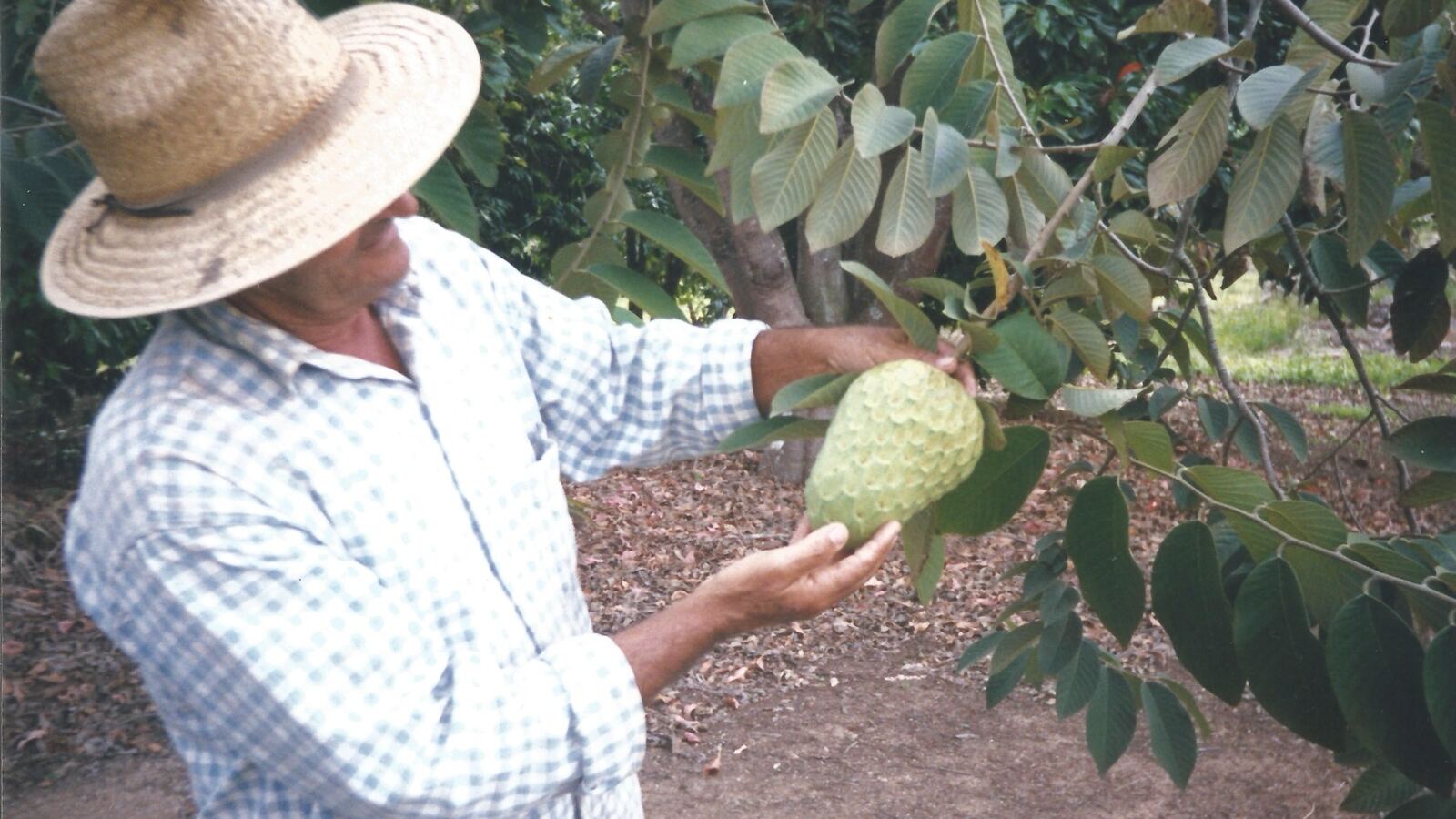
Annona, the custard apples — a genus of small tropical and subtropical trees bearing soft, sweet, creamy fruit, of which the best known are:
- Cherimoya (A. cherimola), the finest-flavoured, of the Andean highlands;
- Soursop or graviola (A. muricata), large, spiny-skinned, tart;
- Sugar apple or sweetsop (A. squamosa), knobbly and very sweet;
- Custard apple (A. reticulata) and the cherimoya × sugar-apple hybrid, atemoya.
They belong to the family Annonaceae, which makes them close relatives of the temperate North American pawpaw — the cherimoya is essentially a tropical, aristocratic cousin of the pawpaw, and the two share the same soft, custardy, many-seeded fruit and the same primitive, beetle-pollinated flowers.
Deliciousness itself
The cherimoya has one of the great reputations in the fruit world. Mark Twain, tasting it in Hawaii, called it "deliciousness itself," and it is regularly ranked among the most delicious of all fruits — the soft white flesh tasting of a blend of banana, pineapple, pear, and vanilla custard, eaten with a spoon like a dessert. The other annonas each have their following: soursop for its tart, fibrous flesh made into drinks and ice creams across the tropics; sugar apple for its intense sweetness. All are highly perishable and bruise easily, so like the pawpaw they are mostly garden and local-market fruits rather than supermarket ones.
Why you may have to pollinate them yourself
The annonas share a peculiar difficulty that every grower discovers: they often set fruit poorly unless pollinated by hand.
Their flowers are protogynous — the female parts are receptive before the male parts of the same flower shed pollen, which prevents self-pollination within a flower and, in the wild, forces cross-pollination by their natural pollinators, small beetles (and, for some, thrips). But outside their native range those specific beetle pollinators are usually absent, and bees do not work the flowers well, so a cherimoya or sugar apple grown in, say, California or Spain frequently produces flowers but few fruit.
The standard solution is hand-pollination: the grower collects pollen from flowers in their male phase (usually late in the day) with a small brush, stores it overnight, and dabs it onto flowers in their female phase the next morning. It is fiddly but transforms the yield, and it is one of the clearest everyday illustrations of a tree being dependent on a specific pollinator — and of what happens when a crop is moved away from it, the flip side of the pollination partnerships that most fruit trees rely on. See native bees.
A caution on soursop
Soursop (graviola) deserves a specific note, because it is heavily marketed. Extracts of soursop leaf and fruit are widely promoted online as a cancer cure, on the basis of laboratory studies of its compounds (annonaceous acetogenins). There is no good clinical evidence that soursop treats cancer in people, and — more seriously — those same acetogenins are neurotoxic: high, sustained consumption of soursop (especially the seeds, and concentrated leaf preparations) has been linked to an atypical Parkinson-like neurological disease in regions where it is consumed heavily. Enjoy the fruit in normal amounts as a food; treat the medicinal-supplement claims with real caution. The seeds of all annonas are toxic and are not eaten.
Growing them
Tropical to warm-subtropical, and frost-tender, though the cherimoya is the hardiest and grows in cool subtropics and Mediterranean climates (it wants a subtropical highland climate — warm days, cool nights, a dry season), while soursop and sugar apple need true lowland tropics.
Soil and site. Well-drained soil and full sun; moderate water, with a drier period helping to trigger flowering. Most are small, manageable trees ideal for a garden or food forest.
Propagation. Seedlings are variable, so superior varieties are grafted, and hand-pollination is used to ensure a crop. See grafting and propagation. Fruit fly and anthracnose are the main problems, managed within integrated pest management.
For a frost-free or warm-subtropical garden, a cherimoya or atemoya is one of the most rewarding of all fruit trees — provided you are willing to play the part of its missing beetle.
See also
- Pawpaw and Persimmon the temperate relative in the same family
- Tropical Fruit Trees the annonas in the wider warm orchard
- Pollinator Habitat the beetle pollination the annonas depend on
- Native Bees and why bees don't substitute here
- Grafting propagating superior annona varieties
- Food Forest Design small custard-apple trees in a garden system
- Ylang-Ylang
- Canistel and Abiu