What they are
Two related groups of shrubs and small trees in the cashew family, Anacardiaceae — the same family as the pistachio, mango, and cashew.
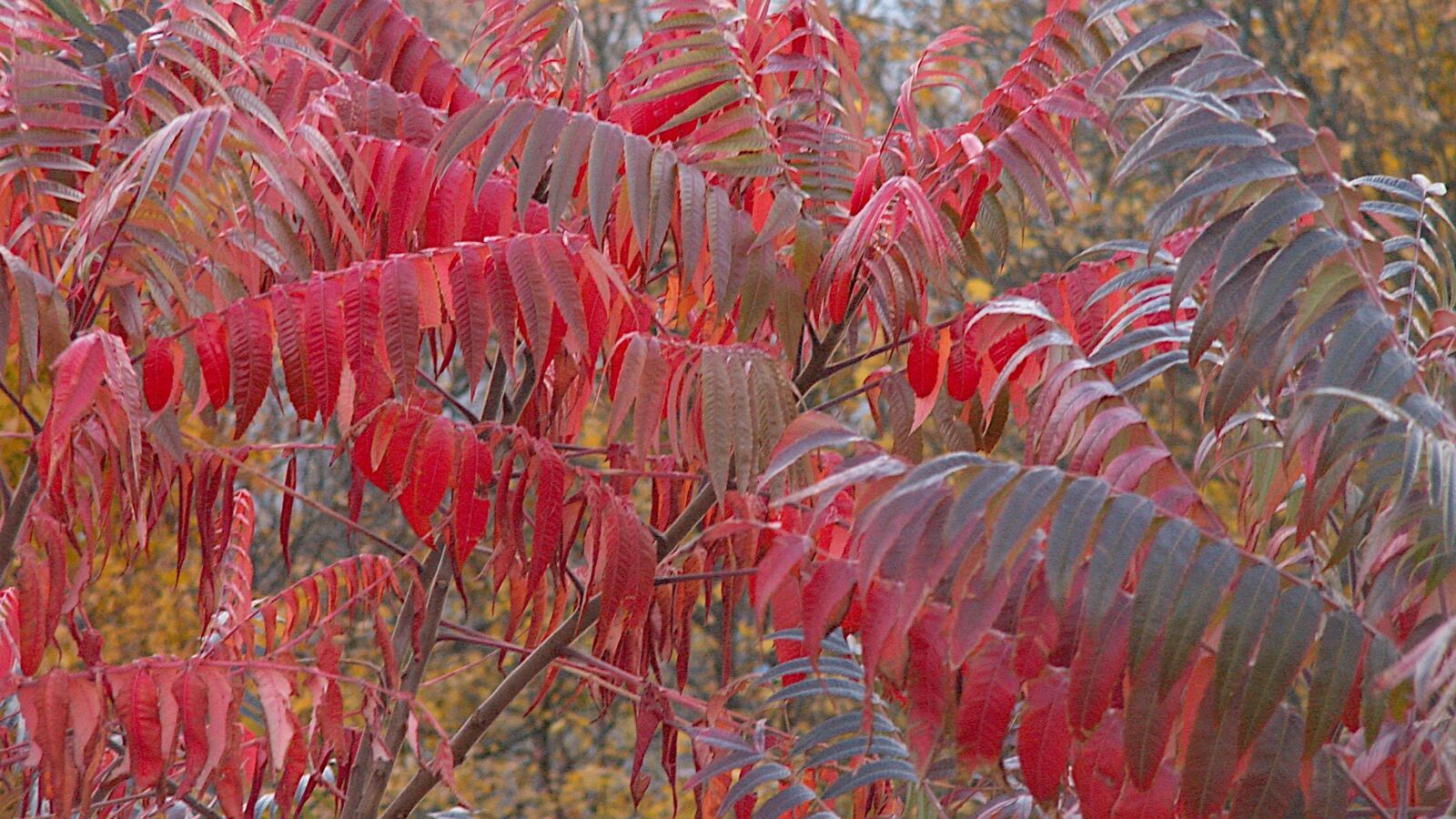
Sumacs, Rhus, are suckering shrubs and small trees, best known for staghorn sumac (R. typhina) of eastern North America, with velvety antler-like branches, ferny compound leaves, and upright cones of fuzzy red fruit.
Smoke tree, Cotinus, is a close relative — European smoke bush (C. coggygria) and American smoketree (C. obovatus) — named for the haze of fine pinkish flower filaments that surround it in summer like a puff of smoke.
Both are grown mainly for one thing: autumn colour.
The best autumn colour there is
Staghorn sumac and the smoke trees turn the most intense scarlet, orange, and crimson of almost any temperate plant — a burning-bush display that outshines even the maples and sweetgum they are planted alongside for the purpose.
The colour comes reliably and early, and because sumac suckers into thickets, a sumac stand in autumn is a solid sheet of red. It is the single reason most people plant either genus. The trade-off is the suckering — staghorn sumac spreads aggressively by root suckers and can colonise a border or a bank, which makes it superb for erosion control on a rough slope and a menace in a small tidy garden.
The spice and the dye
Sumac has a long history of use beyond ornament.
Spice. The red fruit of certain Mediterranean and Middle Eastern sumacs (Rhus coriaria) is dried and ground into the tart, deep-red, lemony sumac spice central to Levantine cooking and a key ingredient of the za'atar blend. The souring effect is from malic and other acids on the fruit surface, and a "sumac-ade" lemonade is made by steeping the fruit of edible North American sumacs in cold water.
Tannin and dye. Sumac leaves and bark are extremely high in tannins and were a major source of vegetable tannin for leather (Sicilian sumac was a significant crop) and of dyes and mordants. This tannin-and-dye use links it to oak galls and other historic tannin sources.
The poisonous cousin — do not confuse
One warning is essential. Among the sumacs is poison sumac (Toxicodendron vernix, once placed in Rhus), along with its relatives poison ivy and poison oak, which contain urushiol — the same violently allergenic oil in the sap of the cashew and mango rinds — and cause severe blistering dermatitis on contact.
The distinction is reliable and worth knowing: the edible and ornamental sumacs (Rhus) have upright red fruit clusters and grow on dry ground; poison sumac has drooping white or grey fruit and grows in wet swamps. Red-and-upright is safe to handle; white-and-drooping in a bog is not. If in doubt, do not touch. The whole family carries irritant compounds in some measure, and sensitive people react even to the ornamental kinds.
Wildlife
The persistent fruit clusters are an important late-winter emergency food for birds — not a first choice, but eaten when better fruit is gone, in the manner of rowan and hackberry berries. The flowers are good for bees and the dense suckering thickets give cover. See seed-dispersing birds and wildlife shrubs.
Growing them
Full sun and dry, poor, well-drained soil; both resent wet ground and both colour best when not too rich or wet.
Sumac is tough, fast, and suckering — plant it where the suckers can roam or be mown, and choose the cut-leaved cultivars for finer foliage. Cutting to the ground each spring produces the largest, most tropical-looking leaves, coppice-style. Smoke tree is neater and less invasive; the purple-leaved forms (Royal Purple, Grace) are among the most popular of all foliage shrubs, and it too responds to hard pruning with bigger leaves at the cost of the smoke.
Both propagate easily from suckers, cuttings, and seed. Largely trouble-free apart from verticillium wilt in smoke tree.
See also
- Pistachio the edible-nut member of the same family
- Mango another Anacardiaceae — and the urushiol in its rind
- Sweetgum planted for the same autumn colour
- Erosion Control suckering sumac on rough banks
- Wildlife Shrubs the winter fruit for birds
- Coppice Rotation cutting back for giant foliage
- Cashew
- Sourwood
- Quebracho