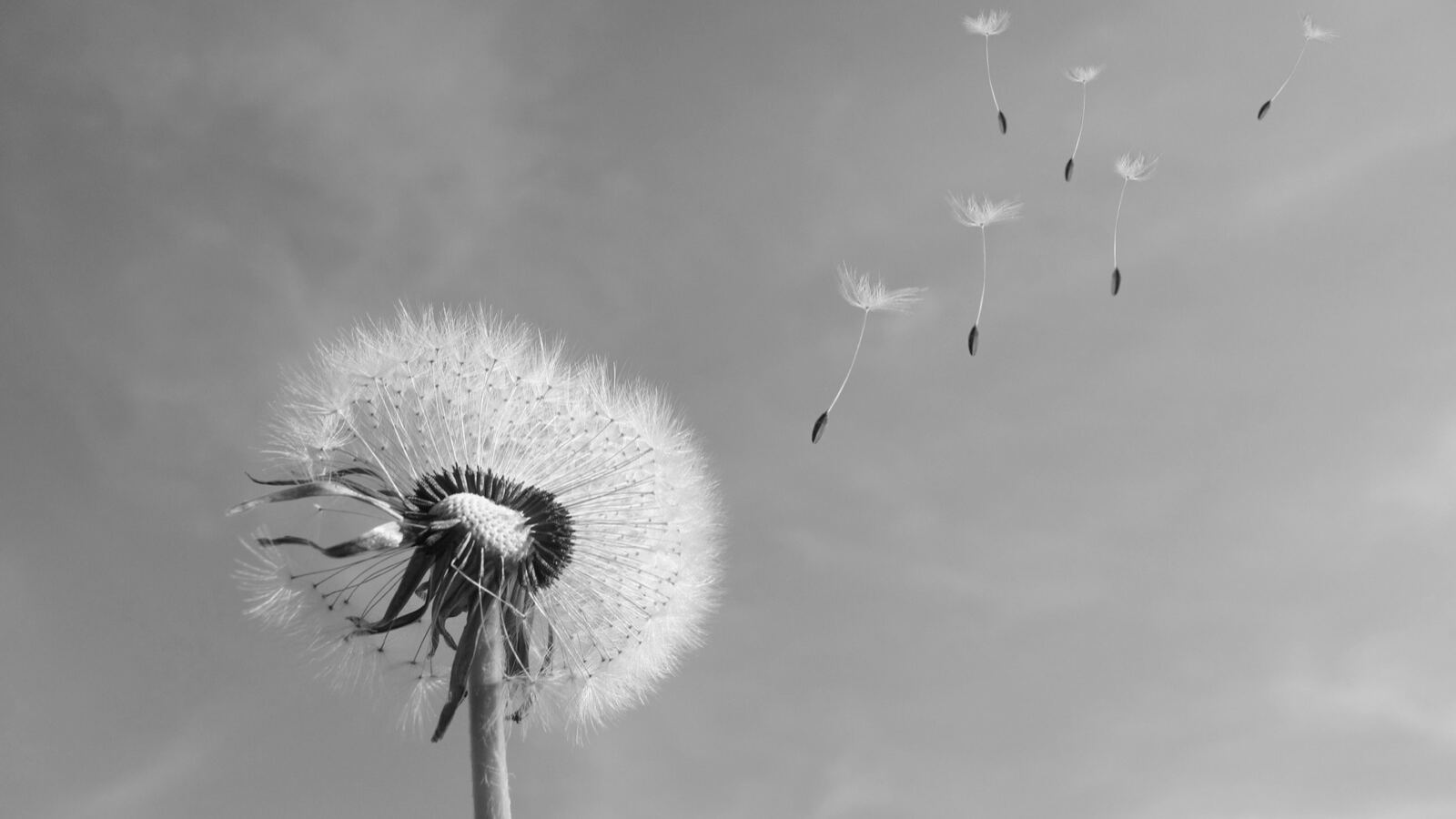
The one chance to move
A plant spends its life rooted to one spot, so its single opportunity to travel — to reach new ground, escape the shade and competition of its parent, and colonise new places — is as a seed. Getting that seed away from the parent and into a good spot is one of the central problems of a plant's life, and plants have evolved a dazzling variety of solutions. How a plant disperses its seeds shapes where it can grow, how it recovers from disturbance, and how whole ecosystems assemble.
The methods of dispersal
Plants get their seeds moved in a handful of main ways, and the design of the seed and fruit reveals which:
Wind (anemochory). The classic method for lightness and distance — seeds equipped to ride the air: the parachutes of the dandelion, thistle, and willow; the wings of the maple, ash, and dipterocarp that spin as they fall; the dust-fine seeds of orchids. Cheap, far-reaching, but a gamble on where the wind drops them.
Animals, by fruit (endozoochory). The great mutualism of dispersal: the plant wraps its seeds in sweet, nutritious, brightly-coloured fruit as a bribe, an animal eats it, and the hard seeds pass through unharmed to be deposited — often far away, and conveniently packaged in dung — where the animal travels. This is the partnership behind the fruit trees and berries of this whole encyclopedia, the seed-dispersing birds, the fruit bats, and the great forest dispersers like the agouti that plants the brazil nut. It is a coevolved bargain (see coevolution), and losing the disperser can doom the plant.
Animals, by hitchhiking (epizoochory). Seeds that clamp onto fur, feathers, or clothing — the hooks and barbs of burdock (which inspired Velcro), goosegrass, and cleavers — riding the outside of an animal rather than the inside.
Water (hydrochory). Buoyant seeds and fruit that float to new shores — the ocean-crossing coconut and sea grape, the floating fruit of the nipa palm and riverbank trees.
Ballistic (autochory). Plants that fling their own seeds by explosive force — the popping pods of gorse and witch hazel, and the extreme case of the sandbox tree, which fires its seeds at seventy metres a second.
Caching. A special animal method: squirrels, jays, and nutcrackers bury nuts and acorns as a food store, and the ones they forget grow — so the oaks, hickories, and nut pines are planted by the very animals that eat them.
Why it shapes ecosystems
Seed dispersal is not a detail; it is one of the forces that assembles and maintains living communities:
- It lets plants colonise new and disturbed ground — the fast, wind-and-bird-dispersed pioneers reach bare sites first, which is why they dominate early succession.
- It lets species track a changing climate, shifting their range as conditions move — but only as fast as their seeds can travel, which is why slow, poorly-dispersed, or disperser-orphaned trees may be unable to keep up with rapid warming.
- It weaves the animal-dispersed plants and their dispersers into deep mutual dependence, so that losing the large fruit-eaters (through hunting or fragmentation) quietly disrupts the forest's regeneration long before the trees themselves are gone — an "empty forest" that still stands but can no longer reseed itself.
For the restorer, understanding dispersal is practical: knowing how a species travels tells you whether it will arrive on its own (and you can simply let it), or whether it must be planted or seeded in because its dispersers or its distance defeat it. A landscape reseeds itself only as well as its dispersers still work. See mutualism and symbiosis.
See also
- Seed-Dispersing Birds the great animal dispersers
- Coevolution the fruit-and-disperser bargain
- Mutualism and Symbiosis dispersal as a partnership
- Osage Orange a tree stranded by the loss of its disperser
- Succession why well-dispersed pioneers arrive first
- Island Biogeography why dispersal governs which fragments hold which species
- Squirrels
- Mistletoe