What it is
Oryza sativa, domesticated in China's Yangtze valley around 9,000 years ago, with O. glaberrima independently domesticated in West Africa.
It is the staple food of more people than any other crop — over half the world's population — and it is grown on a very large share of irrigated land.
Two main subspecies: indica, long-grained and tropical, and japonica, shorter-grained, stickier, and adapted to cooler and temperate conditions.
Rice does not need to be flooded
The single most consequential misconception about the crop.
Rice is a wetland-adapted grass — it tolerates flooding better than any other cereal, because it has aerenchyma, internal air channels that transport oxygen from the leaves down to submerged roots. The same tissue that lets reeds survive in a constructed wetland.
But tolerating flooding is not requiring it. Rice grows perfectly well in moist, unflooded soil.
Flooding is primarily weed control. Standing water suppresses the vast majority of weeds, which cannot tolerate submergence, while rice can. In a system without herbicides and without machinery, that is an enormously effective and labour-cheap method — which is why paddy cultivation spread and persisted.
Secondary benefits: temperature buffering, some nutrient mobilisation, and control of certain pests.
The costs are considerable, and they are why the assumption matters.
The costs of flooding
Water. Paddy rice uses very large volumes — commonly cited at 2 to 5 times the water of an equivalent dryland cereal, much of it to percolation and evaporation rather than to the plant. In water-stressed regions this is a major and growing problem, and rice irrigation is a principal driver of aquifer depletion in northern India and northern China. See wells and boreholes and irrigation scheduling.
Methane. Flooded soil is anoxic, and anaerobic archaea in it produce methane, which the rice plants then vent to the atmosphere through their own aerenchyma. Rice paddies are among the largest anthropogenic methane sources, contributing a significant share of global agricultural emissions. Methane is a far more potent greenhouse gas than carbon dioxide over short timescales, so this matters disproportionately. See carbon accounting.
Arsenic. Flooded anoxic conditions mobilise arsenic from soil into a form rice takes up readily, and rice accumulates it more than other cereals. In regions with arsenic-contaminated groundwater — parts of Bangladesh and West Bengal especially — irrigating rice with that water compounds the problem, concentrating arsenic in the staple food. See water quality testing and salinity.
Alternate wetting and drying
The straightforward mitigation, and it is well established.
Instead of keeping the field continuously flooded, the water is allowed to drop below the soil surface — monitored with a simple perforated tube sunk in the paddy — and then re-flooded when it falls to a threshold, typically around 15 cm below the surface.
The results are consistent across a large body of trials:
Water use falls substantially, commonly by 15 to 30 percent.
Methane emissions fall sharply, because the soil is periodically aerobic. Reductions of 30 to 70 percent are typical.
Yields are maintained when the drying is not taken too far.
Arsenic uptake falls, because oxidised conditions immobilise it.
The trade-off is that aerobic soil produces more nitrous oxide, a different greenhouse gas, so the net climate benefit depends on management — but for well-managed AWD it is clearly positive.
It also requires water control that many smallholders do not have, and it increases weed pressure, which was the point of the flooding in the first place.
The System of Rice Intensification
SRI is a set of practices developed in Madagascar in the 1980s that has generated both large reported yield gains and a long-running scientific argument.
The principles:
Transplant very young seedlings, at 8 to 12 days rather than 3 to 4 weeks, to preserve root and tiller potential.
Plant single seedlings, widely spaced, rather than clumps planted densely.
Do not keep the field flooded — use intermittent wetting.
Weed mechanically, with a rotary weeder that also aerates the soil.
Use organic matter in preference to heavy mineral fertiliser.
Reported yield increases have ranged from modest to extraordinary, and the extraordinary claims are what generated the controversy. Critics argue that the record yields are unverified, that comparisons are against poorly managed controls, and that no novel biology is involved.
The defensible position: SRI's individual components are sound agronomy — young transplants, wide spacing, aeration, organic matter — and combining them frequently improves yields substantially over poor baseline practice while using less water and less seed. It is not the revolution its strongest advocates claim, and it is not the nothing its harshest critics claim.
It is a useful case study in how a practical method can be genuinely valuable while its promotional claims outrun the evidence — the same pattern as rotational grazing and Allan Savory.
Paddy as a system
Traditional paddy is more than a monoculture, and the integrated versions are instructive.
Rice-fish systems raise fish or ducks in the flooded field. The animals eat weeds, insect pests, and snails, fertilise the water, and are harvested as a second crop. Documented yield and income benefits, reduced pesticide use, and a good example of stacking functions. See poultry in systems and permaculture design.
Azolla, a floating fern with a nitrogen-fixing cyanobacterial symbiont, has been grown in paddies as a green manure in China and Vietnam for centuries. It fixes nitrogen directly in the field. See nitrogen-fixing bacteria.
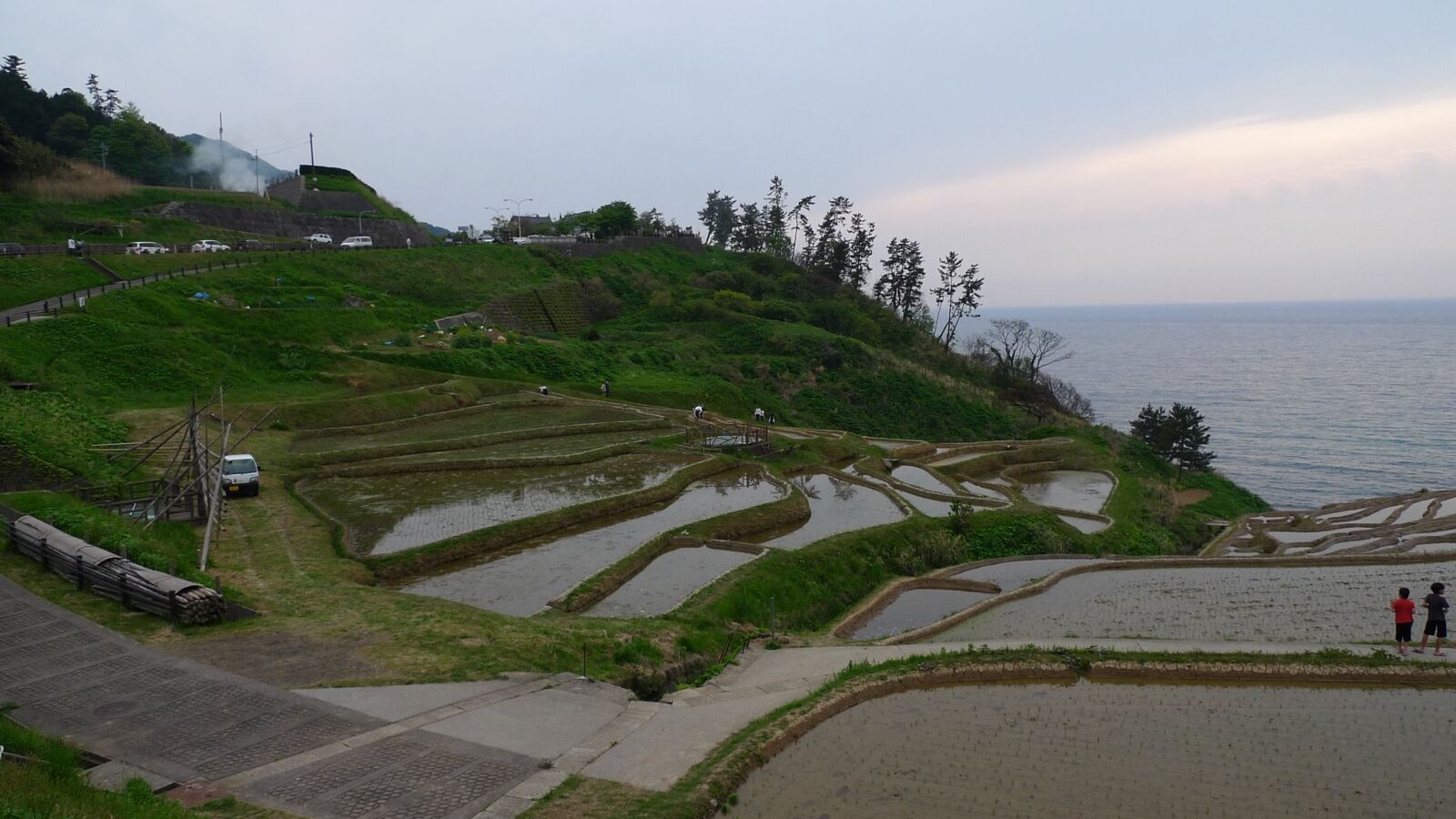
Terraced paddies on steep ground — the rice terraces of the Philippine Cordilleras, Bali, and Yunnan — are engineered water-management landscapes maintained for centuries, and they are simultaneously erosion control, water storage, and cultivation. See erosion control and finding contour.
Bali's subak system, in which water allocation is coordinated through a network of temples, is a much-studied example of successful commons governance and is directly relevant to aquifer recharge and stakeholder mapping.
Growing it outside the tropics
Rice is grown commercially in temperate regions — northern Italy, Japan, California, Australia — using short-season japonica varieties.
At garden scale in a cool climate it is possible and marginal: start indoors, transplant into a lined bed or containers kept saturated, and choose the shortest-season variety available. Expect a novelty crop rather than a staple.
Upland rice varieties grown without flooding exist and are lower-yielding, and they are the more realistic option in a temperate garden.
See also
- Irrigation Scheduling water use and the efficiency question
- Carbon Accounting paddy methane in context
- Constructed Wetlands the same aerenchyma mechanism
- Wheat the other global staple grain
- Water Quality Testing arsenic in irrigation water
- Permaculture Design rice-fish systems as stacked functions
- Tea
- Sago Palm
- Sesbania