What they are
Engineered systems that treat water by passing it slowly through gravel and plant roots, letting biological and physical processes do what a treatment plant does mechanically.
They handle domestic sewage, greywater, farmyard runoff, stormwater, mine drainage, and industrial effluent, at scales from a single household to whole towns.
They need no power, have no moving parts, cost little to run, last decades, and look like a wetland.
The plants are not doing the treatment
The most common misconception, and worth correcting because it changes how you design one.
Reeds take up a small proportion of the nutrients. The actual treatment is done by microbial biofilms growing on root surfaces and gravel, and the plants' primary job is to support them.
Specifically, the roots and rhizomes:
Provide enormous surface area for biofilm to colonise.
Leak oxygen into the rhizosphere. Phragmites and other wetland plants transport air down to their roots through internal air spaces — aerenchyma — and a proportion diffuses out. That creates oxygenated micro-zones immediately around each root, surrounded by anoxic gravel.
That juxtaposition is the whole trick. Aerobic bacteria nitrify ammonia to nitrate in the oxygenated zone; a millimetre away, anaerobic bacteria denitrify nitrate to nitrogen gas. Both processes happen simultaneously, centimetres apart, without any mechanical aeration.
Maintain hydraulic conductivity as roots and rhizomes keep channels open.
Insulate the bed in winter with dead stems, which is why you cut them in spring rather than autumn.
Harvesting the reeds removes only a small fraction of the nutrients, so cropping them is not a treatment strategy.
The three types
Surface flow. Water flows across an open shallow basin with emergent plants — essentially a shallow marsh. Cheapest, largest footprint, good for polishing and for stormwater, and it creates real wildlife habitat. Downsides: mosquitoes, odour if overloaded, and public access issues since the water is exposed.
Horizontal subsurface flow. Water flows sideways through a gravel bed, below the surface, so nothing is exposed. The common configuration for household and small community sewage. Good at removing solids and organic load, less good at nitrification because oxygen supply is limited.
Vertical flow. Water is dosed intermittently onto the surface and percolates down through sand and gravel to a drain. Each dose draws air into the bed as it drains, so oxygen supply is far better and nitrification is much stronger. Smaller footprint, needs dosing control, and more prone to clogging.
Hybrid systems combine vertical for nitrification and horizontal for denitrification, which is how full nitrogen removal is achieved.
What they remove well, and badly
Very good at: suspended solids, biochemical oxygen demand, pathogens over sufficient retention time, and — in a properly designed system — nitrogen.
Moderate at: phosphorus. This is the main limitation. Phosphorus is removed largely by sorption onto the substrate, and the substrate saturates over years. Once it does, removal falls off and the bed may release phosphorus. Special media — iron- or calcium-rich — extend this considerably.
Poor at: high loads of anything, sudden shock loads, and substances that inhibit the biology. They are steady-state systems and dislike surprises.
Design in essentials
Pre-treatment is mandatory. A septic tank or settlement chamber ahead of the bed removes solids and grease. Sending raw sewage to a reed bed clogs it, and clogging is the primary failure mode of subsurface systems. It is not recoverable without rebuilding.
Sizing is typically quoted around 5 m² per person for horizontal subsurface secondary treatment, less for vertical flow, and considerably more for cold climates or high standards. Design properly rather than by rule of thumb, and note that regulations in most countries govern any system discharging to ground or watercourse.
Retention time of several days for pathogen removal.
Slope and level distribution. Water must spread evenly across the inlet, or it channels through one path and short-circuits the bed. Getting the inlet distribution right matters more than almost any other detail. See finding contour.
Liner where groundwater protection is required.
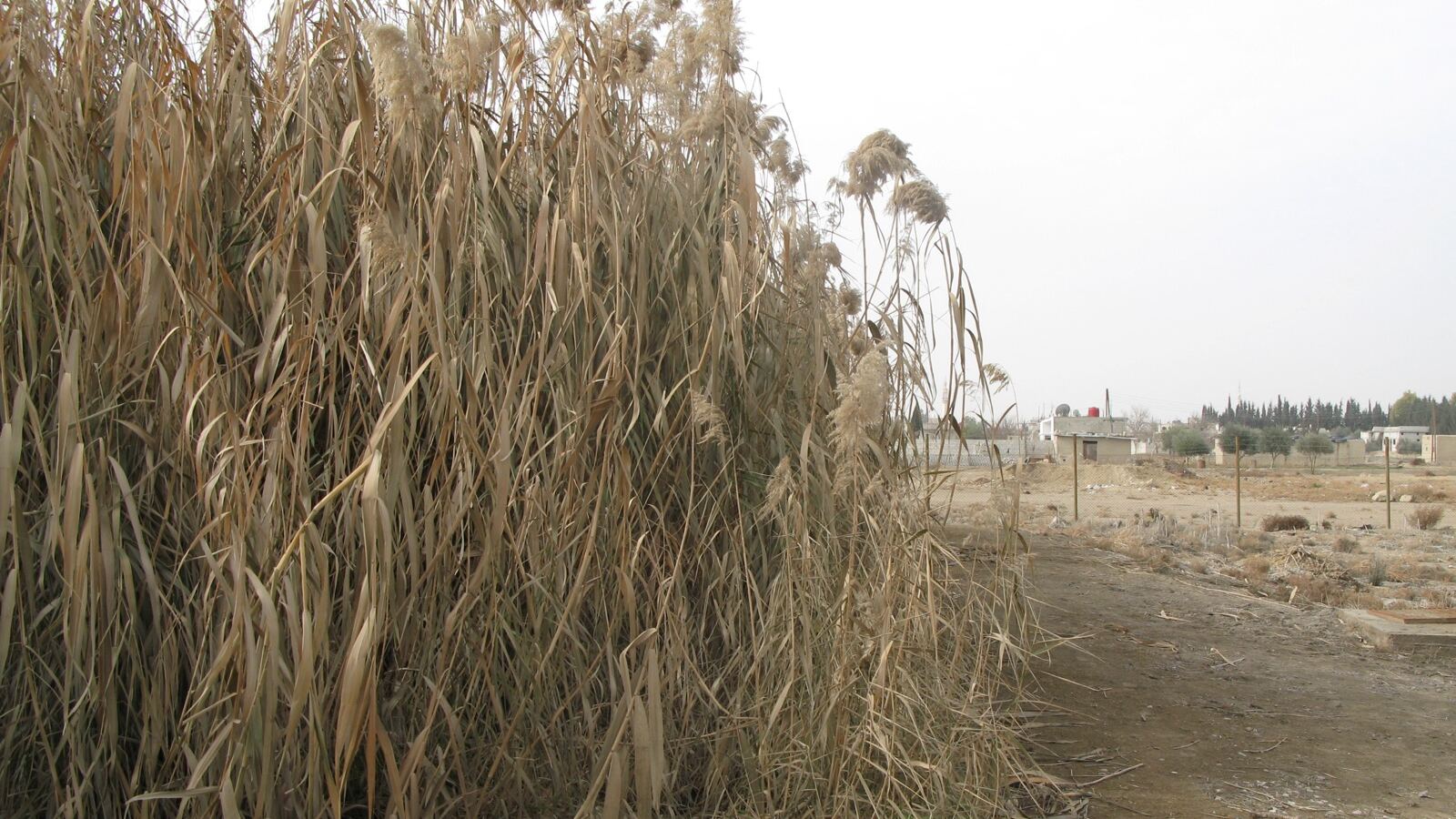
Plants. Phragmites australis is the workhorse. Also Typha, Iris pseudacorus, Juncus, Carex, and Schoenoplectus. Note Phragmites is a serious invasive in North America, where native alternatives are used instead. See invasive species.
Maintenance
Low, and not zero.
Check and desludge the settlement tank annually — neglecting this is what clogs the bed.
Cut and remove dead stems in spring, not autumn, so the standing material insulates over winter and the invertebrates overwintering in it survive. See beneficial predators.
Keep inlets and outlets clear, and watch for surface ponding on a subsurface bed, which is the first sign of clogging.
Expect a working life of 15 to 30 years for the bed, with substrate replacement eventually needed on phosphorus-saturated or clogged systems.
Where they fit
Household wastewater off-grid or beyond mains drainage, and the most common small-scale application.
Greywater, which is easier — lower organic load, no pathogens of the same order. See greywater systems.
Farmyard and silage runoff, a significant pollution source that constructed wetlands handle well.
Stormwater, where they double as attenuation. See stormwater management and rain gardens.
Catchment-scale nutrient interception, alongside riparian buffers.
Habitat, which is a genuine co-benefit rather than a consolation. Surface-flow wetlands support amphibians, dragonflies, and wetland birds, and they are frequently the largest wetland feature in an intensively farmed landscape. See dragonflies and pond life and wetland restoration.
The underlying principle is the same one running through this section: reproduce the process a functioning ecosystem already performs, rather than replacing it with machinery. Natural wetlands were doing this before anyone built one — which is the argument for not draining them in the first place.
See also
- Greywater Systems the easier input stream
- Wetland Restoration the natural version
- Stormwater Management wetlands for runoff
- Water Quality Testing verifying the output
- Riparian Buffers the same interception at catchment scale
- Rain Gardens the small-scale relative
- Rice