Clear is not clean
The most dangerous water looks perfect. Pathogens are invisible, arsenic is tasteless, and nitrate has no smell.
Meanwhile the water that looks worst, brown with tannins or peat, is often harmless. Appearance tells you almost nothing that matters.
So testing is not optional if anyone is drinking it. It is also cheaper than most people assume, and the frequency required is lower than people fear once you know your source.
Match the test to the source
Different sources fail in different ways, and testing for the wrong things wastes money.
Rainwater from a roof. Naturally soft, low in dissolved minerals, and clean when it lands. Contamination is from the collection surface: bird and rodent droppings, dust, leaf litter, and whatever the roof is made of. Test for bacteria, and for lead and zinc if the roof or flashing is metallic or painted with anything old. Do not drink from lead flashing or from a roof treated with moss killer. See rainwater harvesting basics and first-flush diverters.
Groundwater from a well or borehole. Naturally filtered and usually free of pathogens if the wellhead is sound, but carrying whatever the geology contains. Test for bacteria, nitrate, arsenic, fluoride, iron, manganese, and hardness. Near a coast, add chloride for salinity. Arsenic and fluoride are the two that cause mass harm and cannot be detected without a laboratory. See wells and boreholes.
Surface water from a stream or pond. Assume it is contaminated. Everything upstream drains into it, including livestock, septic systems, and roads. Bacteria and protozoa are the primary risk. Treat surface water as non-potable without full treatment.
Stored water in a tank or cistern. The source test plus whatever storage adds: stagnation, biofilm, insect ingress, and light-driven algal growth. See keeping stored water clean.
What to test for
Microbiological. Total coliforms and E. coli. Coliforms indicate that a route for surface contamination exists. E. coli indicates faecal contamination specifically and means do not drink. This is the single most important test and the cheapest.
Nitrate. From fertiliser, manure, and septic systems. Dangerous mainly to infants, causing methaemoglobinaemia. Common in agricultural areas and slow to clear once an aquifer is affected.
Arsenic. Geological, and catastrophic where present. Chronic exposure causes skin lesions and cancers over years with no acute warning. Endemic across parts of Bangladesh, West Bengal, and elsewhere.
Fluoride. Also geological. Beneficial in trace amounts, causes skeletal and dental fluorosis above roughly 1.5 mg per litre. Endemic in parts of the East African Rift and India.
pH. Not a health risk in itself, but it drives everything else. Acidic water dissolves metals out of pipes; alkaline water scales.
Hardness. Calcium and magnesium. A nuisance rather than a hazard.
Iron and manganese. Staining, taste, and clogged screens and drip lines.
Heavy metals. Lead from old plumbing and flashing. Others depending on local industry and mining history.
Turbidity. Suspended solids. Matters because particles shelter pathogens from disinfection.
How often
A full panel once on a new source, ideally including everything above. This is your baseline and it tells you which of the rare, expensive tests you never need to repeat. Geology does not change.
Bacteria annually, and after any of: flooding, work on the well, a new nearby land use, a change in taste or appearance, or unexplained illness.
Nitrate every year or two in an agricultural catchment.
After any repair to a well, tank, or pipework, because that is when contamination is introduced.
Use an accredited laboratory for anything you are making a decision on. Field kits and strips are useful for trend monitoring, chlorine residual, pH, and rough nitrate, but they are not a basis for declaring water safe.
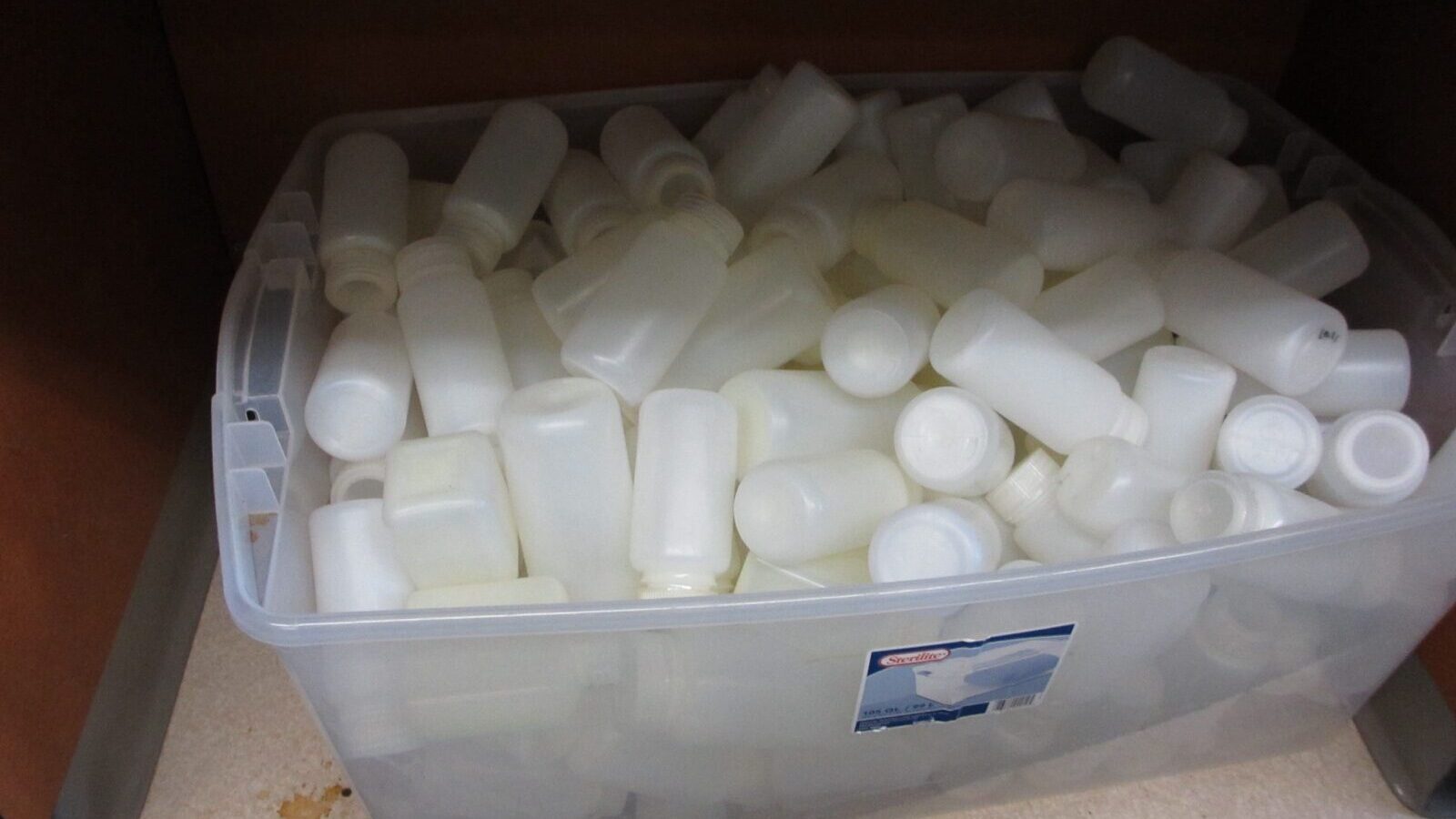
Take the sample properly, or the result is meaningless. Sterile bottle, run the tap or pump for several minutes first, do not touch the rim, chill the sample, and get it to the lab within hours. A mishandled sample usually fails on bacteria and sends people chasing a problem that does not exist.
Treatment, in order
Treatment steps go in sequence, each preparing the water for the next. Skipping a stage usually breaks the one after it.
1. Exclude. Cheapest and most effective. Screens, a sealed first flush, a sound wellhead seal, insect mesh, a light-tight tank. Most contamination problems are solved here.
2. Settle. Time and stillness remove a surprising amount. A settling chamber ahead of storage takes out sediment that would otherwise foul everything downstream.
3. Filter. Sediment filtration first, coarse then fine. Then, if needed, activated carbon for taste, odour, and organics. Slow sand filtration is worth knowing about: a biologically active layer on top of fine sand removes pathogens remarkably well with no power or chemicals, and it has supplied cities.
4. Disinfect. Only after filtration, because turbidity shields organisms. Boiling is definitive. UV is excellent, needs power and clear water, and leaves no residual protection. Chlorination is cheap and leaves a residual that protects the distribution system, which is why utilities use it. Ceramic and hollow-fibre filters remove bacteria and protozoa mechanically.
5. Specific removal. Arsenic, fluoride, nitrate, and salinity each need their own process, generally adsorption, ion exchange, or reverse osmosis. Expensive, and the reason it matters to know exactly what you have rather than treating for everything.
Note the order. UV on turbid water does very little. Carbon before sediment filtration clogs immediately.
Irrigation is a different standard
Water unfit to drink is often perfectly good for irrigation, and treating irrigation water to drinking standard is a waste.
What matters instead is salinity, measured as electrical conductivity, sodium adsorption ratio, which predicts whether sodium will destroy soil structure, and specific ion toxicity from chloride and boron. See salinity.
Greywater is the practical case: fine for subsurface irrigation of trees, never for drinking, never for spray irrigation of leaf crops, and it should not be stored, since it turns septic within a day.
Keep the records
A single test is a snapshot. A decade of tests is a picture of whether your catchment is degrading, your well is being drawn into contaminated ground, or your treatment is working.
Same lab, same parameters, same time of year where possible. Nitrate has a seasonal signal and comparing a spring sample with an autumn one will mislead you.
This is monitoring applied to water, and the value is entirely in the trend.
See also
- Keeping Stored Water Clean tank and cistern management
- First-Flush Diverters excluding the worst of it
- Wells and Boreholes source protection
- Salinity the irrigation-critical parameter
- Greywater Systems fit for purpose, not for drinking
- Monitoring why the trend matters more than the reading
- Dragonflies and Pond Life
- Spring Development
- Rice