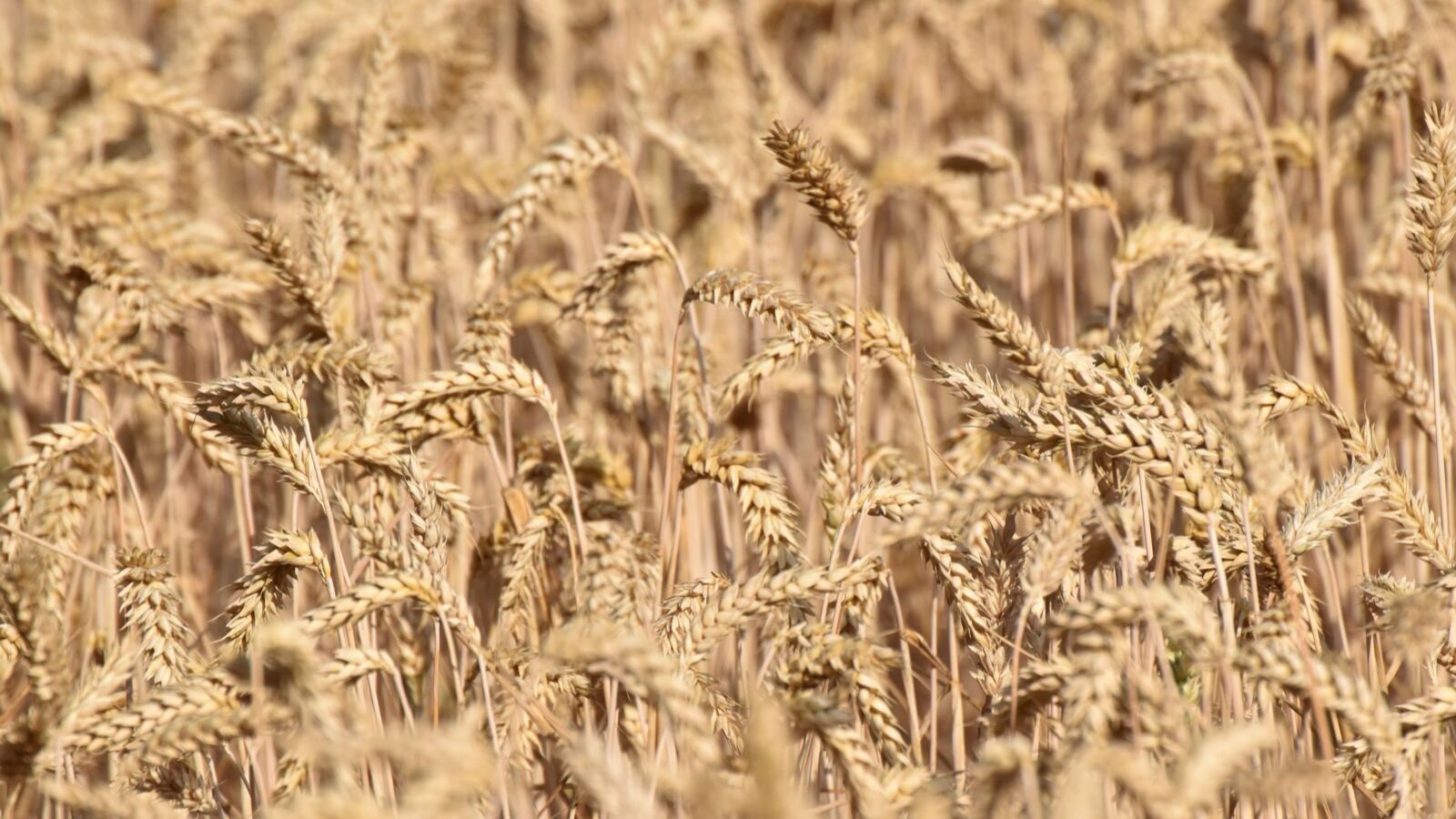
What it is
Triticum, a grass domesticated in the Fertile Crescent around 10,000 years ago, and one of the three crops — with rice and maize — that provide most human calories.
The domestication story is genetic. Wheat arose through two natural hybridisations that doubled and tripled its chromosome sets:
Einkorn, T. monococcum, diploid, the earliest domesticate.
Emmer, tetraploid, from a cross between wild einkorn relatives and a wild goatgrass. Emmer gave rise to durum wheat, the hard pasta wheat.
Bread wheat, T. aestivum, hexaploid, from a further cross between emmer and another goatgrass around 8,000 years ago. That third genome is what gives bread wheat its dough properties.
Gluten is why it won
Wheat outcompeted every other temperate grain for one reason, and it is a physical property rather than a nutritional one.
Wheat proteins — glutenin and gliadin — form gluten when hydrated and worked: an elastic, extensible network that traps the carbon dioxide yeast produces.
That means wheat dough rises and holds its structure. Rye does so poorly, barley and oats essentially not at all.
Everything downstream follows: leavened bread, pasta, noodles, pastry. No other grain does it, which is why wheat spread wherever it would grow and why bread became the staple form.
The trade-off is that the same proteins cause coeliac disease in a small percentage of people and non-coeliac sensitivity in a disputed but larger group.
Winter and spring wheat
The distinction that governs the calendar.
Winter wheat is sown in autumn, requires vernalisation — a period of cold before it will flower — overwinters as a small plant, and harvests in mid to late summer. Higher yielding, because it uses the whole season and establishes a root system before spring.
Spring wheat is sown in spring, needs no vernalisation, and harvests later with lower yields. Used where winters are too severe for the crop to survive.
The same winter–spring split applies to barley and rye and oats, and vernalisation is the same mechanism that makes garlic split into cloves.
What the Green Revolution actually did
Frequently misunderstood, and worth stating precisely.
The wheat yield increases of the 1960s onward came primarily from semi-dwarf varieties carrying the Rht dwarfing genes, developed by Norman Borlaug and colleagues in Mexico.
The mechanism was not that the plants photosynthesised more. It was that shorter stems changed the harvest index — the proportion of total biomass in grain rather than straw — from roughly 35 percent to over 50.
Shorter straw also meant the plant could carry a heavy nitrogen-fed ear without lodging, falling over. Traditional tall wheats given heavy fertiliser simply collapsed, so the dwarfing genes were what made high fertiliser rates usable.
So the package was inseparable: semi-dwarf varieties plus nitrogen fertiliser plus, in many regions, irrigation. The genetics alone did little; the fertiliser alone flattened the crop.
The consequences were correspondingly mixed — very large increases in food production and avoided famine, alongside groundwater depletion, nitrogen pollution, dependence on purchased inputs, and a narrowing of the varietal base. See nutrient deficiency and wells and boreholes.
The old wheats
Einkorn, emmer, and spelt are grown again at small scale, and the honest assessment is mixed.
They are hulled — the grain does not thresh free of its husk and needs an extra dehulling step, which is the main reason they were abandoned.
Yields are considerably lower. Straw is tall and lodges. They do tolerate poor soil and low inputs better, and they have deeper roots.
The nutritional and digestibility claims made for them are weaker than commonly asserted. They contain gluten and are unsafe for coeliacs. Some evidence suggests different protein profiles affect some people differently, but the popular framing outruns the evidence.
The strongest case for them is genuine: genetic diversity, adaptation to low-input systems, flavour, and keeping landraces in cultivation rather than only in seed banks. See seed banking.
Growing it at small scale
Wheat is worth growing in a garden for interest, straw, and flour, and the arithmetic is worth knowing before you start.
Yield at garden scale is roughly 0.2 to 0.5 kg of grain per square metre. A 10 m² patch might give 2 to 5 kg of flour — enough for a few weeks of bread. Grain is a land-hungry crop, which is precisely why it is farmed rather than gardened.
Sowing. Broadcast or drill at roughly 4 to 6 g per square metre, 2 to 3 cm deep. Autumn for winter varieties, early spring for spring types.
Soil. Moderately fertile, well-drained, neutral to slightly alkaline. Wheat is a heavier feeder than rye and less tolerant of poor ground.
Weeds are the main constraint at small scale, since a thin stand loses to them. Sow densely enough to close the canopy. See weed management.
Harvest when the ear has turned golden, the stem is dry, and a grain crushed between the teeth is hard rather than doughy. Cut with a sickle or shears, tie in sheaves, and stand them to dry further.
Threshing at small scale: beat the sheaves in a tub or on a sheet, or thresh underfoot.
Winnowing by pouring the mixture between containers in a breeze, letting the lighter chaff blow away.
Store the grain dry and cool. Whole grain keeps for years; flour goes rancid within months once the germ is milled, which is the argument for milling as needed.
In a rotation
Wheat is a hungry cereal and traditionally follows a nitrogen-fixing legume or a fallow. The Norfolk four-course — wheat, turnips, barley, clover — is the classic sequence, and it is discussed in turnips and swedes and crop rotation.
Cereals also make useful cover crops, and wheat, rye, and oats are all sown as winter green manures for that reason. Rye is the better choice for cold-weather growth. See cover cropping.
The straw is valuable in its own right: mulch, compost carbon, animal bedding, and thatching. See composting methods and mulching for moisture.
Diseases
Rusts — yellow, brown, and stem rust — are the historically catastrophic ones. Stem rust race Ug99, identified in Uganda in 1999, overcame the resistance genes in most of the world's wheat and prompted an international breeding response.
Septoria, fusarium head blight, and powdery mildew are the routine problems in temperate cropping.
Wheat is a case study in the argument made in structural diversity and tree diseases: a genetically narrow crop grown across vast contiguous areas is a standing invitation, and resistance breeding is a permanent arms race rather than a solved problem.
See also
- Barley the other great temperate cereal
- Rye and Oats the poor-soil grains
- Crop Rotation where cereals sit in the sequence
- Cover Cropping cereals as green manure
- Seed Banking preserving landraces
- Harvest and Storage storing grain and flour
- Lentils and Chickpeas