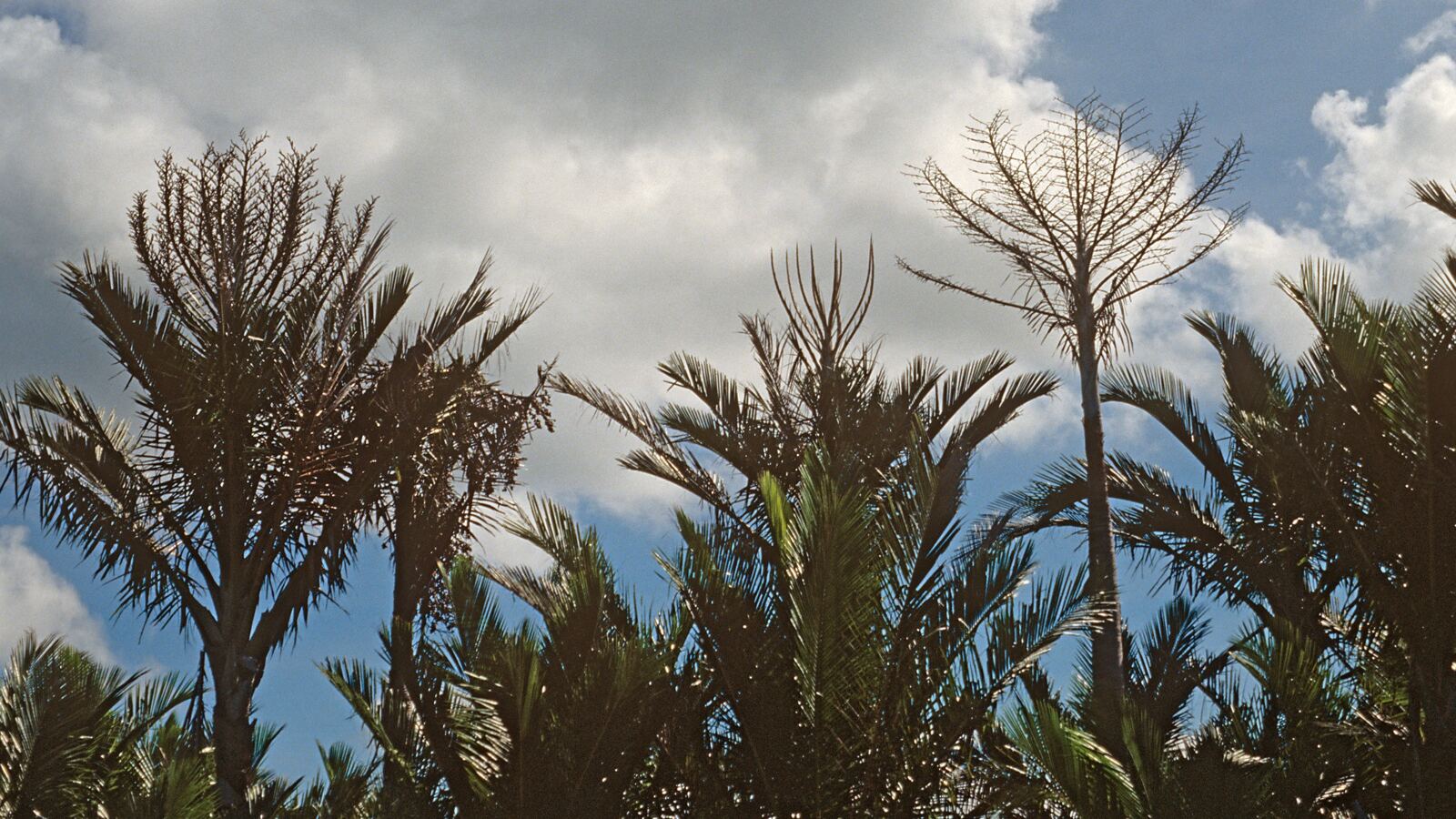
What it is
Metroxylon sagu, the true sago palm — a stout palm of the freshwater swamps of Southeast Asia, New Guinea, and the Moluccas, and one of the most important staple starch crops of that region, feeding many lowland peoples as rice or cassava feed others.
(It should not be confused with the ornamental "sago palm" of gardens, which is a cycad, not a palm at all, and is poisonous — a dangerous naming coincidence. The true sago palm is a genuine palm and a genuine food.)
Its starch — sago — is extracted not from a fruit or a seed but from the pith of the trunk, and the way it is harvested is one of the most striking in all of agriculture.
Harvested by felling
The sago palm's whole life is a slow build-up to a single reproductive climax, and this is what makes its harvest so unusual. The palm grows for years — perhaps 8 to 15 — steadily packing its trunk with starch, a huge energy store. Then, near the end of its life, it prepares to flower and fruit once, massively, and to do so it draws on all that stored trunk starch — after which the palm dies.
The trick of sago cultivation is to fell the palm just before it flowers, at the moment its trunk holds the maximum starch, before the plant consumes that starch to reproduce. So harvesting sago means cutting down the tree — a single palm yielding an enormous quantity of starch, hundreds of kilos, in one go. The felled trunk is split, the starchy pith is rasped out, and the starch is washed and strained from the fibrous pith with water, settling out as a fine flour that is dried and stored, or made into pearls (the "sago" of sago pudding and the "tapioca-like" pearls of bubble tea and desserts).
This makes the sago palm one of the most productive starch sources per unit of labour in the wet tropics — a swamp that grows sago is a granary — and the palm clumps and suckers, so a stand replaces the felled palms with new suckers and can be harvested indefinitely. Sago is the traditional staff of life across lowland New Guinea and the Moluccas, eaten as a starchy porridge, pancake, or dumpling. See restoration economics.
A swamp crop for a warming world
The sago palm thrives where few other crops will: in freshwater and peat swamps, waterlogged ground, and periodically flooded lowlands that defeat rice and most other staples. Because it tolerates flooding and poor, wet, acidic peat soils, and because it is so productive and low-input, sago has attracted renewed interest as a resilient, climate-smart staple for the wet tropics — a crop that turns otherwise unusable swamp into food, and that may become more valuable as flooding and sea-level rise trouble other crops. See wetland restoration.
Growing it
Tropical, frost-tender, and a plant of hot, wet, lowland swamp, the sago palm wants heat, high rainfall, and waterlogged or swampy ground — the wetter and more flood-prone the better — and it is intolerant of drought and cold. It is a large, clumping, suckering feather palm, armed with spines in some forms.
It is grown from suckers (which replace the felled parent) and from seed, and managed as a self-renewing swamp stand harvested by felling mature, pre-flowering palms. As a hugely productive, flood-tolerant, low-input starch staple, the sago palm is one of the quietly vital food trees of the wet tropics — and a rare crop harvested, quite literally, by cutting the tree down at exactly the right moment. See palms and propagation.
See also
- Palms the family, including the trunk-starch (sago) habit
- Cycads the poisonous ornamental "sago palm" it is confused with
- Coconut, Date Palm, and Oil Palm other great economic palms
- Wetland Restoration sago as a swamp and peatland crop
- Restoration Economics sago as a resilient tropical staple
- Banana and Plantain another tree-sized monocot staple
- Raffia Palm