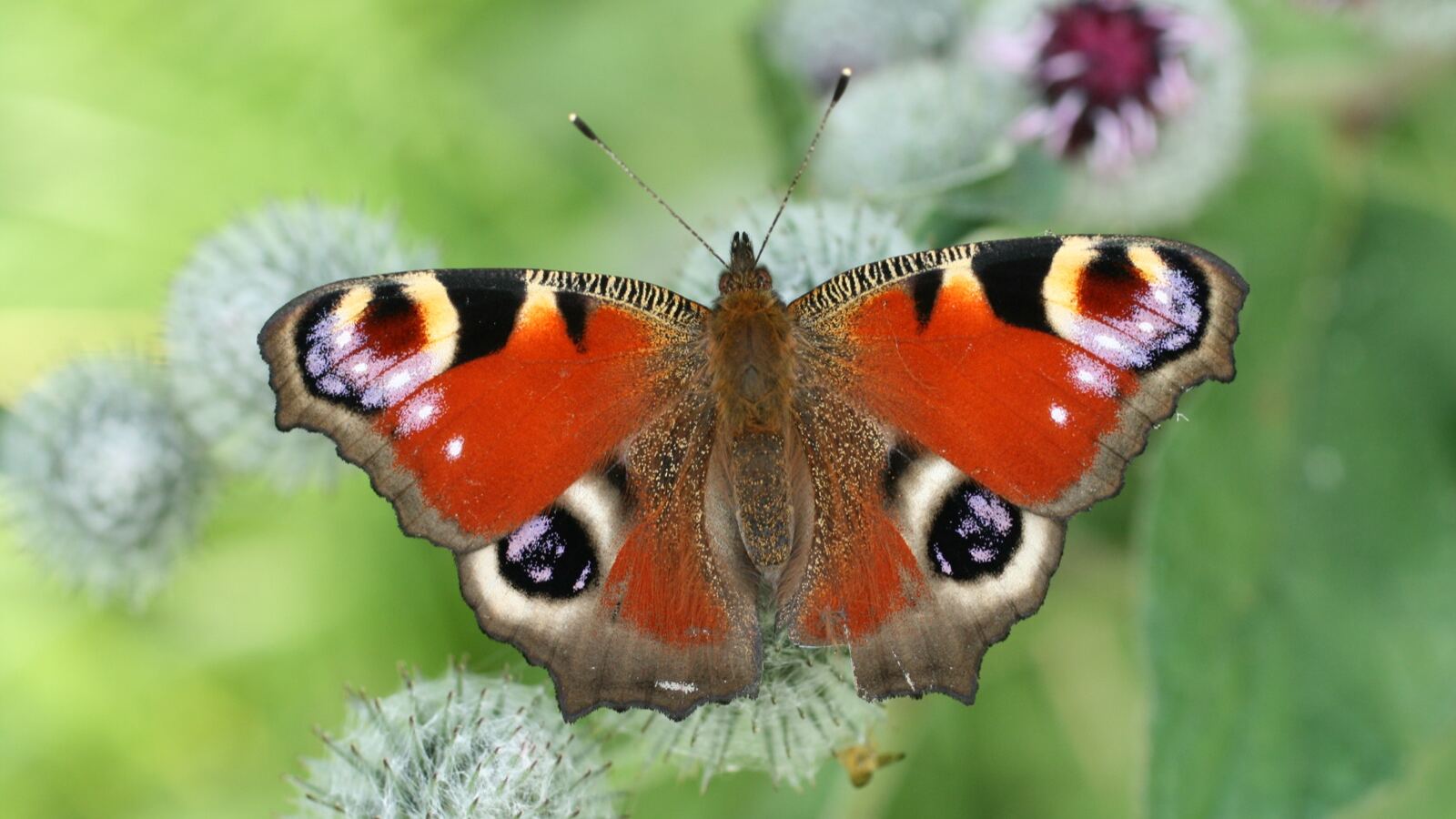
Two animals in one life cycle
A butterfly or moth is effectively two organisms with different requirements, and gardens routinely provide for one and not the other.
The adult drinks nectar, is mobile, and is not fussy — a buddleia will attract butterflies from a wide area.
The larva eats leaves, cannot travel, and is frequently restricted to one plant genus or even one species.
That asymmetry is the whole point. Nectar plants attract adults that were produced somewhere else. Foodplants produce the butterflies.
A garden full of buddleia and no larval foodplants is a service station, not a habitat.
The foodplants that matter
A short list covers a surprising share of familiar species.
Nettles. Peacock, small tortoiseshell, red admiral, and comma all lay on common nettle, and they need a large sunny patch, not a shaded clump behind the shed. This is the single most commonly cited and most commonly ignored piece of butterfly gardening advice.
Grasses, left long. Meadow brown, gatekeeper, ringlet, speckled wood, skippers — all the browns lay on native grasses, and all of them need grass that is not mown. See grassland restoration and meadow management.
Brassicas for the whites, which is the conflict discussed in brassicas.
Bird's-foot trefoil, vetches, clovers for the blues.
Garlic mustard and lady's smock for orange-tip.
Blackthorn for brown hairstreak, which lays on young growth — so flailing every hedge annually destroys the eggs. See hedgerow care.
Elm for white-letter hairstreak, which survives on hedgerow suckers.
Oak, willow, birch, hawthorn, and blackthorn support the largest numbers of moth species by a wide margin — several hundred each. If the aim is total lepidoptera, native trees do more than any flower border. See native oaks.
See caterpillars for the larvae themselves.
Moths are the majority
In Britain there are around 60 butterfly species and around 2,500 moths. Moths are where the diversity is, and they do most of the work.
They are major pollinators. Night-flying moths visit a wide range of flowers and carry pollen over longer distances than many day-flying insects. Recent work suggests moths pollinate a substantial share of plants previously assumed to be bee-pollinated, and they are disproportionately important for pale, strongly scented, night-opening flowers — honeysuckle, evening primrose, night-scented stock, jasmine, ivy.
They are the food base. Moth caterpillars are the principal food for nestling birds, and the numbers in insectivorous birds are essentially moth larvae. They also feed bats as adults.
Moth abundance in Britain has fallen by roughly a third since the 1970s, with correspondingly serious implications for the birds and bats that depend on them.
Light pollution is a significant and under-appreciated driver — artificial light disrupts navigation, mating, and feeding, and draws moths away from where they should be. Turning off unnecessary outdoor lighting, using warm-toned low-level light, and shielding fixtures downward are genuinely useful interventions.
Nectar through the season
Adults need nectar across a long season, and the gaps matter more than the peak.
Very early — blackthorn, willow catkins, serviceberry, primrose, dandelion. Critical for species that overwinter as adults and emerge on the first warm days.
Midsummer — the easy part, and where most planting is concentrated. Lime, culinary herbs in flower, knapweed, scabious, marjoram.
Late — ivy is the outstanding one, flowering in autumn when almost nothing else does and feeding red admirals and a long list of late insects. Also sedum, michaelmas daisy, and rotting fruit, which several species prefer to flowers.
Leaving windfall apples on the ground in autumn feeds red admirals and commas directly. See apples and pears.
What to stop doing
Most butterfly gardening is subtraction rather than addition.
Stop mowing everything. Long grass is larval habitat for a whole guild.
Stop cutting hedges annually, and cut on rotation instead, leaving sections uncut. Annual flailing removes the eggs and young growth several species depend on.
Stop tidying in autumn. Many species overwinter as eggs, larvae, or pupae attached to dead stems and in leaf litter. Cutting in spring instead of autumn preserves them. This is the same argument as in ladybirds and beneficial predators.
Stop spraying. Broad-spectrum insecticides do not distinguish between a cabbage white and a peacock.
Tolerate some leaf damage, since caterpillars eating leaves is the system working.
The conflict
There is a real one, and it is worth being straight about.
Cabbage whites will damage your brassicas, and the answer is netting rather than spraying — a physical barrier protects the crop without removing the species from the garden.
Everything else on the list above eats plants you are not growing for food. Nettles, grasses, and native trees carry the great majority of larvae, and none of them competes with a vegetable bed.
So the resolution is straightforward: net the crop, feed everything else.
See also
- Caterpillars reading the larval flight calendar
- Pollinator Habitat provisioning across the season
- Insectivorous Birds what moth larvae feed
- Bats the adult moths' main predator
- Hedgerow Care rotational cutting and hairstreaks
- Grassland Restoration long grass as larval habitat
- Fennel and Chicory
- Hackberry
- Buckthorn
- Box and Privet
- Joshua Tree and Yuccas