What it is
Prunus spinosa, a suckering thorny shrub or small tree, native across Europe and western Asia. A stone fruit relative — the same genus as plum, cherry, and almond.
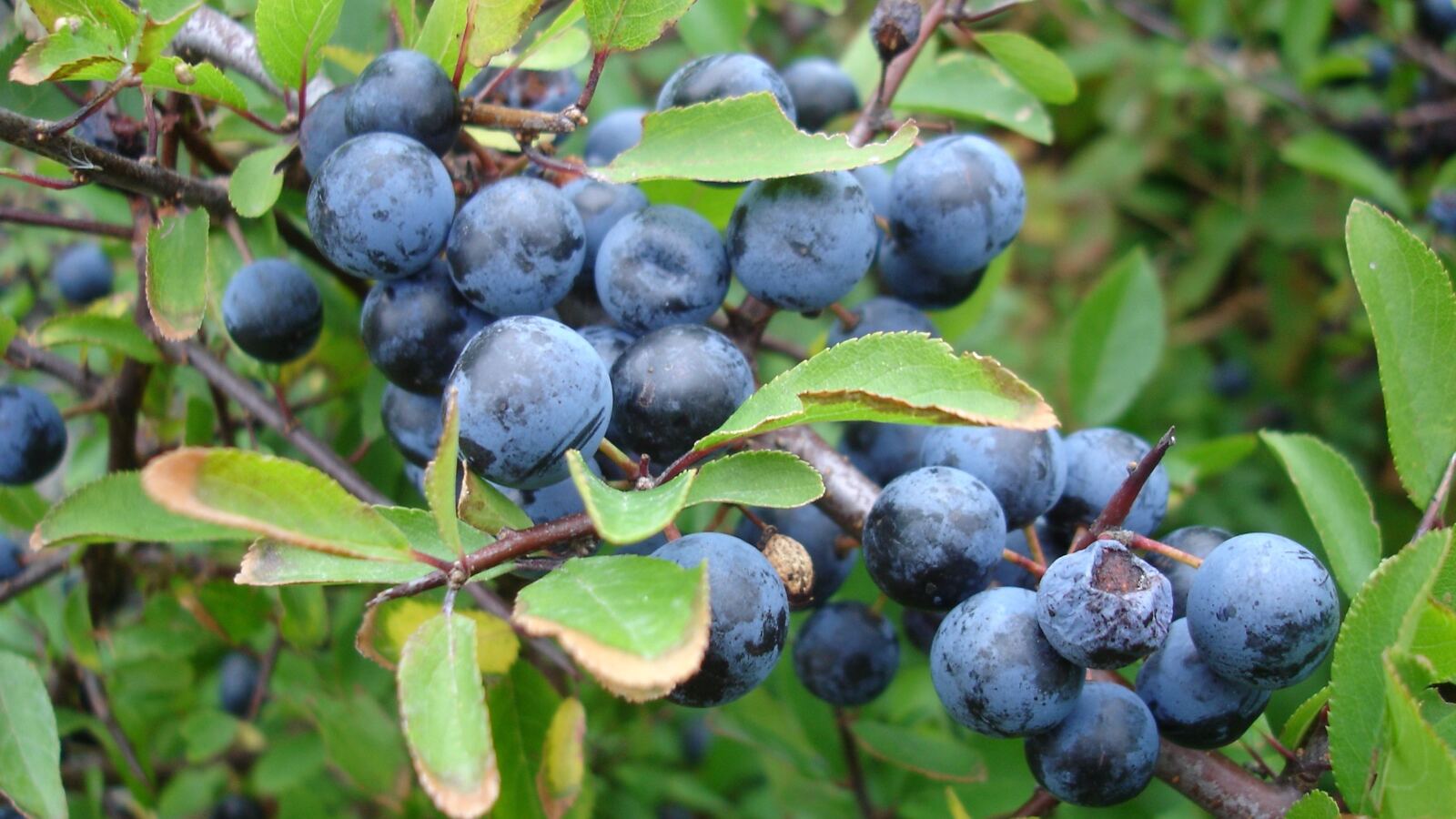
The fruit is the sloe: a small blue-black plum with a waxy bloom, intensely astringent raw.
Blackthorn is one of the parents of the domestic plum, P. domestica, which arose as a hybrid with the cherry plum, P. cerasifera.
Flowers before leaves
The identifying feature and the thing that makes it conspicuous.
Blackthorn flowers in early spring on bare black stems, producing a dense white cloud before any leaf appears. Hawthorn does the reverse, leafing first and flowering later, which is the reliable way to tell the two apart at a distance.
A cold snap during blackthorn flowering has its own name in English — the blackthorn winter.
That early flowering matters ecologically. It is one of the first substantial nectar and pollen sources of the year, at a point when queen bumblebees are emerging from hibernation and have almost nothing else available. See native bees and pollinator habitat.
The thorn
Blackthorn spines are not decorative. They are hard, sharp, and they break off under the skin.
Blackthorn puncture wounds have a genuine reputation for turning septic and for causing persistent inflammation and joint infection, and the injuries are common enough that hedge-layers treat them as an occupational hazard. Whether the wood carries a specific toxin is unsettled; the more likely explanation is that the fine tip snaps off and leaves a fragment behind along with soil bacteria.
Either way: wear thick gloves and eye protection, and take any blackthorn wound that swells or stays sore to a doctor. Eye injuries from blackthorn are a recognised and serious risk when cutting.
See tool care and safety.
The hedge-layer's backbone
Blackthorn is one of the best stock-proof hedging plants in Europe, and for the same reasons it is a nuisance where you do not want it.
It suckers aggressively. A single plant spreads outward by root suckers into a thicket, and blackthorn will colonise a field margin or an unmanaged pasture steadily. That is either free hedge or encroaching scrub depending on your intentions.
It lays well. Cut partly through and bent over, the stems live and throw vertical growth, which is the basis of traditional hedge-laying. See hedgerow care.
It is impenetrable when managed, which is the whole point of a stock hedge.
For scrub control the suckering habit means cutting alone stimulates it. Repeated cutting over several seasons, grazing with goats, or accepting it as a habitat feature are the options. See invasive species for the general principle, though blackthorn is native and the issue is management rather than invasion.
Blackthorn thickets are exceptional habitat in their own right — dense, thorny, and safe from predators. Nightingales, whitethroats, and a long list of scrub-nesting birds depend on them, and the brown hairstreak butterfly lays almost exclusively on young blackthorn growth, which is why flailing every hedge every year is so damaging to it. See rewilding edges and caterpillars.
Sloes
Small, round, blue-black, and astringent enough to dry the mouth completely.
Pick after the first frosts, traditionally, which softens the skin and reduces the astringency. Freezing them at home does the same job and is what most people now do.
Sloe gin is the classic use: sloes, sugar, and gin, left for months. Also sloe wine, jelly, and hedgerow chutneys, and the fruit pairs with apple in preserves.
Raw sloes are edible but unpleasant. As with all Prunus, the stones contain cyanogenic compounds and should not be crushed and consumed.
Sloes are also a significant late food source for birds and mammals. See seed-dispersing birds.
Wood
Very hard, dense, and fine-grained, taking a high polish.
The traditional material for the Irish shillelagh, and for walking sticks and tool handles generally. Rarely available in any size, since blackthorn seldom forms a straight trunk.
Growing it
Undemanding to the point of indifference. Tolerates poor soil, exposure, salt wind, cold, and drought once established.
Plant bare-root whips in winter at 4 to 6 per metre for hedging, usually mixed with hawthorn, hazel, field maple, dog rose, and others — a mixed hedge is far better for wildlife than a single-species one and no harder to establish. See nursery stock.
Plant it where you want it permanently, and expect it to spread. Do not plant it against a border you intend to keep tidy, or beside a lawn you mow, or where the suckers will cross a boundary into a neighbour's ground.
Cut on a rotation rather than annually, and leave some sections uncut each year so that flowering, fruiting, and the butterfly larvae all survive the management.
See also
- Hawthorn the other hedgerow thorn, and how to tell them apart
- Hedgerow Care laying and rotational cutting
- Stone Fruit the genus it belongs to
- Native Bees the earliest nectar of the year
- Rewilding Edges scrub as habitat rather than neglect
- Tool Care and Safety working safely around the thorns
- Butterflies and Moths
- Osage Orange
- Wild Roses
- Hardy Orange