What it is
Zanthoxylum, the Sichuan (Szechuan) peppers and prickly ashes — a group of thorny, aromatic trees and shrubs of Asia and the Americas, whose dried berry husks are the source of the tingling spice at the heart of Sichuan cooking.
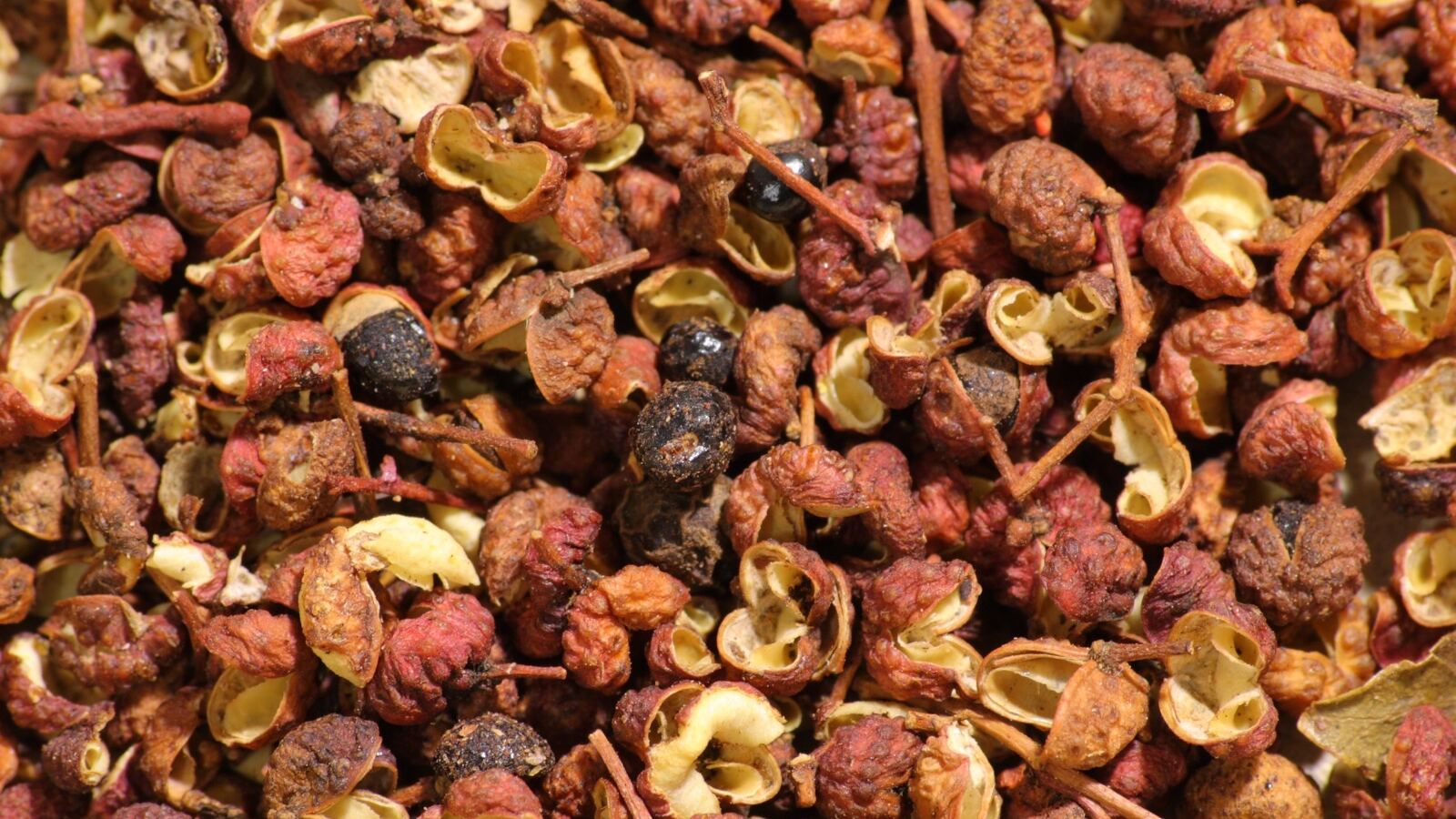
It is a member of the citrus family, Rutaceae — a relative of the citrus, curry tree, bael, and hardy orange — and, like them, its foliage and fruit are intensely aromatic from oil glands, with a distinctive citrus-and-pine scent. The trees are typically thorny (hence "prickly ash"), and it is the husk of the small reddish berry, not the black seed inside (which is gritty and discarded), that is the spice.
Not hot — tingling
Sichuan pepper is one of the most unusual spices in the world, because its signature effect is not taste but sensation. It is not "hot" like chilli (which it is unrelated to) nor pungent like true pepper — instead it produces a strange, electric, tingling, buzzing, numbing sensation on the lips and tongue, often described as like touching a mild battery or a fizzing vibration, along with a fragrant, citrusy, floral flavour.
This effect is real and measurable: the active compounds (hydroxy-alpha-sanshool and relatives) act directly on the touch and vibration nerves of the mouth, and experiments have shown they make the lips buzz at a frequency of around 50 hertz — the spice literally sets your nerves vibrating. It is one of the few foods whose main effect is on the sense of touch rather than taste or smell.
In Sichuan cooking, this tingling numbness is combined with chilli heat to produce the famous "málà" (麻辣, "numbing-and-hot") flavour — the mouth-buzzing, fiery character of dishes like mapo tofu, dan dan noodles, and Chongqing hotpot — in which the Sichuan pepper's numbing (má) tempers and transforms the chilli's heat (là). It is a foundational spice of one of the world's great cuisines, and unlike anything else on the spice shelf. See historical ecology.
More than the spice
Beyond Sichuan cooking, various Zanthoxylum species are used across Asian, African, and American cuisines and medicines — as spices (Japanese sanshō, the seasoning of eel and the seven-spice shichimi; Nepali timur), as flavourings, and in traditional medicine (the numbing effect made prickly ash a folk toothache remedy — "toothache tree" is one of its names, its bark chewed to deaden pain). The trees are also good pollinator and wildlife plants, their berries feeding birds, and some are grown as ornamentals for their aromatic foliage and autumn colour.
Growing it
Most Sichuan peppers are hardy, temperate-to-subtropical trees and shrubs — many are notably cold-hardy (hardier than most of their citrus relatives), tolerant of a range of soils, drought once established, and undemanding — wanting full sun and reasonable drainage. They are thorny, deciduous or evergreen depending on species, and modest in size, suiting a garden or hedge.
They are grown from seed (which needs care, as the oily seed loses viability and has dormancy) and from cuttings and suckers, and are dioecious in some species (needing both sexes for berries). A Sichuan pepper in the garden gives home-grown spice, aromatic foliage, and the fun of the buzzing berry, and it is hardy enough for temperate as well as warm gardens. See propagation and pollinator habitat.
See also
- Citrus, Curry Tree, Bael, and Hardy Orange its aromatic citrus-family relatives
- Star Anise another distinctive Chinese spice tree
- Clove, Nutmeg, and Allspice more spice trees
- Peppers and Chillies the unrelated "heat" that Sichuan pepper is combined with
- Historical Ecology the spice at the heart of a great cuisine
- Pollinator Habitat prickly ash as a wildlife plant
- Finger Lime