What they are
Cinnamomum, a genus of aromatic evergreen trees of the laurel family, Lauraceae — kin to bay and the avocado — whose leaves, bark, and wood are charged with fragrant oils. Three matter most:
- True cinnamon, C. verum (Ceylon cinnamon), of Sri Lanka;
- Cassia, C. cassia and relatives, of China and Southeast Asia — the "cinnamon" of most supermarkets;
- Camphor laurel, C. camphora, of East Asia, source of camphor.
Cinnamon: bark worth an empire
Cinnamon is one of the oldest and most valuable of all spices, and the only major spice that is a tree bark.
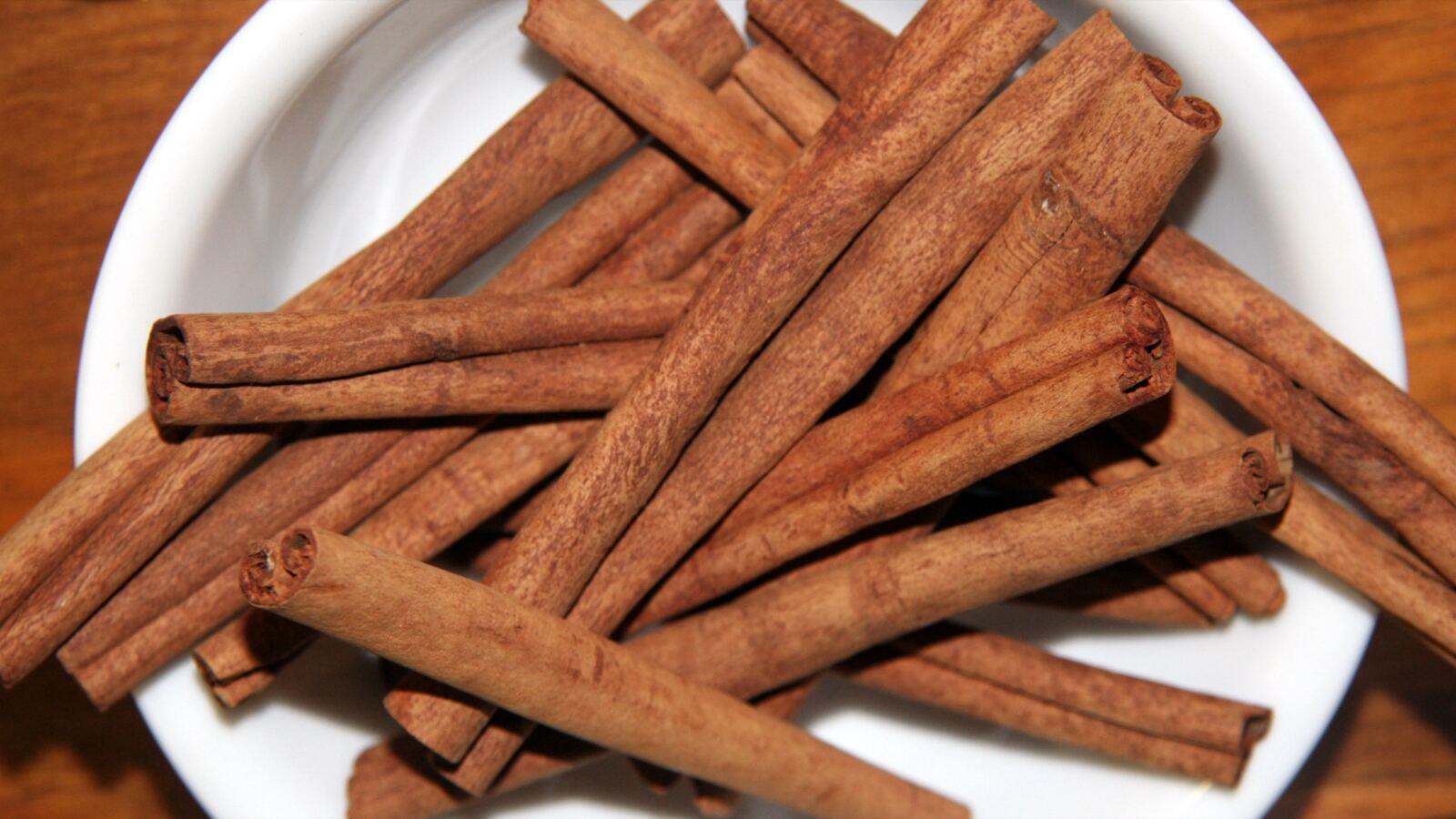
It is made from the inner bark of young shoots. The tree is coppiced — cut back hard to produce a thicket of straight young stems, the same coppice technique used for so many other products — and the bark is stripped from these shoots, the outer bark scraped away, and the inner bark left to dry, when it curls into the familiar quills (sticks) as it shrinks. True cinnamon forms thin, papery, fragile, many-layered quills; the harvesting is skilled hand work.
Cinnamon was among the spices whose value drove the ancient and medieval spice trade — sought across the Roman world, its true source kept deliberately mysterious by the traders who controlled it — and it remains one of the world's most-used spices, in both sweet and savoury cooking across an enormous range of cuisines.
True cinnamon versus cassia. Most "cinnamon" sold, especially in North America, is actually cassia — coarser, thicker-barked, stronger and harsher in flavour, and forming a single thick hard curl rather than papery layers. The distinction matters beyond taste: cassia is high in coumarin, a compound that can harm the liver in quantity, whereas true (Ceylon) cinnamon has very little. For anyone using a lot of cinnamon, true cinnamon is the safer choice — a rare case where a spice's botanical identity has a genuine health consequence.
Camphor: medicine, mothballs, and a menace
The camphor laurel is grown for a different product: camphor, the pungent white crystalline substance distilled from its wood and leaves.
Camphor has a long history in medicine (chest rubs, liniments, and balms — its cooling, penetrating smell is the classic "vapour rub" scent), as an insect repellent and moth deterrent, in embalming and incense, and historically as a raw material for celluloid, the first plastic, and for smokeless gunpowder — which made camphor a strategic material and Taiwan, its main source, a focus of trade and conflict. Most camphor is now synthetic, but the tree remains its natural source.
Camphor laurel is a large, handsome, dense-canopied evergreen, widely planted as a shade and street tree in warm climates — and there is the catch. In Australia especially, C. camphora has become a serious invasive: planted for shade, it seeds prolifically, is spread by birds, and has invaded pasture, riverbanks, and subtropical rainforest on a large scale, out-competing native trees. Its aromatic leaf litter is even thought to suppress other plants. It is another instance of a useful, tough, bird-dispersed tree becoming a weed far from home, the pattern of the cherry laurel and so many others. See invasive species.
Growing them
All are tropical to warm-subtropical evergreens, frost-tender (camphor is the hardiest, taking light frost), wanting warmth, moisture, and deep, well-drained soil.
Cinnamon and cassia are grown as coppiced bushes in the wet tropics for bark, and make attractive glossy-leaved evergreens with spicy-scented foliage where the climate allows; the new growth flushes an ornamental red. Camphor grows into a big, long-lived shade tree — plant it only where it is not invasive, and check local status first. All are grown from seed and cuttings. See propagation and tropical fruit trees for the wider warm-climate tree context.
See also
- Bay and Laurels the culinary member of the same family
- Avocado the laurel family's great fruit
- Coppice Rotation the cutting system that harvests cinnamon bark
- Invasive Species camphor laurel as a weed tree
- Tea another aromatic evergreen crop of the warm hills
- Propagation raising spice trees from seed and cuttings
- Clove, Nutmeg, and Allspice
- Quinine Tree
- Curry Tree
- Annatto
- Star Anise