What they are
Three tropical evergreen spice trees, from opposite sides of the world, whose products flavoured — and whose trade convulsed — the early-modern world:
- Clove (Syzygium aromaticum), a myrtle-family tree of the Moluccas, whose dried unopened flower buds are the spice;
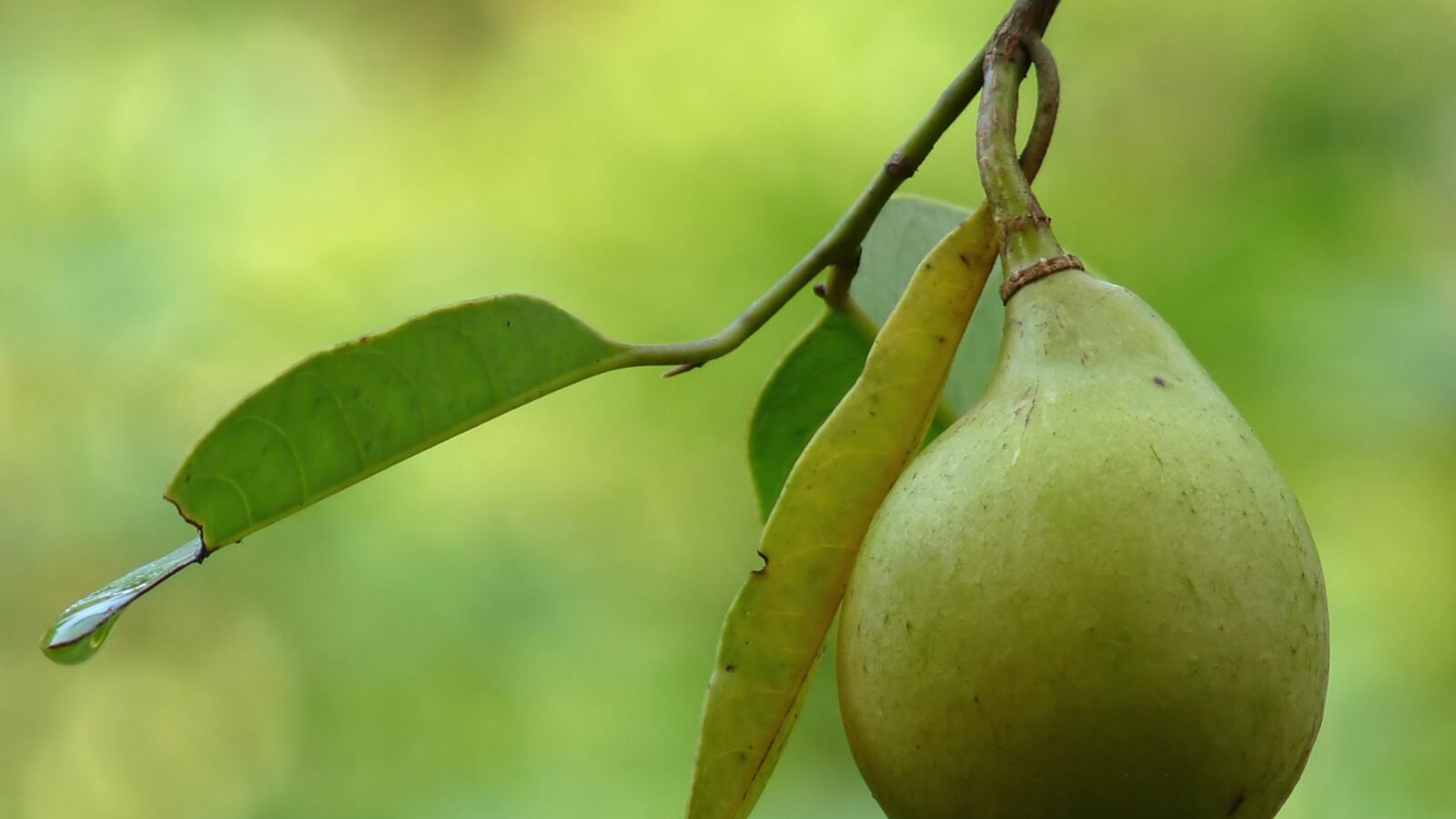
- Nutmeg (Myristica fragrans), of the Banda Islands, which yields two spices from one fruit;
- Allspice (Pimenta dioica), a New World myrtle whose dried berries taste of several spices at once.
Clove and allspice are close kin in the myrtle family, Myrtaceae — relatives of the eucalyptus, melaleuca, and the rose apple — while nutmeg belongs to its own ancient family.
Cloves: the flower never allowed to open
A clove is a flower bud picked before it opens and dried until it turns hard and dark — the familiar nail-shaped spice (the name comes from the Latin clavus, a nail). Were the bud left on the tree it would open into a small flower and set fruit; the spice is the arrested bloom, packed with aromatic oil (eugenol) that gives clove its warm, numbing pungency and its old use in dentistry to deaden toothache. The clove tree is a handsome evergreen that must be caught at exactly the right moment of budding, which makes clove-picking skilled, seasonal work.
Nutmeg: two spices from one seed
The nutmeg tree performs a neat trick: it produces two different spices from a single fruit.
The apricot-like fruit splits to reveal a glossy brown seed — the nutmeg — wrapped in a lacy, brilliant scarlet coat called the aril. That red aril, dried, is the second spice, mace. So nutmeg and mace are the seed and its wrapping from the very same fruit, differing in flavour: nutmeg warm and sweet, mace more delicate. It is the most vivid example of a single tree yielding two distinct spices, and the striking red-lace-on-brown-seed image is unforgettable once seen. (Nutmeg in large doses is mildly hallucinogenic and toxic, a piece of folklore with a real and unpleasant basis — culinary quantities are entirely safe.)
Worth a war
These spices were, for centuries, among the most valuable substances on Earth, and the story of their trade is one of the darker chapters in the history of plants.
Clove and nutmeg grew, originally, only on a few small islands in the Moluccas and Bandas — the fabled "Spice Islands" of eastern Indonesia — and whoever controlled those islands controlled a fortune. The lengths to which European powers went to monopolise them are notorious: the Dutch East India Company seized the Banda Islands in the seventeenth century and, to enforce its nutmeg monopoly, massacred or enslaved almost the entire native Bandanese population, then guarded the trees fanatically, restricting them to controlled plantations and destroying trees elsewhere. In one famous consequence, the Dutch traded the tiny nutmeg island of Run to the English in exchange for another island the English held — Manhattan. The spice trade drove the Age of Exploration, the founding of the great trading companies, and no small amount of bloodshed, all for flavourings a supermarket now sells for pennies. The monopoly finally broke when the French and British smuggled seedlings out and established the trees elsewhere (Zanzibar became the great clove producer), the same monopoly-breaking that ended the secrecy around cinnamon and frankincense.
Allspice: the New World's reply
Allspice is the odd one out — a tree of the Caribbean and Central America, encountered by Europeans in the New World, whose dried unripe berries taste, remarkably, like a blend of clove, cinnamon, nutmeg, and pepper all at once, which is exactly why it was named "allspice." Also called pimento (from the Spanish for pepper, after Columbus mistook it for the peppercorn he was seeking), it is central to Caribbean cooking — the wood and berries flavour Jamaican jerk — and it offered a single, cheaper spice with the character of the costly Old World three. Because it grew freely in the Americas, it never triggered the murderous monopolies of clove and nutmeg.
Growing them
All three are hot, humid, lowland tropical evergreens, frost-tender, wanting deep, rich, well-drained soil, good moisture, and shelter — true wet-tropics trees, and slow to come into bearing.
Nutmeg is notable for being mostly dioecious — separate male and female trees — so a few males must be grown to pollinate the fruiting females, and since seedlings' sex cannot be told until they flower, growers over-plant and thin, or graft known females. Clove and allspice are grown from seed and cuttings. All are handsome, aromatic ornamental evergreens where the climate allows, and natural components of a spice-rich tropical food forest. See propagation and grafting.
See also
- Cinnamon and Camphor the other great spice-trade tree
- Frankincense and Myrrh the earlier aromatic trade they followed
- Eucalyptus the myrtle-family kin of clove and allspice
- Rose Apple and Jambolan the fruiting Syzygium relatives of clove
- Tropical Fruit Trees spice trees in the tropical orchard
- Historical Ecology how the spice trade reshaped the world
- Annatto
- Star Anise
- Lilly-Pilly