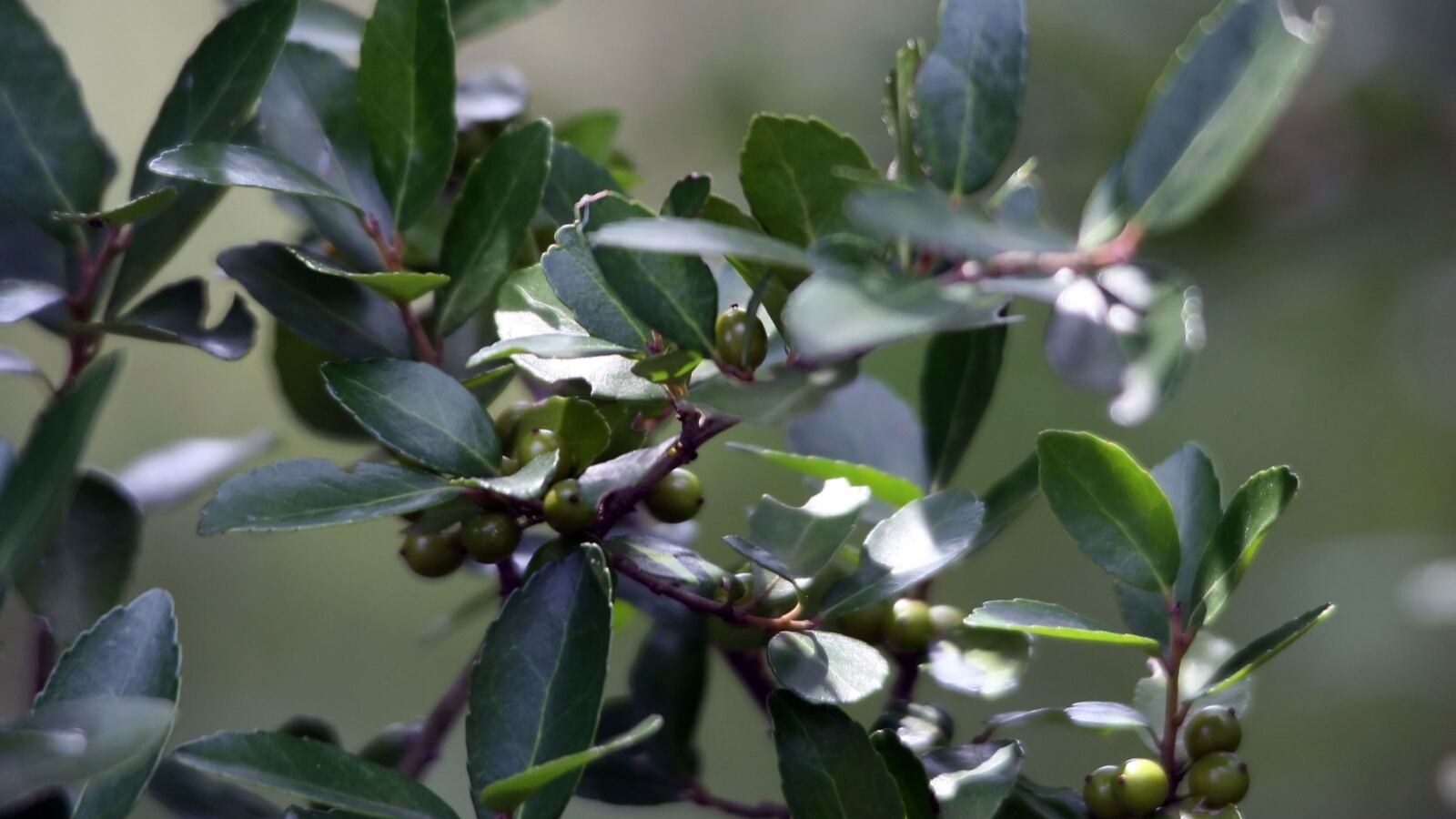
What they are
Two American members of the holly genus, Ilex, brewed like tea for the caffeine in their leaves — close relatives of the South American yerba maté, and, like it, unexpected members of the same genus as the spiny Christmas holly:
Yaupon (Ilex vomitoria) — an evergreen holly of the southeastern United States, and the only caffeine-containing plant native to North America;
Guayusa (Ilex guayusa) — a tree of the upper Amazon, brewed as a stimulant drink by the Indigenous peoples of Ecuador and Peru.
Yaupon and the black drink
Yaupon has one of the more remarkable histories of any American plant. Its caffeine-rich leaves were the basis of the "black drink" — a dark, strong, caffeinated brew central to the ceremonial and social life of the Native American peoples of the Southeast, drunk in rituals of purification, council, and hospitality, sometimes in great quantity from special vessels.
That ceremonial use gave the plant its unfortunate and misleading scientific name. Because the black drink was sometimes taken as part of a ritual purging (a deliberate vomiting ceremony), early botanists assumed the plant itself caused vomiting and named it Ilex vomitoria — but this is a libel: yaupon does not make you sick. The vomiting in the ceremonies came from the huge quantities consumed, from other plants added, or from the ritual itself, not from any emetic property of yaupon, which is a perfectly pleasant, mild, caffeinated tea. The off-putting name, however, stuck, and it is often blamed for holding back what would otherwise be a natural North American "tea." In recent years yaupon has enjoyed a revival as a locally-grown, caffeine-containing "American tea," marketed as a native, sustainable alternative to imported tea and coffee. See historical ecology.
Guayusa and the dawn ritual
Guayusa is the Amazonian counterpart — a holly whose leaves, dried and brewed, make a smooth, caffeinated drink long central to the culture of the Kichwa and other peoples of the upper Amazon.
Traditionally, families rise before dawn to drink guayusa together around the fire, sharing dreams and stories and preparing for the day — the "dawn ritual" that makes guayusa a social and even spiritual drink as much as a stimulant, in the way maté and the kola nut are woven into their societies. Guayusa is caffeine-rich and also contains theobromine (the compound of cacao), giving it a reputation for a smooth, sustained, jitter-free lift, and it too has been taken up as an international "clean energy" tea and energy-drink ingredient, grown in Amazonian agroforestry systems.
Growing them
Yaupon is a tough, adaptable evergreen shrub or small tree, hardy well into the temperate zone, tolerant of drought, salt, poor soil, heat, and coastal conditions, and widely grown as an ornamental and hedge (including dwarf and weeping forms) quite apart from the drink — so many people grow a caffeine plant without knowing it. It is dioecious (only females bear the bright red berries, which feed birds), and it is easily grown from cuttings and seed. See hedgerow care and drought-tolerant species.
Guayusa is a tropical tree of the humid Amazon, frost-tender, wanting warmth, moisture, and shade when young, and it is grown in shaded agroforestry plots among other crops, harvested for its leaves; it rarely flowers or sets seed in cultivation and is grown mostly from cuttings. Both are simply hollies grown for their leaves, and both are enjoying new life as home-grown American caffeine crops. See propagation and pollinator habitat.
See also
- Yerba Maté the South American caffeine holly they join
- Holly the genus Ilex, better known for its spiny Christmas species
- Cacao and Coffee and Tea the other great caffeine plants
- Kola Nut another stimulant plant bound to social ritual
- Historical Ecology the black drink of the southeastern tribes
- Drought-Tolerant Species tough, adaptable yaupon