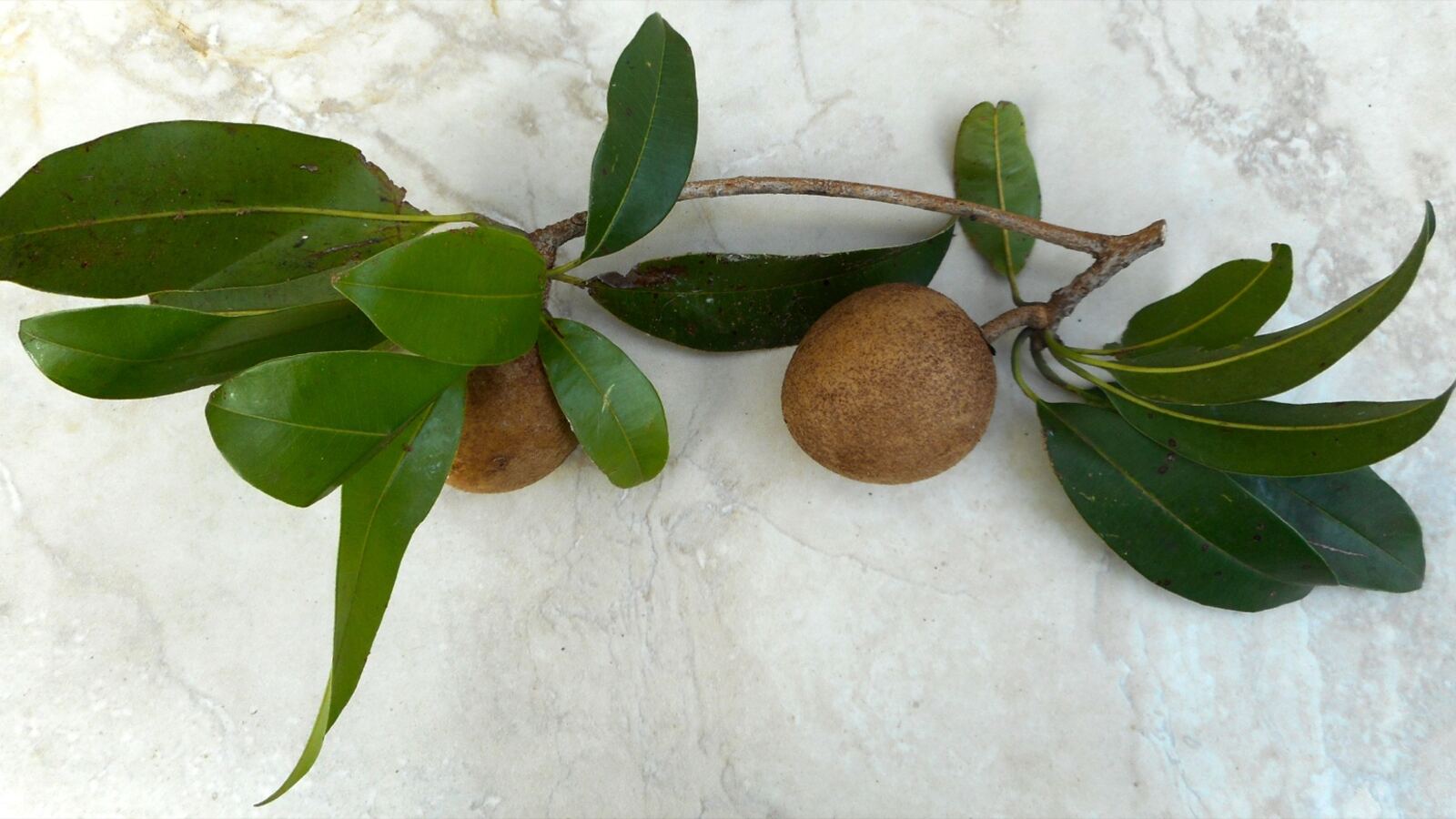
A name shared by unrelated fruits
"Sapote" (from a Nahuatl word for a soft, sweet fruit) is attached to a whole scatter of tropical American fruits that are not closely related to one another — a name of convenience rather than botany. The main ones are:
- Sapodilla (Manilkara zapota) — brown, grainy, sweet, and the source of chicle;
- Mamey sapote (Pouteria sapota) — large, with salmon-pink flesh;
- Black sapote (Diospyros nigra) — actually a persimmon relative, the "chocolate pudding fruit";
- White sapote (Casimiroa edulis) — a citrus relative;
- Star apple or caimito (Chrysophyllum cainito).
They share soft, sweet flesh, tropical origins, and the sapote name, and little else — a good reminder that common names group fruits by how they eat, not by how they are related.
The gum tree: sapodilla and chicle
The sapodilla has a claim to fame beyond its fruit: it is the original source of chewing gum.
The tree's bark, when cut, bleeds a sticky white latex called chicle, and this chicle — tapped from wild sapodilla trees in the forests of Mexico and Central America, in much the same way rubber is tapped — was the traditional chewing gum of the Maya and Aztec, and became the basis of the entire modern chewing-gum industry from the nineteenth century. "Chicle" survives in the Spanish word for gum and in the brand name Chiclets. For decades gum was made from wild-tapped chicle, supporting whole forest economies of chicleros; most gum is now synthetic, but chicle is still tapped, and gum made from real chicle is sold as a natural alternative. The fruit itself is excellent — sweet, malty, with a soft brown granular flesh — but the tree's place in history rests on its latex.
The chocolate-pudding fruit
The black sapote is the other star of the group, and its trick is in the eating. Ripe, it is unremarkable to look at — a green tomato-like fruit that turns to soft dark-brown mush — but the flesh is smooth, sweet, and genuinely tastes and looks like chocolate pudding, so it is eaten as a natural dessert, blended into mousses and used as a low-fat chocolate substitute. Botanically it is a Diospyros, a true persimmon and ebony relative, which is why its wood is dark and its fruit astringent until fully ripe, exactly like its persimmon cousins.
The mamey sapote, with rich pink flesh tasting of sweet potato and almond, is a beloved fruit of the Caribbean and Central America (a classic ice-cream and milkshake flavour), and the white sapote, a hardier citrus-family tree, bears sweet custardy fruit and grows in warm-temperate as well as tropical climates.
Growing them
Most sapotes are tropical to warm-subtropical and frost-tender, though the white sapote is notably hardy (taking light frost and fruiting in subtropical and even mild-temperate gardens) and the sapodilla is very tough once established — drought-, wind-, and salt-tolerant, which makes it a good coastal tree.
Soil and site. Well-drained soil and full sun; the sapodilla in particular tolerates poor, sandy, and coastal ground and drought, part of why it was such a reliable forest and dooryard tree. Most are slow to moderate, long-lived, and evergreen, making handsome shade trees as well as fruit trees.
Propagation. Seedlings are slow and variable, so named varieties are grafted. See grafting and propagation. Generally trouble-free, with few serious pests. They are excellent, low-maintenance components of a tropical or subtropical food forest, giving shade, fruit, and — in the sapodilla's case — a piece of the history of chewing gum.
See also
- Pawpaw and Persimmon the Diospyros relatives of the black sapote
- Citrus the family of the white sapote
- Rubber another tropical tree tapped for its latex
- Tropical Fruit Trees sapotes in the wider orchard
- Grafting propagating named sapote varieties
- Ebony and Blackwood
- Mahua
- Miracle Fruit
- Gutta-Percha
- Canistel and Abiu