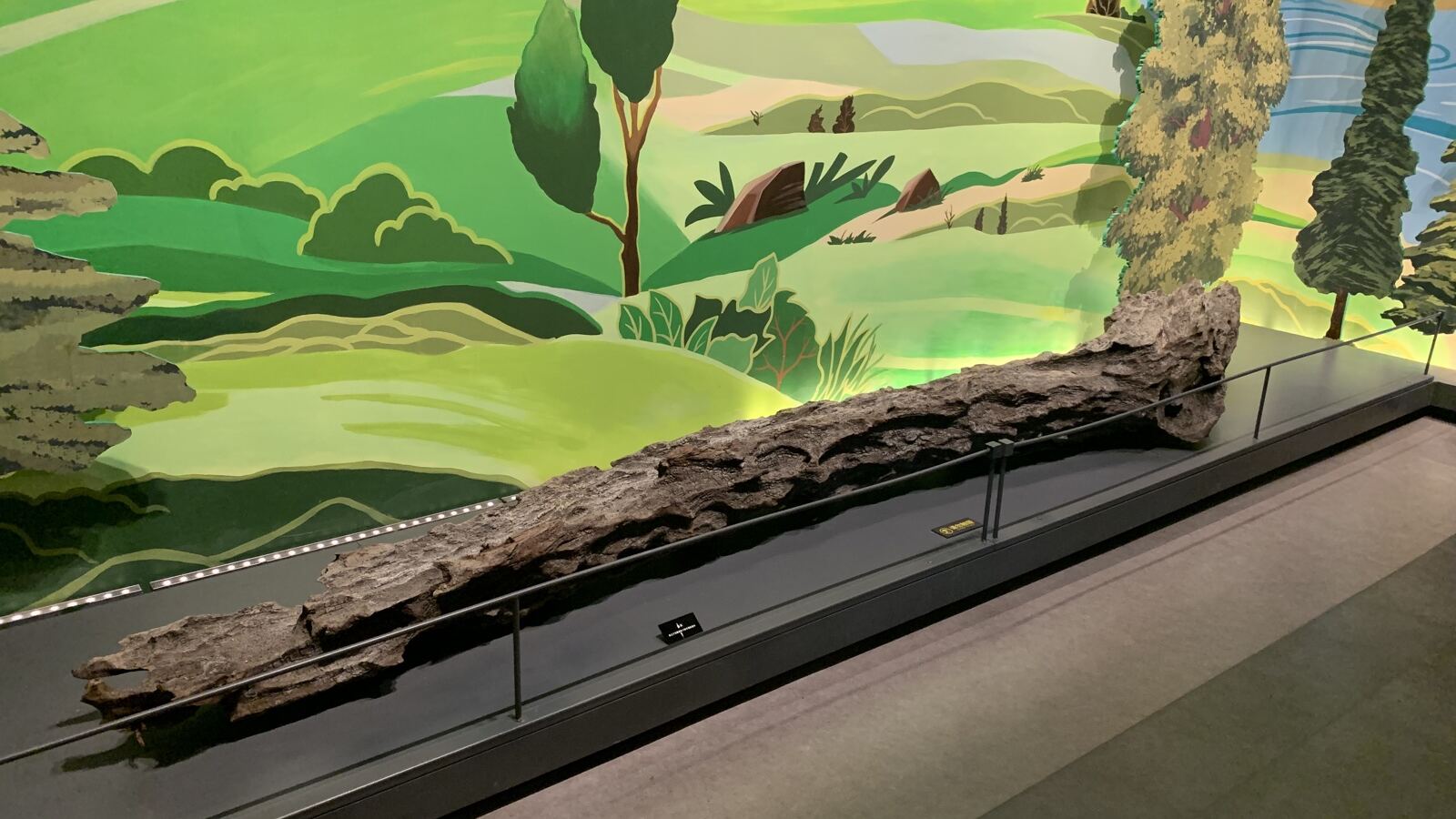
What they are
Two unrelated groups of tropical trees that produce the famous jet-black timbers of the woodworking and music world:
Ebony, various Diospyros species (Gaboon ebony of West Africa, Ceylon ebony of Sri Lanka, and Macassar and others) — and, tellingly, Diospyros is the persimmon genus, so the black-fruited sapote and the orange persimmon are ebony's close kin;
African blackwood (Dalbergia melanoxylon, mpingo), a small, gnarled, slow-growing legume of the dry African savanna — and a true rosewood, in the genus Dalbergia.
Both give timber that is famously dense, heavy, fine, and near-black, and both are among the most valuable woods on Earth by weight.
Wood dense enough to sink
Ebony and blackwood share the qualities that make a wood precious: the heartwood is intensely black, extremely dense and hard, fine-grained, and heavy enough to sink in water — the same sink-in-water density as lignum vitae and box. It polishes to a lustrous, almost stone-like finish, wears superbly, and holds crisp detail.
Only the heartwood is black; the outer sapwood is pale and discarded, and in a slow-grown tree the black core is a small fraction of the trunk, which is a large part of why the wood is so scarce and costly. Historically ebony gave the black keys of pianos, the fingerboards and pegs of violins, guitars, and other stringed instruments, black chess pieces, cutlery handles, inlay and marquetry, and carvings — the word "ebony" is a synonym for black itself.
The wood of the woodwinds
African blackwood has a special, and now precarious, place: it is the wood of the woodwind.
Clarinets, oboes, cor anglais, piccolos, recorders, and the chanters of bagpipes are, overwhelmingly, made of African blackwood, because its extreme density, stability, and fine grain let it be bored, threaded, and keyed with precision and hold that precision through the constant wetting and drying of playing without cracking. There is no fully satisfactory substitute for the professional instrument, so the world's orchestras and pipers depend on a slow-growing savanna tree from a narrow band of eastern Africa — mpingo, the national tree of Tanzania. This makes blackwood, ounce for ounce, one of the most valuable timbers in the world, and it has made the sustainability of mpingo a direct concern of the music industry, which has funded conservation and community-forestry projects to keep the supply — and the trees — alive. See restoration economics.
Cut toward scarcity
The story of both woods is the familiar one of a precious, slow-grown tree over-exploited toward crisis.
Because the black heartwood is so valuable and forms so slowly, ebony and blackwood have been selectively logged for centuries, the biggest and best trees cut first, and several ebony species are now commercially exhausted or endangered, with much of the trade illegal or of dubious origin. Both Diospyros and Dalbergia are now heavily represented on CITES, the endangered-species trade convention — indeed the entire genus Dalbergia was CITES-listed to stem the rosewood-and-blackwood trade — so legal trade requires certified, sustainable origin, exactly as for mahogany. Responsible makers now seek certified, plantation, or salvaged material, use the whole log rather than only the perfect heartwood, and support the community forestry that gives standing trees a value. See invasive species only as the mirror image — these are the opposite problem, trees too valuable and too slow to survive demand. See tree diseases and woodland management.
Growing them
Tropical and subtropical, frost-tender, and — crucially — very slow-growing, which is the heart of their conservation problem: a blackwood or ebony takes many decades to build a usable core of heartwood, so they cannot be quickly farmed to meet demand.
Ebony species want humid tropical forest conditions; African blackwood is a tough, drought-hardy, nitrogen-fixing tree of dry savanna and thornbush, slow and gnarled. Both are grown from seed in restoration and community plantings, and blackwood's toughness makes it a candidate for dryland agroforestry as well as a timber crop. The single most useful thing a grower or buyer can do is treat these woods as the rare, slow treasures they are. See reforestation techniques and propagation.
See also
- Rosewood and Sandalwood blackwood's Dalbergia kin and the other precious woods
- Pawpaw and Persimmon the Diospyros fruit relatives of ebony
- Lignum Vitae the other sink-in-water dense timber
- Mahogany the CITES-listed furniture wood with the same story
- Sapotes the black sapote, another dark-wooded Diospyros
- Restoration Economics giving slow, valuable trees a living value
- Padauk
- Brazilwood
- Shisham