What it is
Theobroma grandiflorum, cupuaçu — a small-to-medium tree of the Amazon rainforest, and a very close relative of the cacao tree: they share the genus Theobroma ("food of the gods"), the mallow family, and much of their character, so cupuaçu is, in effect, cacao's larger, fruitier cousin.
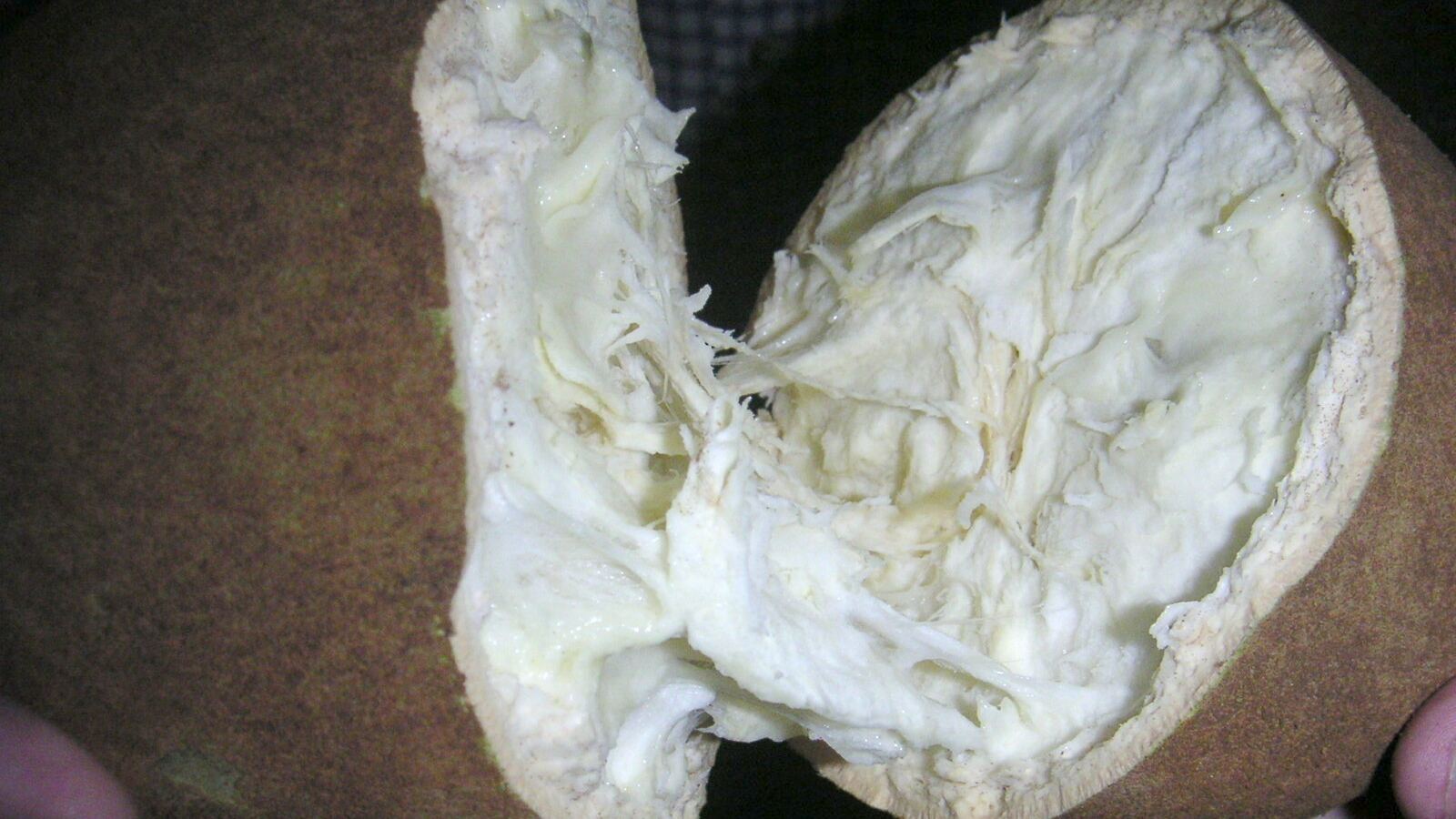
Like cacao, it bears its fruit in pods — large, oval, brown, furry pods, considerably bigger than a cacao pod — but where cacao is grown for the seeds (to make chocolate), cupuaçu is grown chiefly for the pulp that surrounds them.
The pulp and the flavour
Inside the pod, the seeds are embedded in a fragrant, creamy, white-to-yellowish pulp with an intense, distinctive aroma and flavour — variously described as a mix of chocolate, banana, pineapple, and pear, sharp and rich at once. This pulp is a beloved everyday fruit across the Amazon, especially in Brazil, where it is scooped fresh from the pod and, above all, made into juices, ice creams, sorbets, mousses, jams, sweets, and desserts — cupuaçu is one of the great regional fruit flavours of northern Brazil, on a par with açaí.
The pulp is highly perishable and strongly flavoured, so — like so many tropical fruits — cupuaçu travels mainly as frozen pulp rather than fresh fruit, and it has been marketed internationally (with the usual "superfood" claims) as an exotic flavour and cosmetic ingredient (cupuaçu butter, pressed from the seeds, is used in skin creams like cocoa butter). See restoration economics.
Chocolate without cocoa
Because cupuaçu is so close to cacao, its seeds can be processed much like cocoa beans — fermented, dried, roasted, and ground — to make a chocolate-like product. This is sold as "cupulate," a chocolate made from cupuaçu seeds rather than cacao, with its own fruity, slightly different flavour.
Cupulate has attracted interest both as a novel product and as a potential alternative or supplement to cacao, particularly because cupuaçu, growing in the same Amazon forests, offers Amazonian farmers another pod crop and another use for a tree that fits naturally into the same agroforestry and shade systems as cacao. Growing cupuaçu (and cacao) under the forest canopy is one of the ways the standing Amazon forest can be made to pay, in the spirit of açaí and the brazil nut. See cacao and coffee.
Growing it
Tropical, frost-tender, and a tree of the hot, humid, lowland Amazon, cupuaçu wants heat, high rainfall, humidity, deep rich moist soil, and — like cacao — shade, especially when young, so it is grown as an understorey tree beneath taller shade trees in agroforestry, not in the open. It is intolerant of drought and cold.
It is a small, spreading tree, grown from seed (sown fresh) and by grafting for superior types, and it fruits within a few years, its pods borne on the branches. As a productive, delicious, shade-grown Amazon fruit-and-butter tree, and a cacao relative that makes its own chocolate, cupuaçu is one of the most appealing of the underused tropical crop trees and a natural component of a tropical food forest. See propagation and grafting.
See also
- Cacao and Coffee cupuaçu's close relative, the chocolate tree
- Açaí the other great Amazon fruit, and the shade-grown-forest economy
- Brazil Nut another Amazon crop that rewards keeping the forest
- Durian and Mangosteen and Tropical Fruit Trees more of the tropical orchard
- Food Forest Design cupuaçu as a shade-grown fruit tree
- Restoration Economics a forest fruit turned regional and global product