What it is
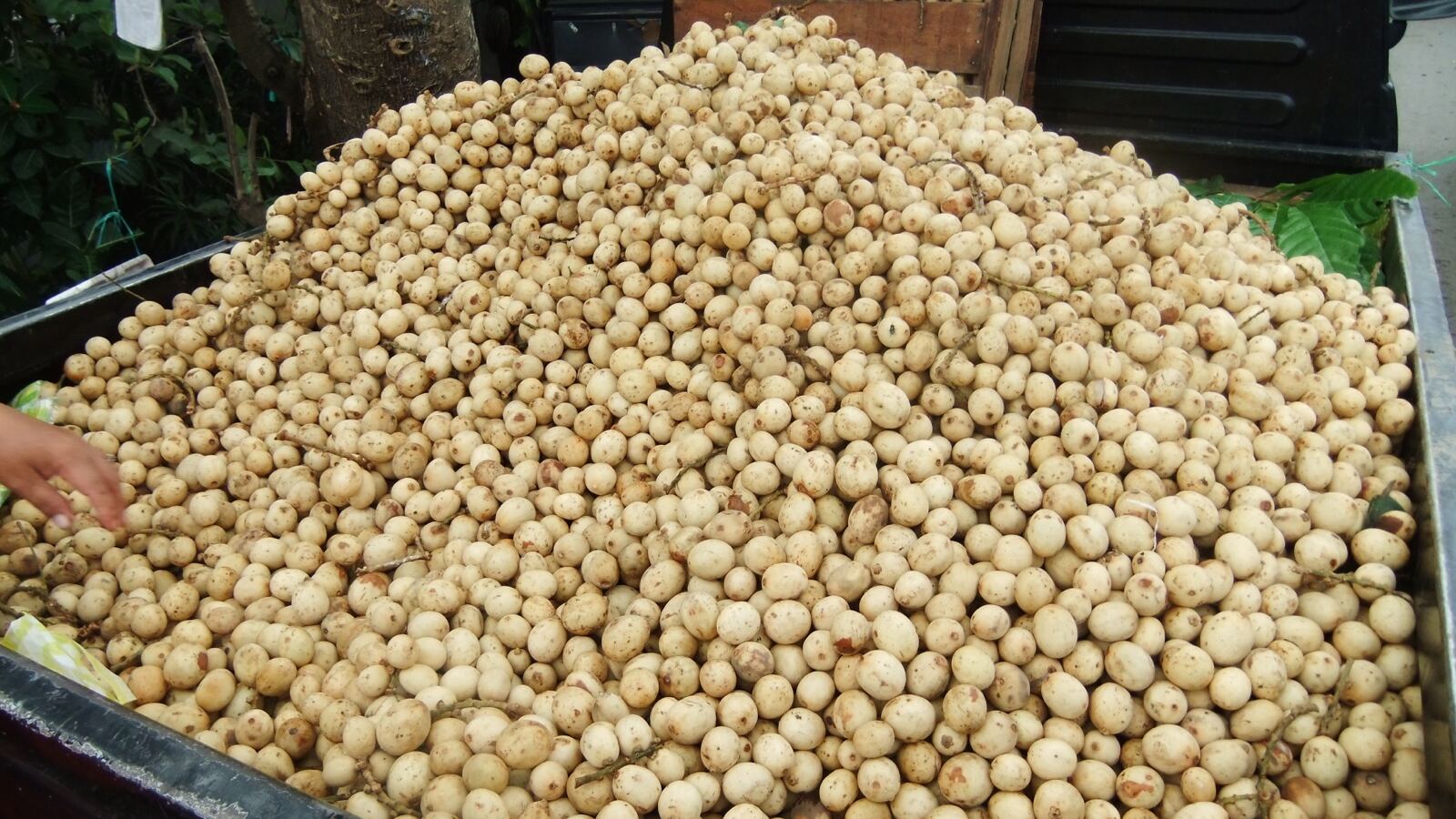
Lansium parasiticum (also L. domesticum), the langsat, duku, or lanzones — a medium-sized evergreen tree of Southeast Asia, grown throughout the region for its clusters of small, round, tan-to-straw-coloured fruit.
The tree bears its fruit in dense hanging bunches directly on the trunk and branches, and the fruit is eaten by peeling the thin leathery skin to reveal translucent, whitish, juicy segments — five of them, like a tiny grapefruit — that are sweet, sub-acid, and refreshing, with a flavour between grape and grapefruit. The duku and langsat are two forms of the same species: duku thicker-skinned, rounder, sweeter, with little of the milky latex; langsat thinner-skinned, more acid, and exuding a sticky latex when peeled.
Surprisingly, it belongs to the mahogany family, Meliaceae — a relative of the true mahogany, neem, and Spanish cedar — a family better known for timber and bitter medicinal chemistry than for sweet fruit, which makes langsat a pleasant exception (though the seeds and skin are bitter, carrying the family's chemistry, and are not eaten).
A beloved regional fruit
Langsat and duku are among the most popular seasonal fruits of Malaysia, Indonesia, Thailand, and the Philippines, sold by the bunch in every market when in season and eaten fresh by the handful — a refreshing, thirst-quenching treat in the tropical heat, with a devoted local following. They are eaten fresh, and also bottled, candied, and made into drinks. The Philippine town of Camiguin and the lanzones festival celebrate the fruit; it is very much a fruit of local love rather than global trade, being (as ever) too perishable and too little-known to travel far. The bitter skin, when dried and burned, is even used as a mosquito repellent incense, and the bitter compounds of the tree have folk-medicinal uses in keeping with its Meliaceae relatives. See tropical fruit trees.
Growing it
Tropical, frost-tender, and a tree of the hot, humid, lowland tropics, langsat wants heat, high rainfall, humidity, deep rich moist well-drained soil, and — like the cupuaçu and cacao — shade when young, being naturally an understorey tree; it is intolerant of drought, cold, and full exposure when small, so it is grown among other trees in shaded agroforestry.
It is slow-growing, long-lived, and grown from seed (which is recalcitrant and must be sown fresh) and by grafting and marcotting (air-layering) for superior fruiting types and quicker bearing. It fruits in dense bunches from the trunk and branches (cauliflory), cropping heavily in season. As a delicious, shade-tolerant, understorey fruit tree, langsat is a natural component of a Southeast Asian food forest. See propagation and grafting.
See also
- Mahogany, Neem, and Spanish Cedar its mahogany-family relatives
- Cupuaçu and Cacao and Coffee other shade-grown understorey fruit trees
- Tropical Fruit Trees langsat in the wider orchard
- Santol another Meliaceae fruit of the region
- Jaboticaba another tree that fruits on its trunk
- Food Forest Design langsat as a shade-tolerant fruit tree