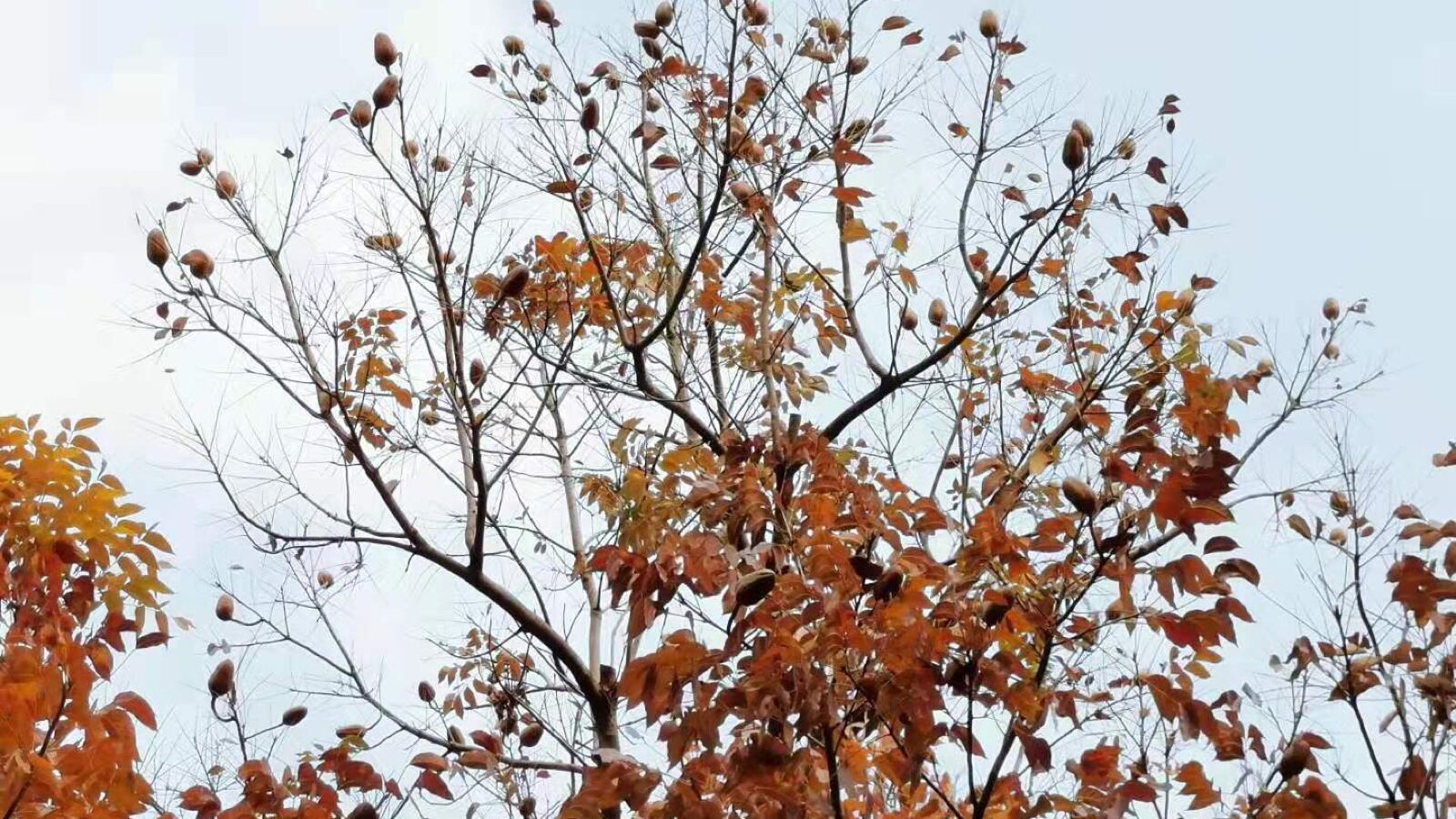
What it is
Swietenia, true mahogany — big-leaf mahogany (S. macrophylla), Honduran and Cuban mahogany — large trees of the tropical forests of Central and South America and the Caribbean, and the source of the most prized furniture timber in the world.
Mahogany belongs to the family Meliaceae, which also contains the neem and the chinaberry — a relationship that matters, because it is Meliaceae chemistry that both defends the tree and, through a shared pest, frustrates every attempt to farm it.
The wood that defined furniture
Mahogany's timber is deep reddish-brown, straight- or interlocked-grained, dimensionally stable, easy to work, and takes a superb polish — and it was the defining wood of fine cabinet-making from the eighteenth century onward.
The great English furniture of the Georgian era — Chippendale, Sheraton, Hepplewhite — was mahogany, and it remained the premier wood for quality furniture, panelling, boat-building, and musical instruments (it is a classic guitar wood) for two centuries. Its combination of beauty, stability, and workability has never really been bettered for cabinet work, which is exactly why it was cut so relentlessly. This is the fine-furniture counterpart to teak's dominance of outdoor and marine timber.
Logged toward scarcity, listed on CITES
Two centuries of intense demand drove destructive selective logging across the American tropics. Because mahogany grows scattered through the forest rather than in stands, loggers cut roads deep into intact rainforest to reach individual valuable trees, so mahogany extraction has been a leading edge of tropical deforestation — the damage from access far exceeding the single tree removed.
The Caribbean and Central American species were logged toward commercial extinction, and big-leaf mahogany was listed on CITES (the international endangered-species trade convention) in 2003, so legal trade now requires permits certifying sustainable, legal origin. Much mahogany on the market has a troubled provenance, and buyers are urged to seek certified plantation-grown or salvaged timber. See invasive species for the reverse case — because, planted outside its range in places like Hawaii and parts of Asia, mahogany has itself become locally invasive.
The moth that prevents plantations
The obvious answer to over-logging would be to grow mahogany in plantations, as is done with teak. But mahogany has resisted plantation culture for one specific reason, and it is a fascinating piece of ecology.
The mahogany shoot borer (Hypsipyla grandella in the Americas, H. robusta in the Old World) is a small moth whose caterpillar bores into the growing tip of young mahogany trees. In the wild, where mahogany grows scattered among many other species, the borer finds only occasional trees and does limited damage. But in a plantation, where mahoganies stand close together in pure stands, the borer spreads unchecked, attacking the leading shoot of tree after tree. Each attack kills the leader; the tree responds by throwing out multiple side shoots, and the result is a bushy, forked, twisted tree with no straight trunk — worthless for timber.
This single insect is the reason there are almost no successful pure mahogany plantations in the Americas, and why the timber still comes largely from wild forest. Research into growing mahogany under partial shade, in mixed plantings, or interspersed among other species — mimicking the scattered wild condition that keeps the borer in check — is the main hope for farming it sustainably, a clear demonstration of why monocultures invite pest catastrophe and mixed plantings resist it. The Old-World relatives of mahogany suffer the same borer, which is why African and Asian plantations struggle too.
Growing it
Tropical, frost-free, wanting deep, well-drained, fertile soil and reasonable moisture; big-leaf mahogany is fairly fast-growing and moderately drought-tolerant once established.
Grown from seed (the winged seeds come from woody upright capsules), it is planted for reforestation, enrichment planting, and amenity, and does best — for the borer reason above — mixed with other species rather than in pure stands. As a large, long-lived, high-value native tree it is a keystone of American tropical forest and a priority for its conservation and restoration. See woodland management and restoration economics.
See also
- Teak the other great tropical timber, and one that does plantation well
- Neem the useful relative in the same family
- Reforestation Techniques the deforestation mahogany logging drives
- Structural Diversity why mixed planting foils the shoot borer
- Restoration Economics the value that drives the pressure
- Woodland Management conserving wild mahogany
- Ebony and Blackwood
- Chinaberry
- Ipê and Pau d'Arco
- Spanish Cedar
- Langsat and Duku
- Toon