Two timbers of the Guianas
The forests of Guyana, Suriname, and neighbouring South America produce two of the most remarkable specialty timbers in the world — one prized for extreme durability, one for an almost unbelievable colour.
Greenheart (Chlorocardium rodiei) — a heavy, hard, greenish-brown timber, and, surprisingly, a member of the laurel family, Lauraceae, making it a relative of the avocado, bay, cinnamon, and camphor.
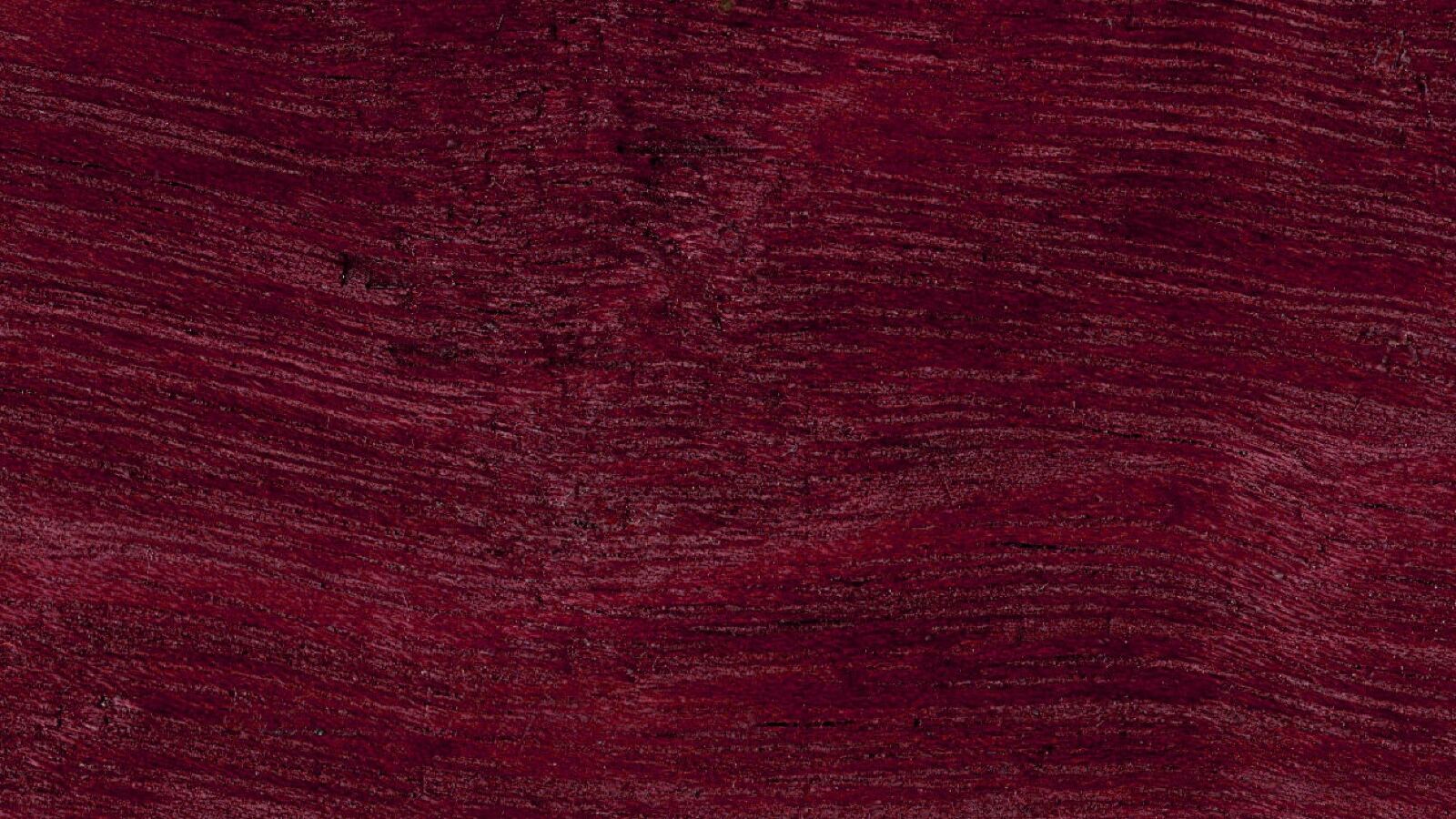
Purpleheart or amaranth (Peltogyne species) — a legume, whose freshly-cut brown heartwood turns, on exposure to light and air, a vivid royal purple.
Greenheart: the wood of the sea
Greenheart's reputation rests on an almost unmatched combination of strength, hardness, and durability, above all in water.
It is exceptionally resistant to rot, and — crucially — to marine borers (the shipworms and gribbles that destroy ordinary timber in the sea), which made it the premier timber for marine and hydraulic engineering: dock and harbour piling, lock gates, piers, jetties, breakwaters, and sea defences across the world were built of greenheart, which lasted for generations in salt water where other woods rotted in years. It also made ship keels, and — famously — the finest split-cane fishing rods were built with greenheart, and it was used for lock gates on canals and in the great civil-engineering works of the nineteenth and twentieth centuries. Its extreme durability puts it alongside teak and ipê among the great outdoor and marine woods, and its density with lignum vitae. (It is strong and stiff enough that it was even used for archery bows; and its dust and splinters are notably irritant, a hazard those who work it know well.)
Purpleheart: the wood that turns purple
Purpleheart's fame is pure spectacle: it is one of the very few woods with a genuinely vivid colour. Freshly sawn it is a dull greyish-brown, but on exposure to light and air it oxidises to a rich, deep, royal purple over hours to days — a colour no other common timber comes close to.
That extraordinary colour, combined with great hardness, density, strength, and durability, makes purpleheart a prized wood for fine furniture, flooring, inlay and marquetry, turned objects, musical instruments, knife and tool handles, and decorative woodwork — anywhere the purple can be shown off. It is a favourite of craftspeople for accent and contrast, and, being very hard and heavy, it also serves in heavy construction and, like greenheart, in marine and outdoor work. (Woodworkers learn to manage the colour: too much heat in cutting or finishing can turn it brown, and it needs the right handling to keep the purple bright.)
The conservation question
Both trees grow scattered through intact tropical rainforest, are slow-growing, and — as high-value specialty timbers — have been selectively logged, so both raise the familiar concerns about sustainable and legal sourcing that attend all the great tropical hardwoods, from mahogany to rosewood. Greenheart forests in Guyana are managed for the timber, and responsible sourcing (certified, legal origin) is the watchword for both woods. Their value is part of the economic case for keeping the forest standing and managing it well rather than clearing it. See restoration economics and reforestation techniques.
Growing them
Both are trees of the hot, wet, lowland tropical rainforest, frost-tender, slow-growing, and large — not garden or plantation trees in any ordinary sense, but forest giants grown (where grown at all) in enrichment planting, restoration, and managed natural forest.
They are propagated from seed, and their slow growth and rainforest requirements make them, like the dipterocarps and brazil nut, trees best conserved and managed within the living forest rather than farmed on cleared ground. See propagation and woodland management.
See also
- Teak and Ipê and Pau d'Arco the other great durable and marine timbers
- Lignum Vitae another extreme, dense specialty wood
- Avocado and Bay and Laurels greenheart's laurel-family relatives
- Mahogany and Rosewood and Sandalwood the sustainable-sourcing question
- Restoration Economics valuable timber as a reason to keep forest
- Dipterocarps other slow, forest-bound tropical timbers