What it is
Paubrasilia echinata (long Caesalpinia echinata), brazilwood or pernambuco — a leguminous tree of the Atlantic coastal forest of Brazil, and one of the most historically and culturally loaded trees in the world.
It has given its name to a whole country, made a fortune in red dye, and — most remarkably — become indispensable to classical music, all while being logged from vast abundance to the edge of extinction. Few trees carry so much history in their wood.
The tree that named Brazil
When Portuguese navigators reached the coast of South America around 1500, they found forests full of a tree whose heartwood yielded a valuable red dye — and they called it pau-brasil, "ember-wood," for the glowing red colour (from the compound brazilin). The dye was so commercially important, and the tree so abundant along the coast, that the land itself came to be named for it: Brazil.
For the first century of European contact, brazilwood was the colony's main export — shipped to Europe by the boatload to dye the luxury textiles of the age a rich red and purple — and the trade drove the earliest exploitation of the Atlantic forest. So a dye tree is the reason a nation of over 200 million people is called what it is called, one of the most consequential tree-namings in history. See historical ecology. (The red dye was later largely displaced by logwood and then by synthetics.)
The wood of the bow
Brazilwood's second life is even more surprising. Its dense, heavy, resonant, and beautifully elastic wood — the finest of it known in the trade as pernambuco — turned out to be the ideal material for one very specific and exacting object: the bow of the violin, viola, cello, and double bass.
Since the late eighteenth century, when the great bow-maker François Tourte established the modern bow, pernambuco has been the wood for fine bows — no other material quite matches its combination of strength, springiness, weight, and responsiveness, and the world's professional string players have depended on it for over two centuries. A top pernambuco bow can be worth as much as the instrument it plays. This makes classical music, quite literally, dependent on a single endangered Brazilian tree, in the way the world's woodwinds depend on African blackwood.
Logged to the edge
The combined weight of the dye trade, the clearance of the Atlantic forest (one of the most devastated forests on Earth, reduced to a small fraction of its original extent), and the demand for bow wood has pushed brazilwood to the brink. It is now an endangered species, listed on CITES, its trade in logs restricted, and the bow-making world — anxious about the future of its essential material — has become deeply involved in efforts to conserve and replant it, funding plantations and research into sustainable pernambuco and into alternative bow materials (carbon fibre, other woods). It is a stark case of a tree endangered by its own irreplaceable value, and of an entire art form confronting the loss of the tree it rests on. See restoration economics, reforestation techniques, and woodland management.
Growing it
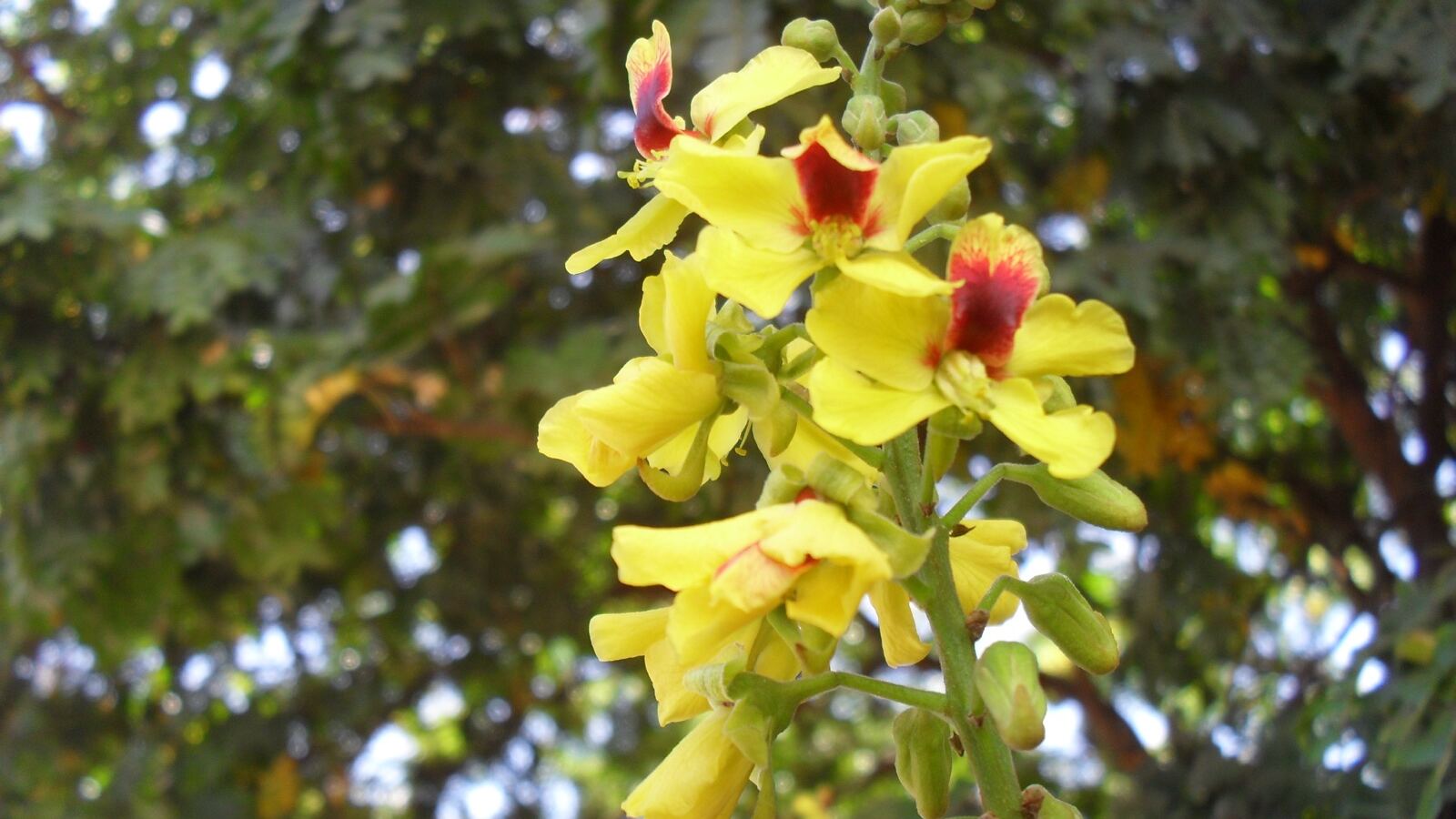
Tropical to subtropical and frost-tender, brazilwood is a slow-growing tree of the humid Atlantic forest, wanting warmth, good moisture, and well-drained soil; as a legume it fixes nitrogen. It bears fragrant yellow flowers and spiny pods, and it is grown as an ornamental as well as, increasingly, in conservation and pernambuco plantations.
Its extreme slowness (the valuable dense heartwood takes many decades) is the heart of its conservation problem — it cannot be quickly farmed to meet demand — so planting, protecting, and waiting are the work, alongside supporting certified sources and alternatives for bows. To grow a brazilwood is to plant a piece of a country's name and a voice of its music. See propagation.
See also
- Logwood the other great American dye tree
- Ebony and Blackwood the wood the world's woodwinds depend on, as bows depend on pernambuco
- Rosewood and Sandalwood the CITES protection brazilwood shares
- Tamarind and Carob its legume-family relatives
- Historical Ecology the dye tree that named Brazil
- Reforestation Techniques replanting pernambuco for the future of the bow
- Genipap