What it is
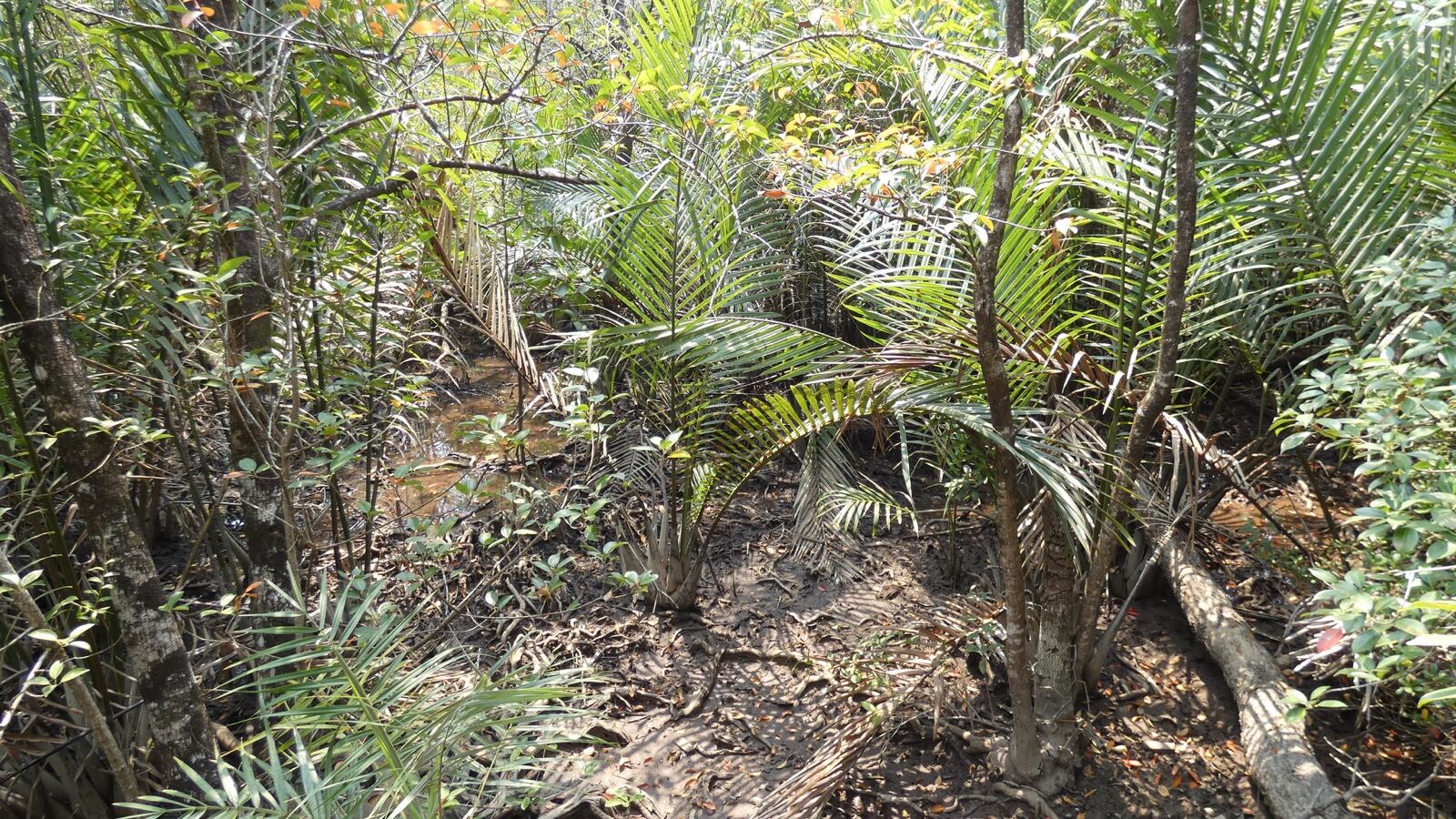
Nypa fruticans, the nipa or mangrove palm — a unique palm of the tidal mangrove swamps and brackish river mouths of South and Southeast Asia and the western Pacific, and the only palm adapted to live as part of the mangrove community.
It is unlike any other palm in form. It has no upright trunk: its stout, branching stem grows horizontally, buried in the tidal mud, so that all you see above the surface is a rosette of tall, feathery fronds rising directly out of the mud and, among them, a round, spiky ball of fruit on a stalk. The nipa is, in effect, a trunkless palm — the most un-palm-like of palms.
A living fossil of the tides
The nipa is one of the most ancient of all flowering plants still living. Fossil nipa pollen and fruit are among the oldest known for any palm, dating back around 70 million years or more to the age of the dinosaurs, and fossil nipa has been found far from the tropics — including in what is now England — recording ancient warm coastlines. So the nipa is a living fossil, a survivor from the dawn of the palms, still doing exactly what it did when Tyrannosaurus walked: rooting in tropical tidal mud. Its round fruit-balls float, and the individual seeds are dispersed by the tides and currents, which is how this single, ancient species spread across the whole Indo-Pacific coast. See historical ecology.
Thatch, sugar, and fuel
For the people of the tidal coasts, the nipa is a tree of everyday necessity, and its uses are many:
- Thatch (attap). The long fronds are the classic roofing and walling thatch of coastal Southeast Asia — "attap" or "nipa" houses — woven into durable, waterproof shingles; the name of the Filipino "nipa hut" (bahay kubo) comes from this palm.
- Wrapping and weaving. The leaves are woven into mats, baskets, hats, and — split young — cigarette wrappers, and used to wrap food.
- Sugar and drink. Like the palmyra and other palms, the nipa's flower stalks are tapped for a sweet sap, drunk fresh, fermented into palm wine and vinegar (the famous sukang paombong), distilled into arrack, and boiled down into palm sugar.
- Fruit. The immature seeds are a sweet, translucent, jelly-like treat (the "attap chee" of Southeast Asian desserts and drinks).
Because the nipa's tapped sap is so sugar-rich and the palm so productive in its tidal home, it has attracted serious interest as one of the most promising sources of biofuel (bioethanol) — its potential sugar-and-ethanol yield per hectare is among the highest of any plant, and it does it on brackish tidal land useless for food crops, so it could, in principle, produce fuel without competing with farmland (the flaw that sank jatropha). See restoration economics.
In the mangrove
Ecologically, the nipa is a valued part of the mangrove ecosystem — stabilising the muddy banks of tidal rivers and estuaries with its buried, spreading stems, providing habitat, and buffering the coast — and nipa stands are protected and restored as part of mangrove and wetland restoration, which defends coasts against storms and erosion. See coastal dunes for the wider theme of coastal protection.
Growing it
Tropical, frost-tender, and strictly a plant of brackish tidal mud — the mangrove zone of river mouths, estuaries, and tidal creeks — the nipa wants heat, and the rise and fall of brackish tidewater over soft mud; it will not grow away from tidal, brackish, muddy conditions.
It is grown (and restored) from its large floating seeds, planted in tidal mud, and managed by cutting fronds for thatch and tapping the flower stalks for sap, both of which a healthy stand renews. As an ancient, trunkless, tide-dwelling palm that thatches houses, sweetens drinks, and might one day help fuel cars — all from land no other crop can use — the nipa is one of the most remarkable and useful of palms. See palms and propagation.
See also
- Palms the family the nipa belongs to
- Mangroves the tidal-forest community the nipa is part of
- Doum and Palmyra other sugar-tapped, thatch-yielding palms
- Wetland Restoration restoring nipa and mangrove
- Jatropha the biofuel tree whose "fuel from useless land" promise nipa may better keep
- Historical Ecology the nipa as a 70-million-year-old living fossil