What it is
The rattans are climbing palms — mostly of the genus Calamus and its relatives — of the rainforests of Southeast Asia, Africa, and Australasia, and the source of the flexible "cane" of cane-and-wicker furniture.
Unlike the tall, self-supporting trunks of the coconut or date palm, a rattan is a vine: it produces a long, slender, immensely tough and flexible stem that hauls itself up through the forest canopy, clinging to other trees, and can reach extraordinary lengths — the longest rattans are among the longest stems of any plant in the world, running for a hundred metres or more through the treetops.
Climbing by hooks
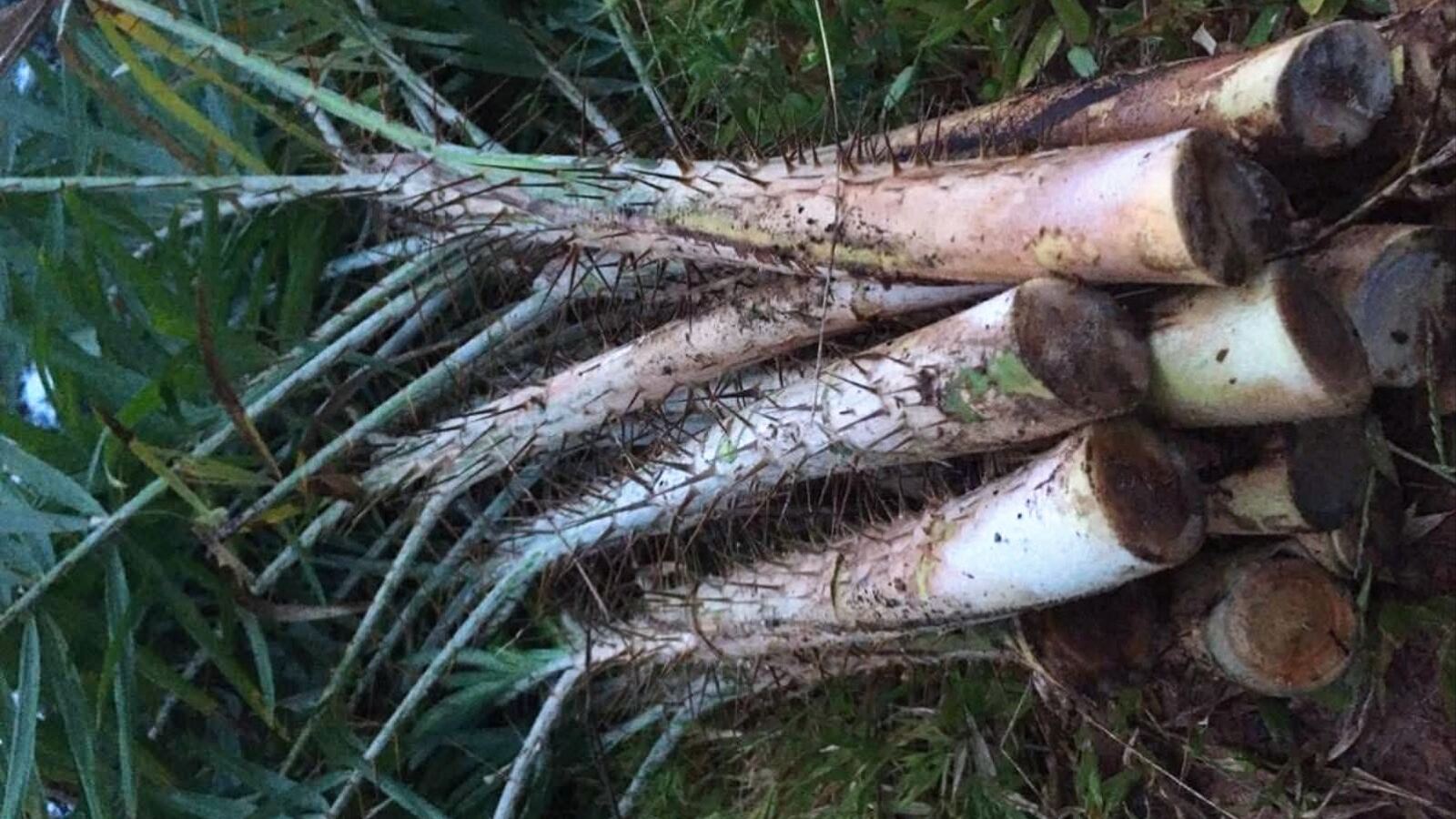
Rattans climb by a fierce and ingenious method. Many produce long, whip-like extensions — modified leaf tips or flower stalks — armed with backward-pointing hooks and spines, which the growing stem flings out to catch on the branches of neighbouring trees, then uses to pull itself upward as it grows. The whole plant is typically armed with vicious spines that deter animals and make harvesting a painful, skilled job. It is a palm that behaves like a grappling-hook, and pushing through rattan-infested forest is a memorably unpleasant experience.
The cane that furnished the world
Rattan's value lies in the stem, which — once the spiny outer sheath is stripped — is one of nature's finest natural materials for furniture and weaving: strong, light, flexible, tough, and easily bent with steam into curves that hold their shape.
This "cane" is the basis of the entire global rattan and wicker furniture industry — chairs, sofas, tables, baskets, screens, and the woven "cane" seats and backs of furniture worldwide — as well as walking sticks, sports goods, cordage, and (split into fine strips) the binding and weaving material of countless crafts. Rattan is the most economically important non-timber forest product of the tropics, a multi-billion-dollar trade supporting millions of rural people who harvest and process wild and cultivated cane, above all in Indonesia, which dominates supply. Because it is harvested as a stem from a plant that can regrow, and because it depends on a standing forest to climb through, rattan is often held up as a model of a sustainable, forest-friendly forest product — a reason to keep the forest standing, in the spirit of the brazil nut — though over-harvesting of wild rattan and the clearing of its host forests have made much of it scarce, driving a shift to rattan cultivation. See restoration economics and reforestation techniques.
Some rattans yield a bonus: a red resin, "dragon's blood," exuded on the fruit and used as a dye and varnish, sharing the name and use of the resin of the dragon tree.
Growing them
Tropical, frost-tender, and — being forest climbers — needing the warmth, humidity, shade, and support of the rainforest, rattans are grown in and alongside forest rather than in the open: they are planted in agroforestry and enrichment systems where they can climb existing trees, which ties their cultivation to keeping trees for them to grow on.
They are grown from seed and are cut for cane once the stems reach length and maturity; managed sustainably, a rattan can be harvested and allowed to regrow. As the source of the world's cane furniture and a genuinely forest-dependent crop, rattan is one of the most important — and most encouraging — of tropical forest products. See propagation.
See also
- Palms the family rattan belongs to, in its climbing form
- Coconut, Date Palm, and Oil Palm the great self-supporting palms
- Brazil Nut another forest product that rewards keeping the forest standing
- Dragon Tree the other source of "dragon's blood" resin
- Restoration Economics rattan as a sustainable forest product
- Bamboo the other great flexible, fast plant material of the tropics