What it is
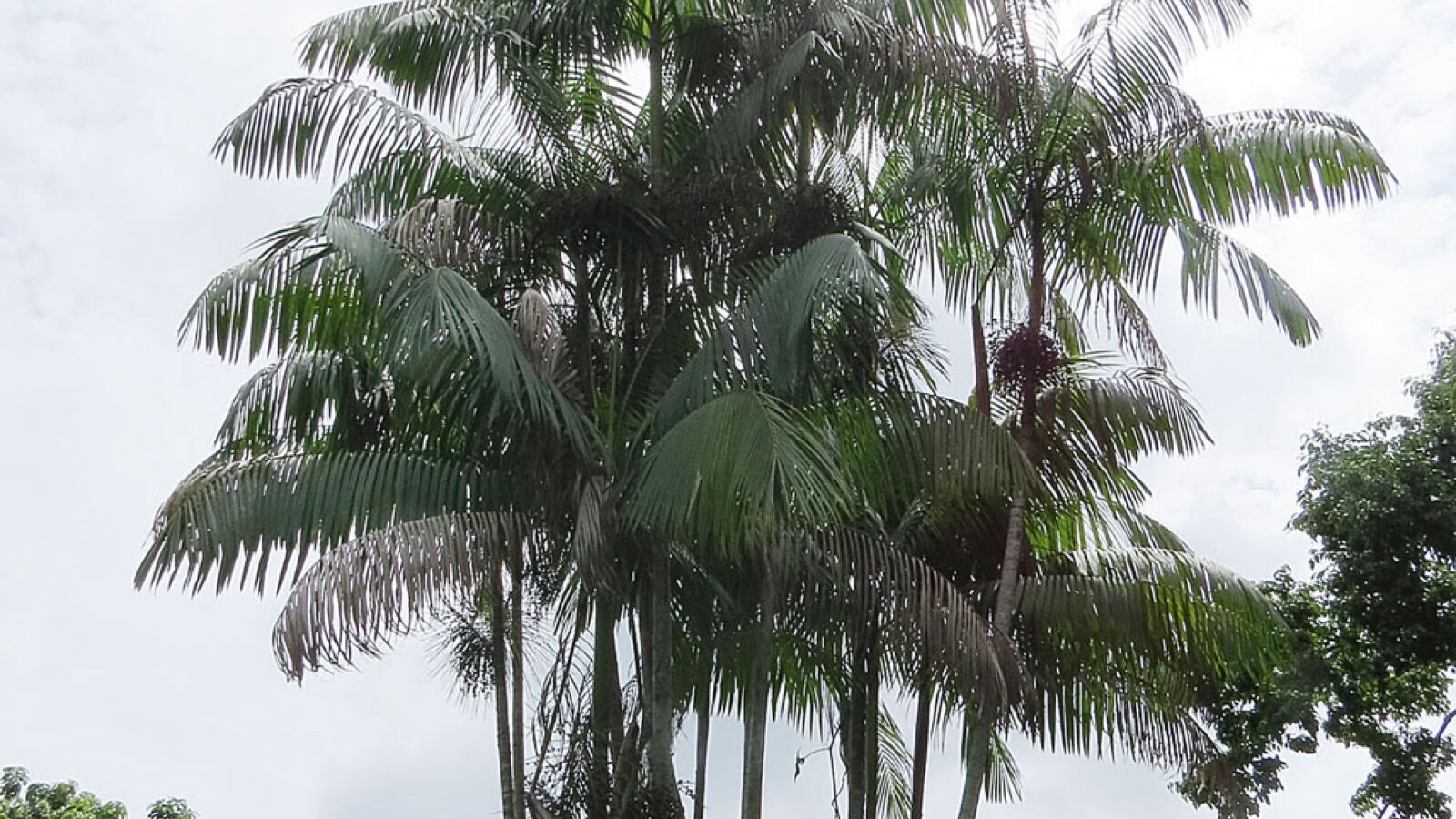
Euterpe oleracea, the açaí palm — a slender, clumping palm of the floodplains and swamp forests of the Amazon estuary, above all in the Brazilian state of Pará, whose small, round, deep-purple berries are one of the most important foods of the Amazon and, in the last two decades, a global phenomenon.
The palm grows in dense clumps of tall, thin, elegant stems in seasonally-flooded forest, and it bears heavy hanging bunches of thousands of small berries, each mostly a large seed with only a thin layer of edible purple pulp around it.
A staple of the river
Long before the wider world had heard of it, açaí was a dietary staple of the Amazon, especially for the river and forest people of Pará. The berries are soaked and mashed into a thick, dark-purple pulp — traditionally eaten not as a sweet dessert but as a savoury staple, mixed with cassava flour and eaten with fish, shrimp, or meat, a daily source of calories and fat that could make up a large part of the diet.
The pulp is genuinely nutritious — rich in fat, fibre, and antioxidants (the deep purple anthocyanins) — and this nutritional profile, real if oversold, is what launched its global career. See restoration economics.
The superfood boom
In the 2000s, açaí was marketed to the wider world as a "superfood," and demand exploded. Frozen açaí pulp, blended with other fruit and topped with granola, became the ubiquitous purple "açaí bowl" of cafés and gyms from Rio to Los Angeles to Sydney, and açaí turned up in juices, smoothies, supplements, and health products worldwide, promoted (often extravagantly, and with claims that ran far ahead of the evidence) as an anti-ageing, weight-loss, antioxidant wonder.
The boom transformed the Amazon estuary economy. Demand and prices soared, and açaí — once a cheap local staple — became a valuable cash crop and export, with major and mixed consequences: rising incomes for the ribeirinho communities who harvest it (skilled, dangerous work, shinning up the thin, tall palms to cut the fruit bunches); rising local prices that put the traditional staple out of reach of some of the poor who long depended on it; and pressure to expand and intensify açaí cultivation in the floodplain forests, with both benefits (an incentive to keep the flooded forest, since açaí grows in it) and risks (simplifying the forest toward açaí monoculture). It is a vivid, ongoing case study of what happens when a local forest staple becomes a global commodity. Because açaí grows in and depends on the standing floodplain forest, well-managed açaí can be an argument for keeping that forest — the brazil nut logic again. See reforestation techniques.
(The closely related Euterpe edulis, the juçara palm of Brazil's Atlantic forest, yields similar fruit but only one stem, so harvesting its heart of palm kills the tree — which drove it toward extinction; growing E. edulis for açaí-like fruit instead is now promoted to save it.)
Growing it
Tropical, frost-tender, and a palm of the hot, wet, lowland tropics — especially seasonally-flooded and swampy ground — açaí wants heat, high rainfall or standing water, humidity, and rich, moist soil, and it is intolerant of drought and cold. It is a clumping, suckering, multi-stemmed feather palm.
It is grown from seed (which must be sown fresh) and, being clumping, is harvested by cutting fruit bunches from the tall stems without felling the clump, so a stand crops for many years. As a nutritious floodplain-forest fruit that is both an ancient Amazon staple and a modern global superfood, açaí sits at the meeting point of traditional food, forest conservation, and the world market. See palms and propagation.
See also
- Palms the family açaí belongs to
- Peach Palm another Amazon palm grown for fruit and heart of palm
- Brazil Nut another Amazon product that rewards keeping the forest
- Coconut and Oil Palm other great economic palms
- Restoration Economics a local staple turned global commodity
- Tropical Fruit Trees the wider tropical fruit palette
- Cupuaçu