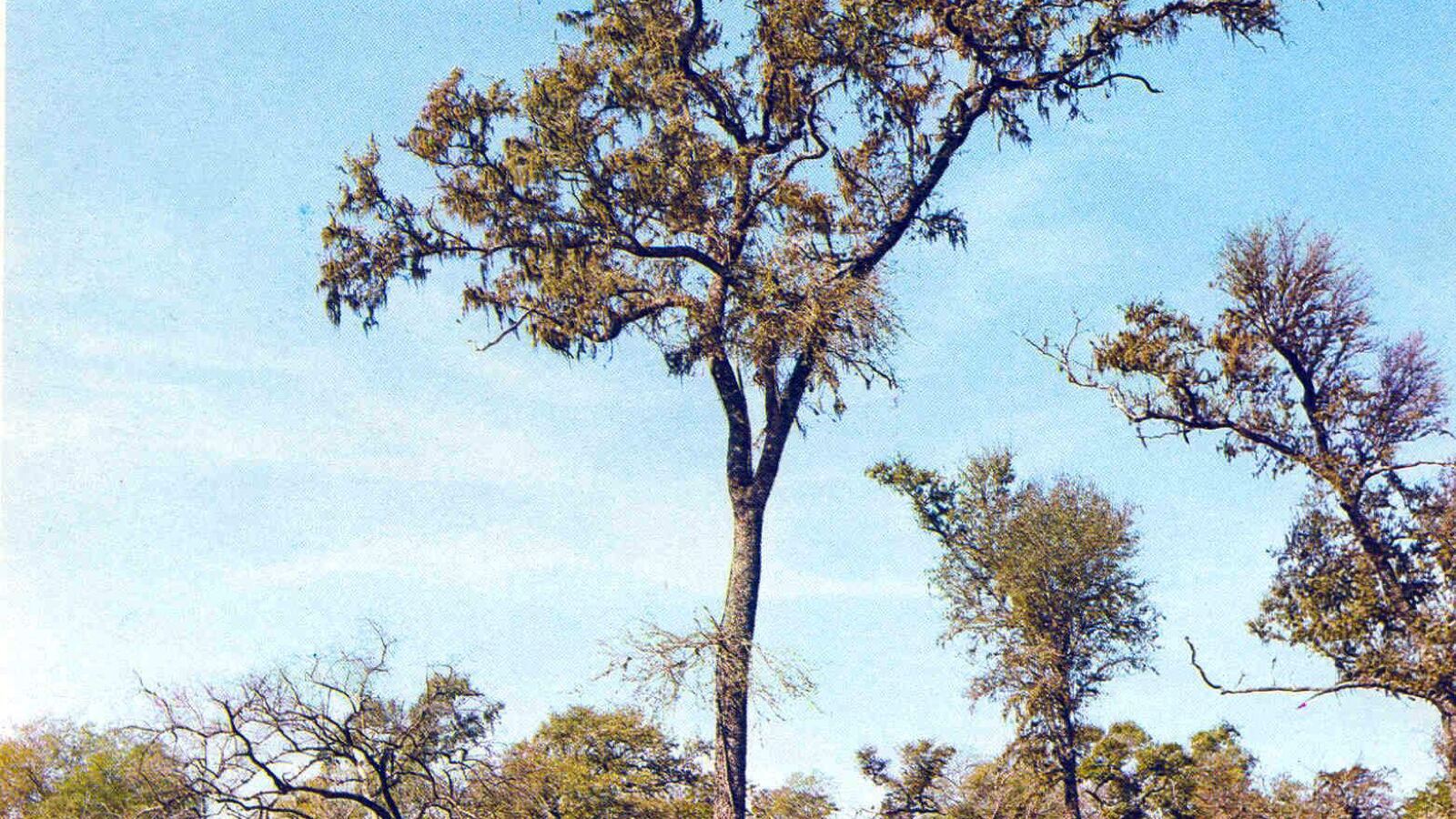
What it is
Schinopsis, the quebrachos — slow-growing hardwood trees of the dry Gran Chaco forests of Argentina, Paraguay, and Bolivia, in the cashew family, Anacardiaceae (relatives of the mango, cashew, and pepper tree).
The name says everything: quebracho comes from the Spanish quiebrahacha, "axe-breaker," because the wood is so extraordinarily hard and dense that it blunts and shatters the tools used to cut it. It is one of the hardest and heaviest of all woods — dense enough to sink in water, like lignum vitae and ebony — and it was prized for two things above all: its indestructible timber and its tannin.
Tannin for the world's leather
The quebracho's greatest economic role was as a source of tannin — the plant compound used to turn raw animal hide into durable leather (vegetable tanning). Quebracho heartwood is exceptionally rich in tannin, among the richest of all commercial sources, and from the late nineteenth century it became one of the world's principal tanning materials.
Vast quantities of quebracho were felled, chipped, and boiled to extract tannin, which was shipped worldwide to tanneries to make everything from shoe leather to industrial belting, and the trade built (and then abandoned) whole towns in the Chaco. Quebracho tannin is still used in leather-making, and in other industries (as a component of adhesives, drilling muds, and water treatment). But the cost was severe: the quebracho is slow-growing and was cut far faster than it could regrow, so the great quebracho forests of the Chaco were heavily over-exploited and reduced, contributing to one of South America's serious deforestation stories, and quebracho is now a species of conservation concern. See restoration economics and woodland management.
The indestructible timber
The wood itself, beyond tannin, was valued for exactly its axe-breaking hardness and its extreme durability and rot-resistance. Quebracho timber was used for railway sleepers, fence posts, telegraph poles, bridge timbers, mine props, and heavy construction — anything that had to last for decades in the ground or the weather without rotting — across South America and beyond, in the way lignum vitae and ipê were used. A quebracho fence post could outlast several of the animals it fenced. Its density and durability made it a favoured firewood and charcoal too. As with the tannin, this demand drove heavy cutting of a slow tree.
Growing it
Tropical to subtropical and adapted to the hot, dry, seasonal climate of the Gran Chaco, quebracho is a tough, drought-hardy tree of poor, dry forest, wanting heat and full sun and tolerating drought and poor soil; it is very slow-growing and long-lived, which is the root of its over-exploitation problem — a felled quebracho forest takes generations to return.
It is grown from seed, and its conservation now depends on protecting remaining forest, managing harvest sustainably, and replanting — slow work for a slow tree. As one of the world's hardest woods and a tree that tanned much of the world's leather, the quebracho is a striking example of a slow, dense, tannin-rich tree exploited faster than it could recover. See reforestation techniques and propagation.
See also
- Lignum Vitae and Ebony and Blackwood other sink-in-water dense woods
- Mango and Cashew its cashew-family relatives
- Ipê and Pau d'Arco another ultra-durable South American timber
- Sumac and Smoke Tree other trees rich in leather-tanning tannin
- Restoration Economics the over-cutting of a slow, valuable tree
- Woodland Management conserving the Chaco quebracho forests