What it is
Genipa americana, the genipap or jagua — a medium-to-large tree of the tropical American lowlands, in the coffee family, Rubiaceae (a relative of the coffee and quinine trees), grown and gathered for both its fruit and, above all, its extraordinary blue dye.
It bears round, brownish, thick-skinned fruit the size of an orange, and it is one of the most culturally important trees of tropical America — not for the fruit's flavour, but for what the unripe fruit does to skin.
The blue that grows on you
Genipap's fame rests on a remarkable chemical trick. The juice of the unripe green fruit is clear and colourless when applied — but on contact with skin (with the proteins and amino acids of the skin, and the air) it slowly oxidises to a deep blue-black, developing over a few hours into a rich, dark, indelible stain that lasts on the skin for one to two weeks, wearing off only as the skin cells slough away.
This has made genipap the great body-paint and temporary-tattoo plant of Indigenous tropical America. For countless peoples of the Amazon and beyond, genipap juice — often paired with the red of annatto — was, and is, used to paint the body and face in intricate patterns for ritual, war, decoration, identity, and protection (it also repels insects and was thought to protect the skin), the black genipap designs contrasting with the red annatto. Because it stains from within the skin's surface and cannot be washed off, it is effectively a natural temporary tattoo, and "jagua" body art has been taken up in the wider world as a plant-based, henna-like temporary tattoo. It also dyed textiles, pottery, and basketry blue-black, and marked the skin for medicinal and ceremonial purposes. See historical ecology.
The active compound (genipin) is also of scientific and industrial interest as a natural blue food colouring and as a gentle biological cross-linking agent used in medical and food technology — a modern life for the ancient body-paint chemistry.
The fruit
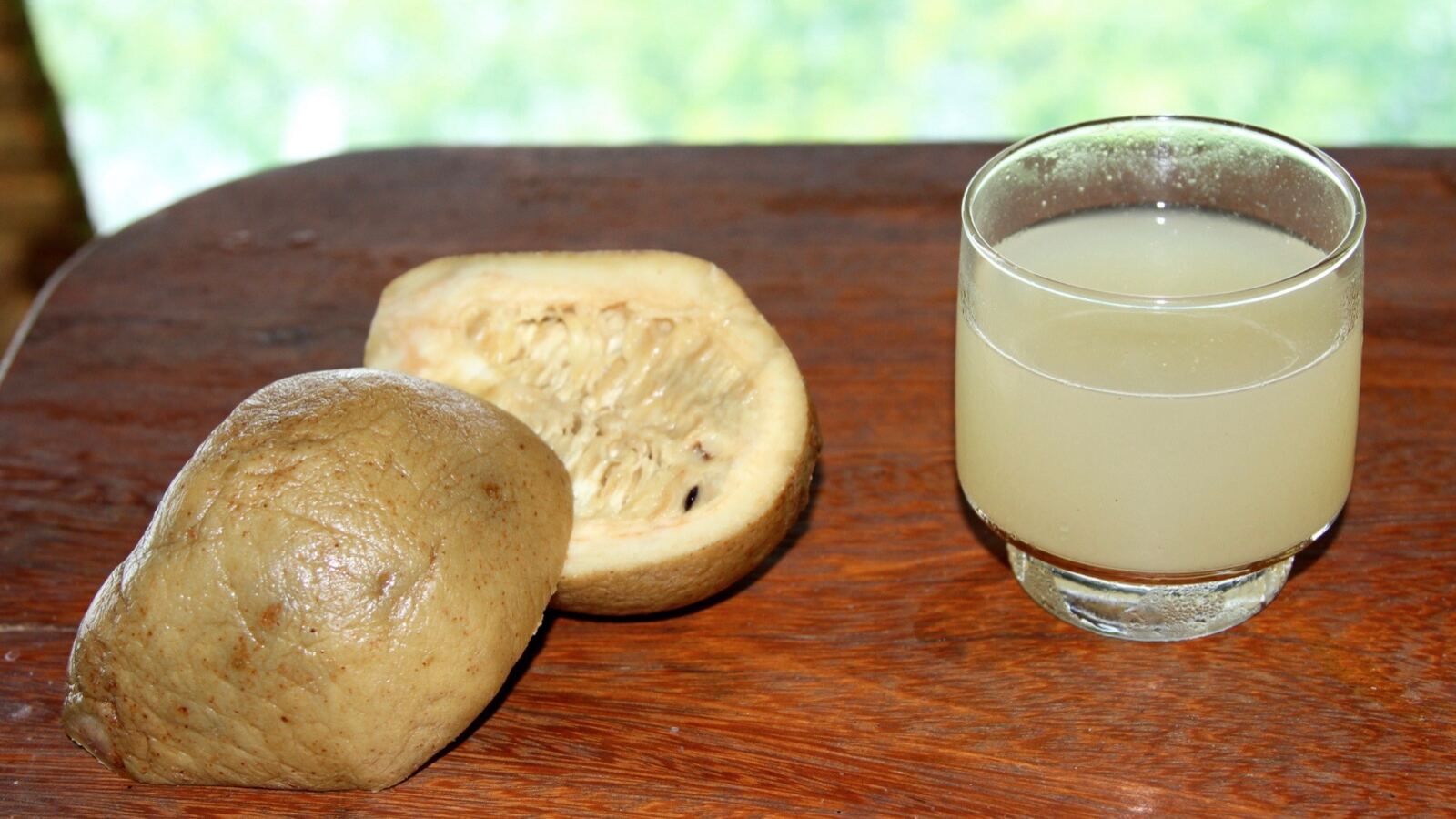
The ripe fruit, by contrast, does not stain and is edible — soft, brownish, with a strong, distinctive, quince-or-apple-like aroma, sharp and not to everyone's taste raw, but made across tropical America into drinks, juices, syrups, jellies, preserves, wine, and liqueurs, and used in folk medicine. So the same fruit gives an indelible blue dye when green and a food when ripe — a useful and cultural tree in equal measure. The tree is also a good, hardy shade and timber tree, and its flowers feed pollinators and its fruit feeds wildlife.
Growing it
Tropical to warm-subtropical and frost-tender, the genipap is a tough, adaptable tree — it tolerates a range of soils, seasonal flooding, and poorer ground, wanting warmth, reasonable moisture, and full sun, and it is fairly fast-growing and hardy for a tropical tree. It is grown from seed (which germinates readily) and is a large, handsome, glossy-leaved shade and fruit tree.
As a source of a unique natural blue dye, a distinctive fruit, useful timber, and good shade, the genipap is a valuable and culturally rich component of a tropical food forest and dooryard. See propagation and tropical fruit trees.
See also
- Annatto the red body-paint tree genipap's blue is paired with
- Cacao and Coffee and Quinine Tree its coffee-family relatives
- Logwood and Brazilwood other great tropical dye trees
- Historical Ecology genipap body paint of the Amazon
- Tropical Fruit Trees the genipap in the wider orchard
- Food Forest Design a dye-and-fruit tree for the tropics