What they are
Syzygium, a huge genus of tropical evergreen trees in the myrtle family, Myrtaceae — the same genus as the clove, whose dried flower buds are the spice, and kin to the guava, feijoa, and eucalyptus. Among its many fruiting species, two are especially widespread:
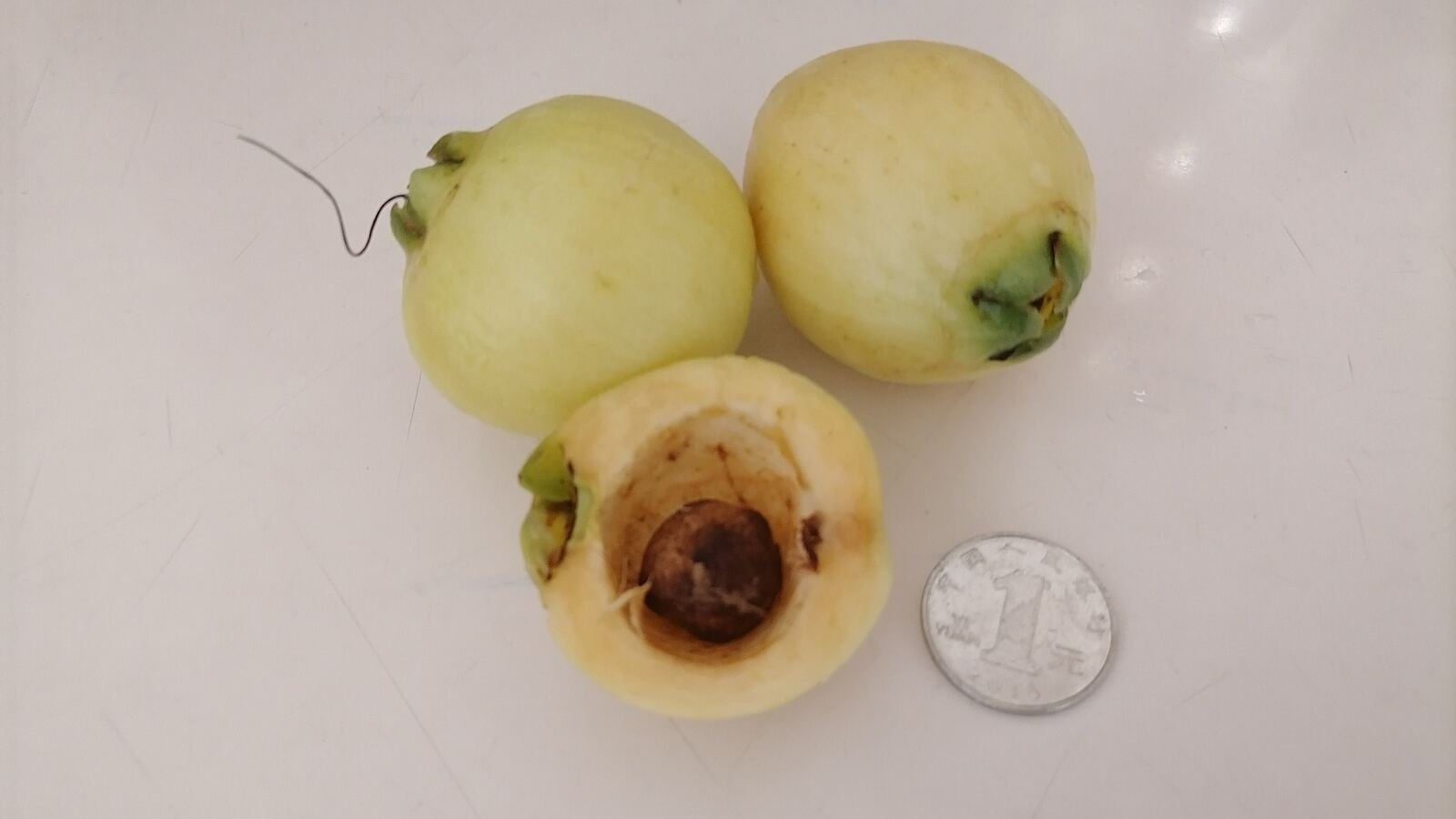
- Rose apple (Syzygium jambos) — bell-shaped, pale yellow-green, crisp and watery, scented and flavoured like rose water;
- Jambolan or java plum or jamun (Syzygium cumini) — oval, deep purple-black, sweet-astringent, staining the mouth violet.
The wider genus also gives the crunchy water apple and wax jambu (S. aqueum, S. samarangense), the Malay apple, and many local fruits, plus the lilly-pilly ornamentals of Australia — a genus that has produced fruit, spice, and timber trees across the whole tropics.
Rose apple: fruit that tastes of perfume
The rose apple is a curiosity of flavour. The fruit is crisp, light, and mostly water, with little sweetness — but it is powerfully perfumed with rose, so that eating one is like biting into a crunchy, watery fruit soaked in rose water. It is eaten fresh and made into rose-scented preserves, jellies, and sweets, more for its fragrance and refreshing crunch than for richness. The tree is handsome, with glossy leaves and showy powder-puff cream flowers (a family trait, seen in the clove's relatives), and is grown as much for ornament and shade as for the fruit.
Jambolan: the tongue-staining java plum
The jambolan is a more substantial fruit — a deep purple-black, olive-shaped berry, sweet, tart, and astringent, that stains the tongue and lips a vivid purple, a familiar mark of the fruit season across South Asia, where it is the beloved jamun. It is eaten fresh (often with a little salt to tame the astringency), juiced, and fermented into vinegar and wine.
Jamun has a large place in traditional medicine, particularly for diabetes — the fruit, seeds, and bark are long-used folk remedies for blood sugar, and the seeds are a subject of genuine scientific study for anti-diabetic compounds, one of those traditional uses with some experimental support. The tree is also a good timber and a heavy nectar source for honey. It is a tough, adaptable, fast-growing tree, widely planted for fruit, shade, and avenue.
The invasive shadow
As with so many tough, prolific, bird-dispersed tropical trees, both species have become invasive where introduced.
Rose apple is a serious invasive species in Hawaii, the Caribbean, and other Pacific and tropical islands, forming dense monospecific thickets that shade out native forest understorey and choke streambanks — one of the more damaging woody invaders of Hawaiian wet forest. Jambolan, similarly, has naturalised and become weedy in parts of Florida, the Caribbean, Australia, and East Africa, its heavy bird-spread crops carrying it into bushland and pasture. It is the recurring pattern of a valued, fast, fruitful tree turning into a thicket-forming pest far from home — the same story as strawberry guava and cherry laurel — and a reason to check local status before planting either. See tree diseases for the myrtle rust that now also threatens the whole family.
Growing them
Tropical to warm-subtropical and frost-tender (jambolan is the tougher and more drought- and cold-hardy of the two, growing well in the seasonal tropics and warm subtropics).
Soil and site. Both want full sun and moist, well-drained soil, and both tolerate a range of conditions — rose apple likes it wetter (hence its streamside invasiveness), jambolan tolerates drought, poor soil, and periodic flooding, part of its toughness. Fast-growing, evergreen, and productive, they make good shade and fruit trees for a tropical food forest where they are not invasive.
Propagation. From seed (which comes fairly true and, in jambolan, is often polyembryonic), and from cuttings, layering, and grafting for named types. See propagation and grafting.
See also
- Clove, Nutmeg, and Allspice the spice-bearing Syzygium cousin
- Feijoa another myrtle-family fruit
- Guavas the related — and also invasive — myrtle fruit
- Eucalyptus the great Myrtaceae relative
- Invasive Species rose apple and jambolan abroad
- Tropical Fruit Trees the wider warm-climate orchard
- Jaboticaba
- Lilly-Pilly