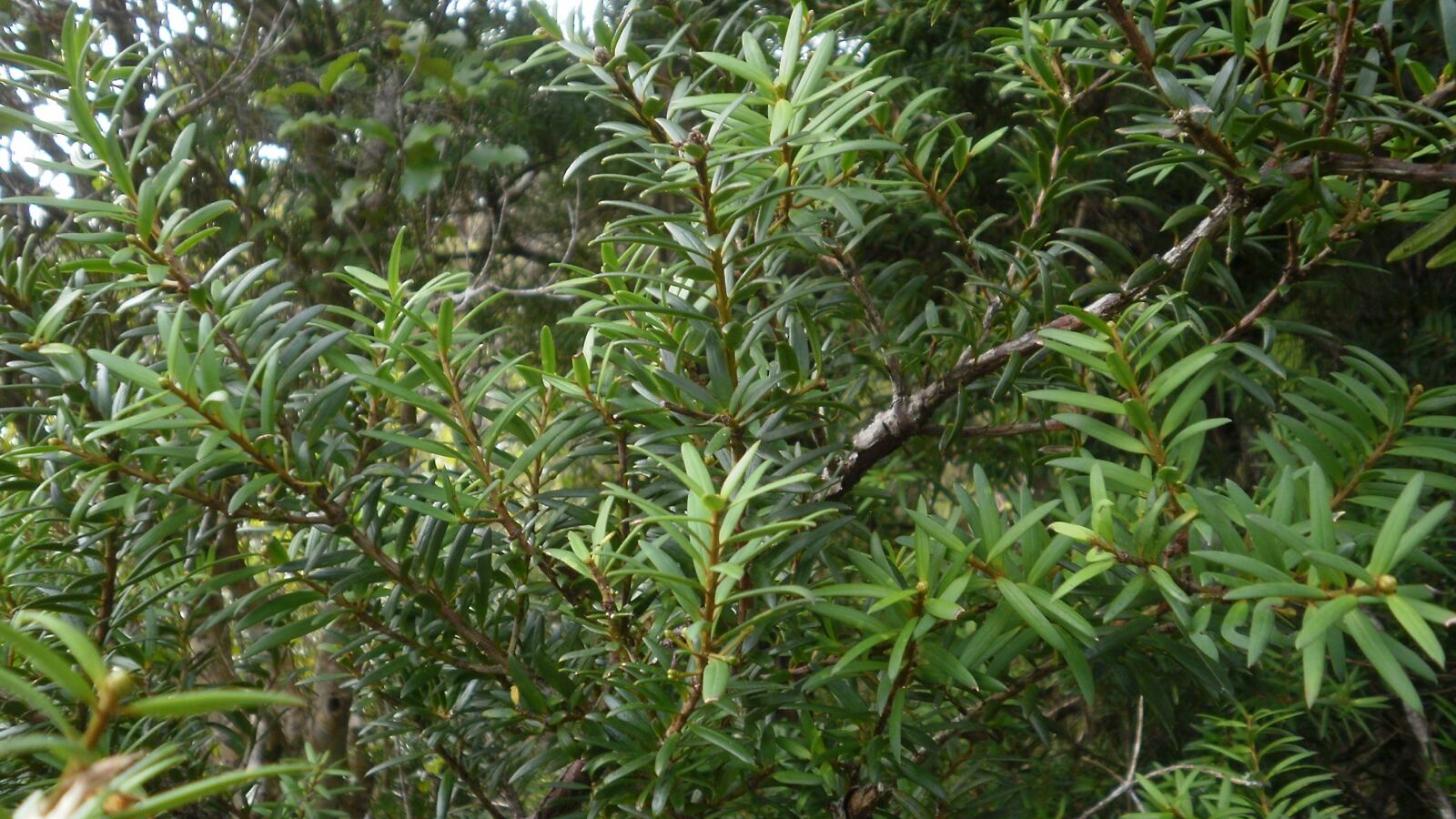
What they are
The Podocarpaceae — the podocarps — are the great conifer family of the southern hemisphere, the southern counterpart to the pines and firs that dominate the north. They include the totara, rimu, miro, matai, and kahikatea of New Zealand, the yellowwoods (Podocarpus) of South Africa, and species through South America, Australia, and tropical Asian mountains.
Where northern forests are built on pine, spruce, and fir, southern temperate and montane forests are built substantially on podocarps, alongside the southern beech and kauri. They are ancient Gondwanan trees, and several are giants and forest dominants in their own right.
Conifers that make fruit
The podocarps' most striking feature is that many of them do not bear a dry woody cone at all. Instead they produce a fleshy, brightly coloured fruit-like structure to get their seeds dispersed by birds.
In Podocarpus and its kin, the seed sits on top of a swollen, fleshy, red or purple stalk (the "receptacle" or aril), so the whole thing looks and functions like a small berry — sweet, conspicuous, and eaten by birds, which carry the seed away. It is the same solution the yew and the juniper reached in the north: a conifer abandoning wind-scattered cones in favour of a fleshy fruit and animal dispersal. In the podocarps' bird-rich southern forests this reliance on birds is profound — the New Zealand podocarps evolved with, and depend on, native pigeons (the kererū) and other birds to swallow their fruit and spread the seed, one of the classic tree–bird partnerships, and one now threatened where those birds have declined. See seed-dispersing birds.
Totara and the timber trees
Several podocarps are prime timber trees, and totara (Podocarpus totara) is the most celebrated.
Totara wood is straight, even, easily worked, and — most importantly — extraordinarily rot-resistant, durable in ground and water for generations, the same self-preserving virtue as cedar and redwood. For Māori it was the pre-eminent tree: the wood for the great war canoes (waka), carved houses, and totem carvings, and a tree of deep cultural significance. Rimu and matai gave fine cabinet and building timber, and kahikatea (white pine), a tall swamp-growing podocarp, gave odourless wood used for butter boxes. As with the kauri, the southern podocarp forests were heavily logged, and old-growth podocarp forest is now largely protected.
The South African yellowwoods (Podocarpus latifolius and relatives), the national tree of South Africa, played the same role there — the premier native timber, slow-grown, durable, and now conserved.
In the forest
Podocarps are typically slow-growing, shade-tolerant, and very long-lived, often persisting for many centuries and emerging through the canopy as forest giants. In the mixed podocarp–broadleaf and podocarp–beech forests of the south they provide much of the tall structure, the emergent crowns, and the bird food, making them keystone trees of those ecosystems. Their structural role and their fruit make them central to the conservation and restoration of southern forests, and their dependence on mycorrhizal fungi and on bird dispersal ties them tightly into the forest web. See historical ecology.
Growing them
Most podocarps want mild, moist, frost-free to lightly-frosted, humid conditions — the oceanic southern climates they come from — and free-draining soil, though several tolerate a range of ground and some yellowwoods take considerable drought and cold.
They make handsome, dense, dark evergreen specimen and hedging trees where the climate suits, valued for their neat form and (in the berrying species) their bird appeal, and several are grown far from home in mild-temperate gardens. Slow but rewarding and long-lived. Grown from the fleshy seed (cleaned of pulp) and from cuttings. See propagation.
See also
- Kauri the giant conifer of the same southern forests
- Southern Beech the broadleaf partner in podocarp forest
- Yew the northern conifer that also swapped cones for berries
- Conifers the wider group and the northern contrast
- Seed-Dispersing Birds the birds the podocarp fruit depend on
- Structural Diversity podocarps as emergent forest giants
- Plum-Yews