What it is
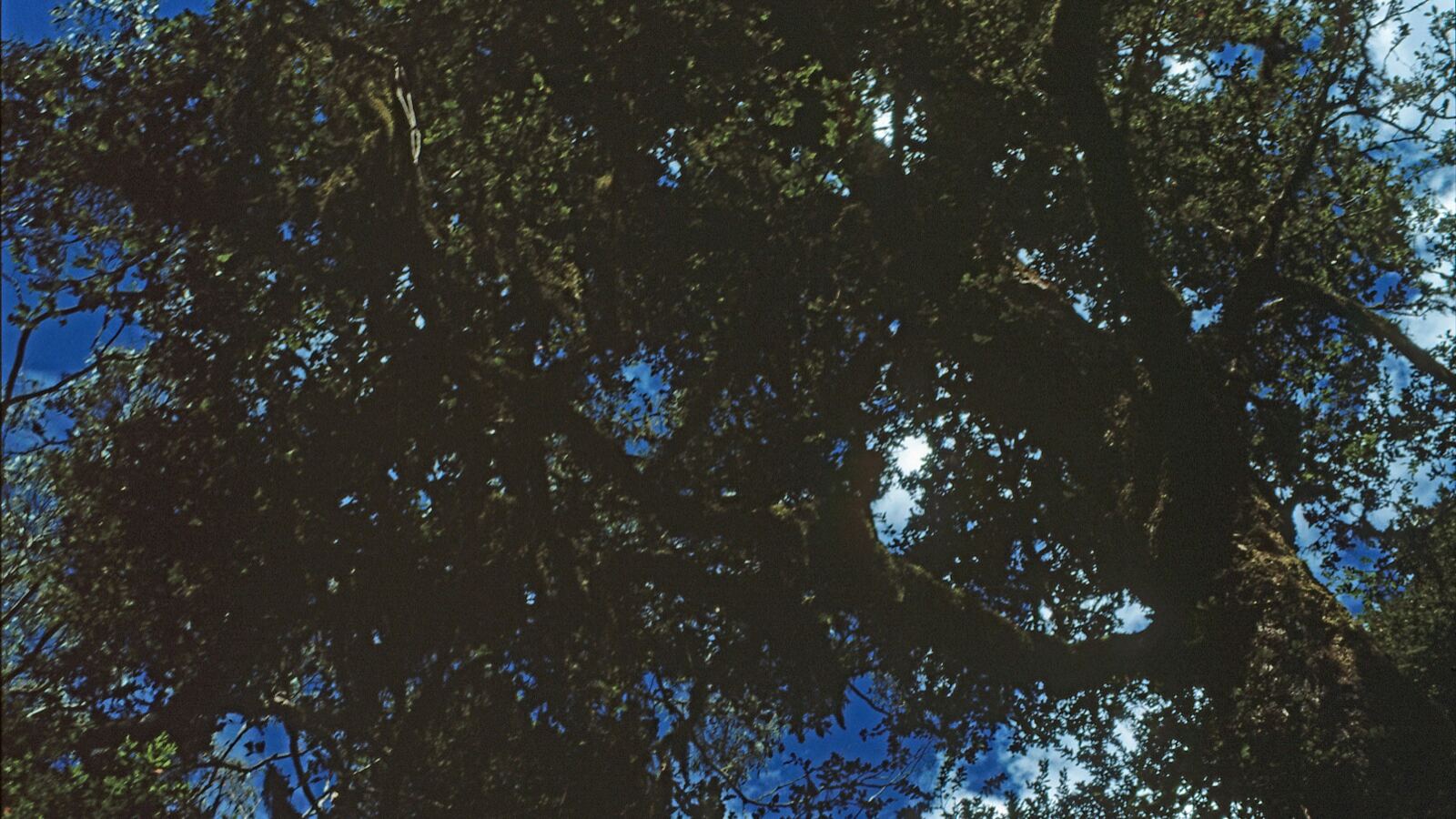
Nothofagus and its relatives, the southern beeches — around 40 species of trees of the cool temperate southern hemisphere, found in southern Chile and Argentina, New Zealand, southeastern Australia and Tasmania, New Guinea, and New Caledonia.
They resemble the northern beech, with small toothed leaves and a similar habit, and were long placed in the same family — hence the name, which means "false beech." They are the dominant forest trees of the southern temperate zone, forming the great beech forests of Patagonia, the silver-beech and red-beech forests of New Zealand, and the myrtle-beech rainforests of Tasmania. Some are evergreen, some deciduous, and a few of the Patagonian species (lenga, ñire) give spectacular autumn colour across whole mountainsides.
A living map of Gondwana
Southern beech is one of the classic pieces of biological evidence for continental drift, and this is what makes it more than just another forest tree.
Its distribution makes no sense on the modern globe: the same genus grows in southern South America, New Zealand, and Australia — landmasses now separated by thousands of kilometres of ocean, with seeds far too heavy to cross it. The explanation is that these lands were once joined in the supercontinent Gondwana, and the ancestral southern beeches were spread across the single connected forest before it broke apart around 80 million years ago. As the continents rafted away, they carried their Nothofagus with them.
The genus therefore acts as a biogeographic tracer — its scattered species map the shape of a continent that no longer exists, and fossil Nothofagus pollen even in Antarctica confirms the forest once ran unbroken across the whole southern land. It is one of the textbook examples used to teach how the distribution of living things records the deep history of the planet, alongside the monkey puzzle and other Gondwanan relicts. See historical ecology.
The forests it builds
Southern beech forests are the southern counterpart of the northern oak and beech woods, and they support their own distinctive ecology.
Because a single Nothofagus species often dominates over large areas, these forests can be strikingly uniform in the canopy while extraordinarily rich beneath — festooned with mosses, lichens, ferns, and filmy epiphytes in the wetter types, which are true cool temperate rainforests. They depend heavily on mycorrhizal fungi, and the southern beeches host a remarkable diversity of fungi, including the bright orange Cyttaria galls eaten as "Indian bread" in Patagonia.
Many southern beech forests regenerate in even-aged stands after catastrophic disturbance — landslide, windthrow, earthquake — rather than by continuous gap replacement, a succession pattern shaped by the geologically active landscapes they grow in. Their structural diversity and old-growth character make them priorities for woodland management and conservation, and much southern-hemisphere reforestation centres on them.
Use and threats
The timber of several species — red beech, rauli, coigüe, Tasmanian myrtle — is good, and southern beech has been logged extensively, sometimes to the point of threatening old-growth forest. Rauli and roble have been trialled in northern-hemisphere forestry for their fast growth and good timber.
The forests face the familiar pressures: logging, clearance for pasture, introduced deer and possums browsing the regeneration (a severe problem in New Zealand), and root-rot pathogens. Myrtle wilt, a fungal disease, kills Tasmanian myrtle-beech, and Phytophthora threatens others — the same tree disease pressure seen worldwide.
Growing it
A few southern beeches are grown as ornamentals and in forestry in mild oceanic climates — Britain, Ireland, the Pacific Northwest — where the cool, wet, frost-free conditions suit them. They want moist, cool, humid conditions and dislike drought, heat, and hard frost, reflecting the oceanic climates they come from.
Fast-growing for temperate trees, they make elegant specimens, the deciduous kinds valued for autumn colour and the evergreen kinds for year-round cover. Grown from seed, which is often shy and irregular (the forests mast like northern beech). See propagation and seed banking.
See also
- Beech the northern tree it mirrors
- Monkey Puzzle another Gondwanan relict of the same forests
- Mycorrhizal Fungi the fungal partners of southern beech
- Historical Ecology reading continental history from distribution
- Lichens and Mosses the epiphyte load of southern rainforest
- Woodland Management conserving old-growth beech forest
- Kauri