What they are
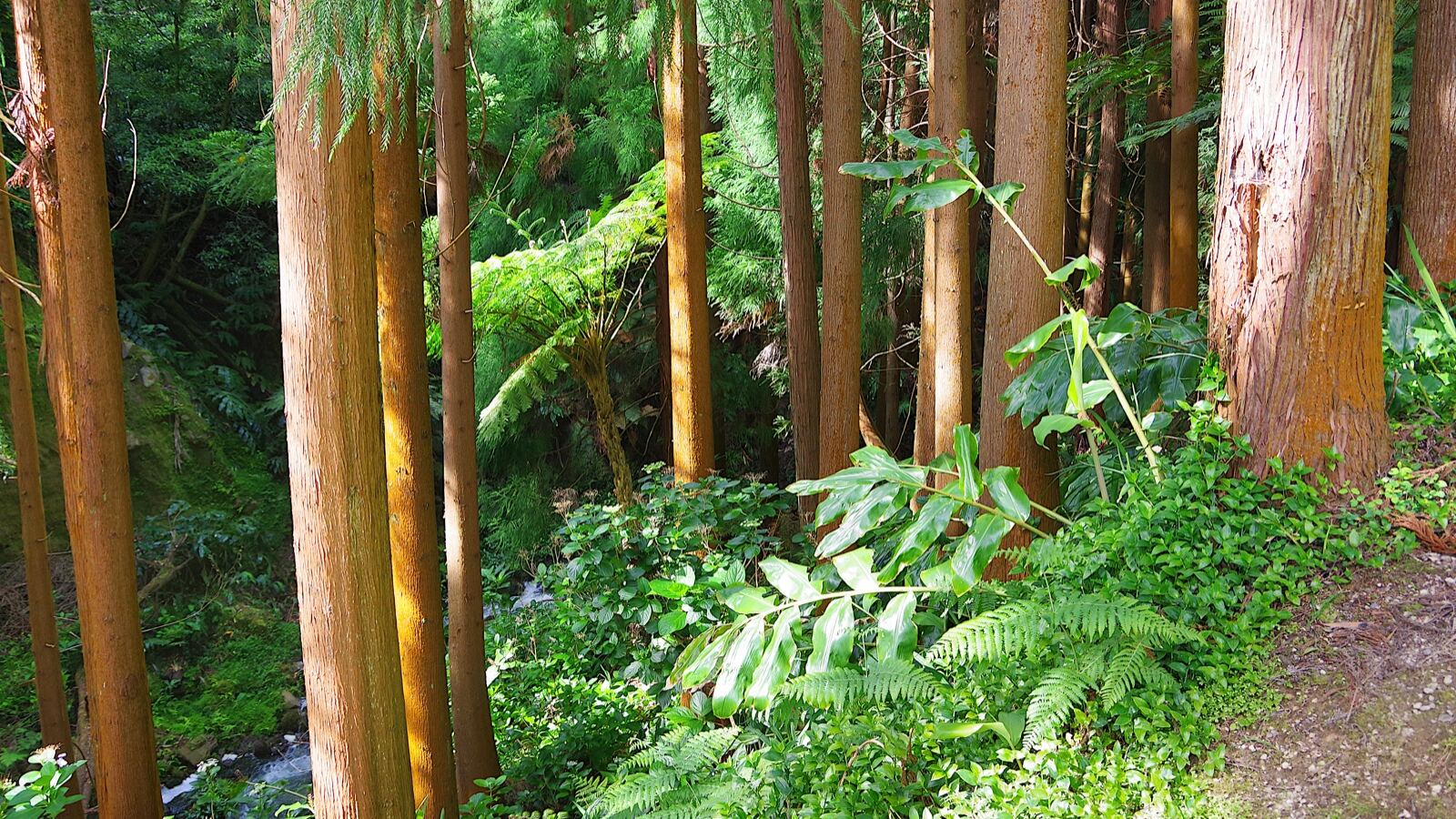
The tree ferns — chiefly Dicksonia and Cyathea — are ferns that have grown to the size and stature of trees, with a tall trunk topped by a spreading crown of huge fronds, forming the lush understorey and gully forests of the cool, wet southern hemisphere and tropical mountains.
They are the most ancient "trees" in this encyclopedia by lineage. Ferns are primitive plants that reproduce by spores, not seeds — they have no flowers, no fruit, and no seeds at all — and tree ferns are living representatives of the great fern forests of the Carboniferous period, hundreds of millions of years ago, whose remains formed much of the world's coal. To stand in a grove of tree ferns is to see something close to the vegetation of the age before the dinosaurs, before flowering plants existed. They are Gondwanan plants, sharing the cool southern forests with the southern beech and podocarps.
A trunk that is not wood
A tree fern's "trunk" is one of the strangest structures among tree-like plants, and understanding it explains how the plant lives and how to grow it.
It contains no wood. The upright trunk is a slender central stem clothed in a thick, fibrous sheath of matted aerial roots and the persistent bases of old fronds. In effect, the tree fern builds its supporting column out of its own roots growing downward around the stem, plus the accumulated stubs of dead leaves — a completely different solution to standing tall than the wood of a broadleaf or the fibres of a palm. Because the true growing point is the single crown at the very top, like a palm, the tree fern is vulnerable there and cannot branch; and because the trunk is a mass of roots, a cut tree fern trunk, kept moist, can often be simply stood in the ground and will re-root and regrow — an astonishing property exploited in cultivation and, unfortunately, in the trade.
The whole plant depends utterly on moisture and humidity. Tree ferns have no waterproofing or water-storing tricks; they live in perpetually damp, shaded, humid gullies, rainforests, and cloud forests, and they dry out and die quickly in sun, wind, or drought. Their crowns hold water, and their fibrous trunks are themselves gardens for mosses, filmy ferns, and epiphytes. See lichens and mosses.
Slow, old, and reproducing by spore
Tree ferns are extremely slow-growing and very long-lived — a trunk may add only a few centimetres a year, so a tall tree fern can be centuries old, one of the reasons wild-collecting them is so damaging.
They reproduce, like all ferns, by spores released from the undersides of the fronds. A spore grows first into a tiny, flat, short-lived plant (the prothallus) that produces the sex cells; fertilisation needs a film of water for the sperm to swim through, which is another reason tree ferns are bound to wet places; and only then does the familiar fern plant grow. It is the ancient, water-dependent, two-stage life cycle of the ferns, utterly unlike the seed reproduction of every other tree here. This slow growth and moisture-bound reproduction make them slow to recover from disturbance and important indicators of undisturbed, humid old forest. See indicator species and historical ecology.
In the forest and the garden
In their native forests tree ferns are keystone structure — the structural diversity of the understorey, the shade and humidity they cast, and the epiphyte habitat their trunks provide all shape the ecosystem, and they are protected in many places, with a regulated trade in salvaged trunks. They are much loved as garden plants in mild, moist climates, where the soft-tree-fern (Dicksonia antarctica) in particular is grown for its lush, prehistoric, jungly effect — but every tree fern in a cool-climate garden should come from a sustainably-harvested or nursery source, never wild-dug from dwindling forests. See woodland management.
Growing them
Cool to warm but always moist, humid, and sheltered, in shade or dappled light out of drying wind; tree ferns want damp, rich, acidic soil and constant moisture, and many (the soft tree fern especially) are hardier to cold than expected but never to drought.
Water the crown, not just the ground — the trunk's roots and the growing point both need to stay damp — and mist or mulch in dry spells. In cold areas the crown is wrapped for winter. New plants are established from spore (slow and skilled), from offsets in the clumping kinds, and, for Dicksonia, from re-rooting a sawn trunk section stood upright in moist ground. Feed and never let dry out. See propagation.
See also
- Palms the other single-crowned, wood-free tree form
- Southern Beech the Gondwanan forest they share
- Podocarps the ancient conifers of the same southern woods
- Lichens and Mosses the epiphytes that clothe tree-fern trunks
- Indicator Species tree ferns as signs of humid old forest
- Structural Diversity their role in the forest understorey