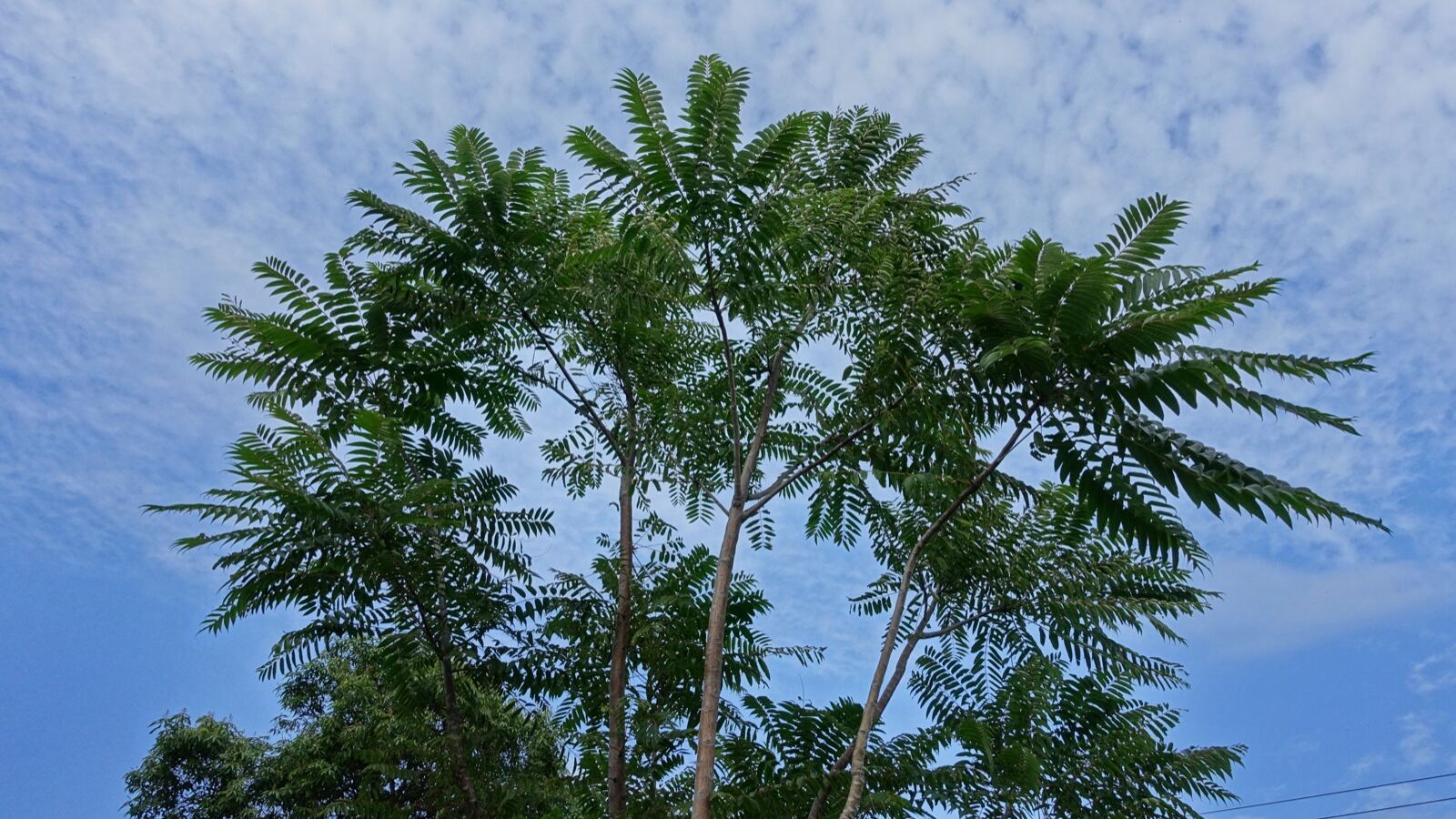
What it is
Toona, the toons — deciduous or semi-evergreen trees of Asia and Australia, in the mahogany family, Meliaceae, and so relatives of the true mahogany, Spanish cedar, neem, and chinaberry. Two species lead very different lives:
Australian red cedar (Toona ciliata) — a magnificent rainforest timber tree; Chinese toon (Toona sinensis) — grown for its edible shoots.
Despite the "cedar" name, neither is a true cedar (which are conifers) — the name, as so often, was given for the reddish, aromatic, cedar-like wood.
Australian red cedar: the "red gold"
The Australian red cedar was the most prized timber of early colonial Australia — a tall rainforest tree yielding a beautiful, richly-figured, easily-worked, deep-red timber, superb for fine furniture, joinery, panelling, and boat-building, so valued that it was called "red gold."
Its story is the familiar one of a magnificent timber logged toward scarcity. The red cedar grows scattered through the rainforest, not in stands, so — exactly like its cousin mahogany — cutting it meant pushing roads deep into the forest to reach individual trees, and the relentless "cedar-getting" of the nineteenth century stripped the great red cedars from the Australian rainforests, a leading edge of that forest's clearance. The tree also, unusually for the family, largely escapes the shoot borer (Hypsipyla) that foils mahogany and Spanish cedar plantations in the tree's Australian range — though the borer does attack it elsewhere — which raised hopes for plantations. Today the wild red cedar is much reduced and prized, and its responsible use means certified or plantation timber. See restoration economics and reforestation techniques.
Chinese toon: the vegetable tree
The Chinese toon leads the opposite life — it is grown not for timber but as a vegetable. Its young red-flushed spring shoots and leaves (xiangchun) are harvested, and they have a distinctive, powerful, aromatic flavour — variously described as onion-and-garlic-like, resinous, and savoury — quite unlike any other vegetable.
These fragrant shoots are a beloved seasonal delicacy in China, stir-fried with eggs, made into sauces and preserves, blanched and dressed, and pickled, prized for their strong aroma and eaten as a sign of spring. The tree is grown in gardens and small plots for a regular supply of the shoots (kept coppiced low for easy picking), so the Chinese toon is one of the relatively few trees grown as a leaf-and-shoot vegetable, in the way the moringa and sesbania are. It is a hardy, adaptable tree, grown well beyond China (including as an ornamental, in a golden-leaved form) for its foliage and its edible shoots. See food forest design.
Growing them
Both toons want warmth and reasonable moisture; the Australian red cedar is a subtropical-to-tropical rainforest tree, fast-growing and frost-tender, wanting rich, moist, well-drained soil and warmth, while the Chinese toon is much hardier, tolerating cold, heat, drought, and a range of soils, which is why it is grown across a wide temperate-to-subtropical range as a vegetable and ornamental.
Both are grown from seed (and the Chinese toon from suckers and root cuttings, which it produces freely — it can sucker enough to be weedy). Whether grown for its red-gold timber or its fragrant shoots, the toon is a distinctive and useful member of the mahogany family. See propagation.
See also
- Mahogany, Spanish Cedar, Neem, and Chinaberry its mahogany-family relatives
- Cedars the true (coniferous) cedars it is named for but unrelated to
- Moringa and Sesbania other trees grown as leaf-and-shoot vegetables
- Restoration Economics the logging-out of the "red gold"
- Reforestation Techniques restoring and plantation-growing red cedar
- Food Forest Design the Chinese toon as an edible tree