What it is
Sandoricum koetjape, the santol, cotton-fruit, or lolly-fruit — a large, fast-growing evergreen tree of Southeast Asia, grown across the region for its round, apple-sized, yellow-to-orange fruit.
Like the langsat, it is a member of the mahogany family, Meliaceae — a relative of the mahogany, neem, and Spanish cedar — and it shares the family's habit of bitter, aromatic chemistry in bark and seed, while offering a genuinely pleasant fruit.
The cotton fruit
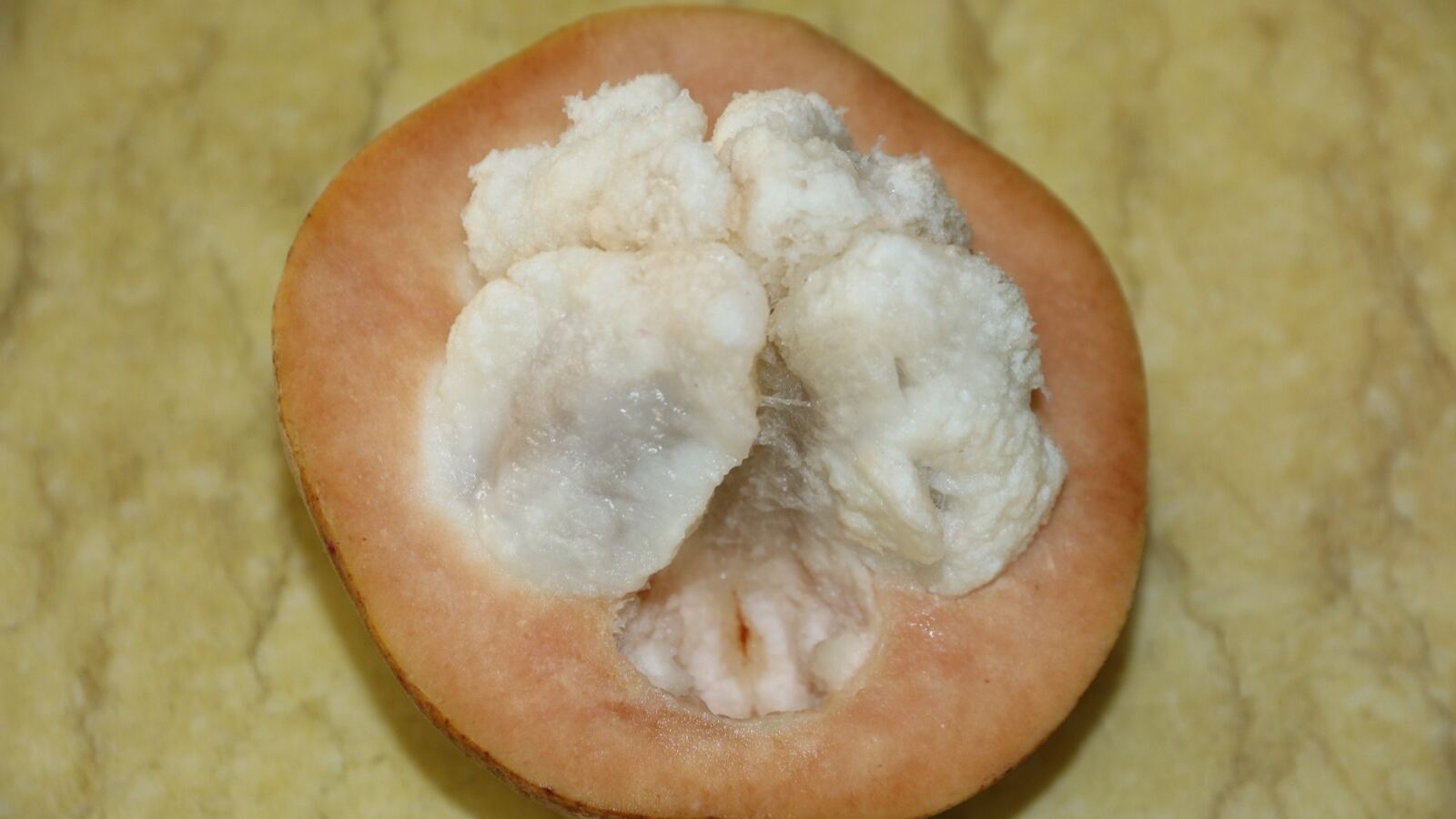
The santol's name and appeal come from the texture inside. Cut or twist open the thick rind, and the seeds are surrounded by a soft, white, cottony or woolly pulp — hence "cotton-fruit" — that is sweet-to-sour and juicy, clinging to the large seeds.
The fruit is eaten by sucking the tart-sweet cottony pulp off the seeds (the seeds themselves are not eaten and, with the rind, are bitter), a messy, moreish tropical treat — the "lolly-fruit" name captures the sucked-sweet quality. There are sweeter and sourer types (the "yellow" and "red" santols), and the fruit is eaten fresh, dipped in salt and chilli, candied and preserved, made into jams and marmalade, and cooked green in the sour Filipino and Thai dishes (santol is a classic souring fruit in sinigang and in Thai curries and salads), where its tartness stands in for tamarind or lime. The thick rind is candied into a popular sweet. So the santol is both a fresh fruit and a cooking ingredient across the region. See tropical fruit trees.
Beyond the fruit, the santol is valued as a big, dense, fast-growing shade tree, its timber is used locally, and its bark and roots have folk-medicinal uses (aromatic and bitter, in the Meliaceae manner).
Growing it
Tropical, frost-tender, and a tree of the hot, humid, lowland tropics, the santol wants heat, good rainfall, and deep, rich, moist, well-drained soil, though it is more tolerant of a range of conditions and of a drier season than the fussier langsat, and it is a fast, vigorous, adaptable grower.
It becomes a large, spreading, densely-shady tree, cropping heavily in season, and is grown from seed (which grows readily, though variable) and by grafting and marcotting for superior types. As a productive, tough, shade-giving fruit tree — good fresh, candied, and in the cooking pot — the santol is a rewarding and useful component of a Southeast Asian food forest and dooryard. See propagation and grafting.
See also
- Langsat and Duku its fellow Meliaceae fruit of the region
- Mahogany, Neem, and Spanish Cedar the family's timber and medicinal trees
- Tropical Fruit Trees santol in the wider orchard
- Tamarind and Carob another souring fruit of tropical cooking
- Food Forest Design the santol as a shade-and-fruit tree
- Cupuaçu another tropical fruit sucked from around its seeds