Two unrelated heat crops
Aubergine, Solanum melongena, is a nightshade — the same family as tomatoes, potatoes, and peppers — domesticated in South and Southeast Asia.
Okra, Abelmoschus esculentus, is in the mallow family, alongside hibiscus and cotton, and was domesticated in Africa, probably Ethiopia.
They are grouped here because they share the same limiting factor in a temperate garden: both need sustained heat, more than most cool-summer climates supply, and both are far more reliable under cover.
Aubergine
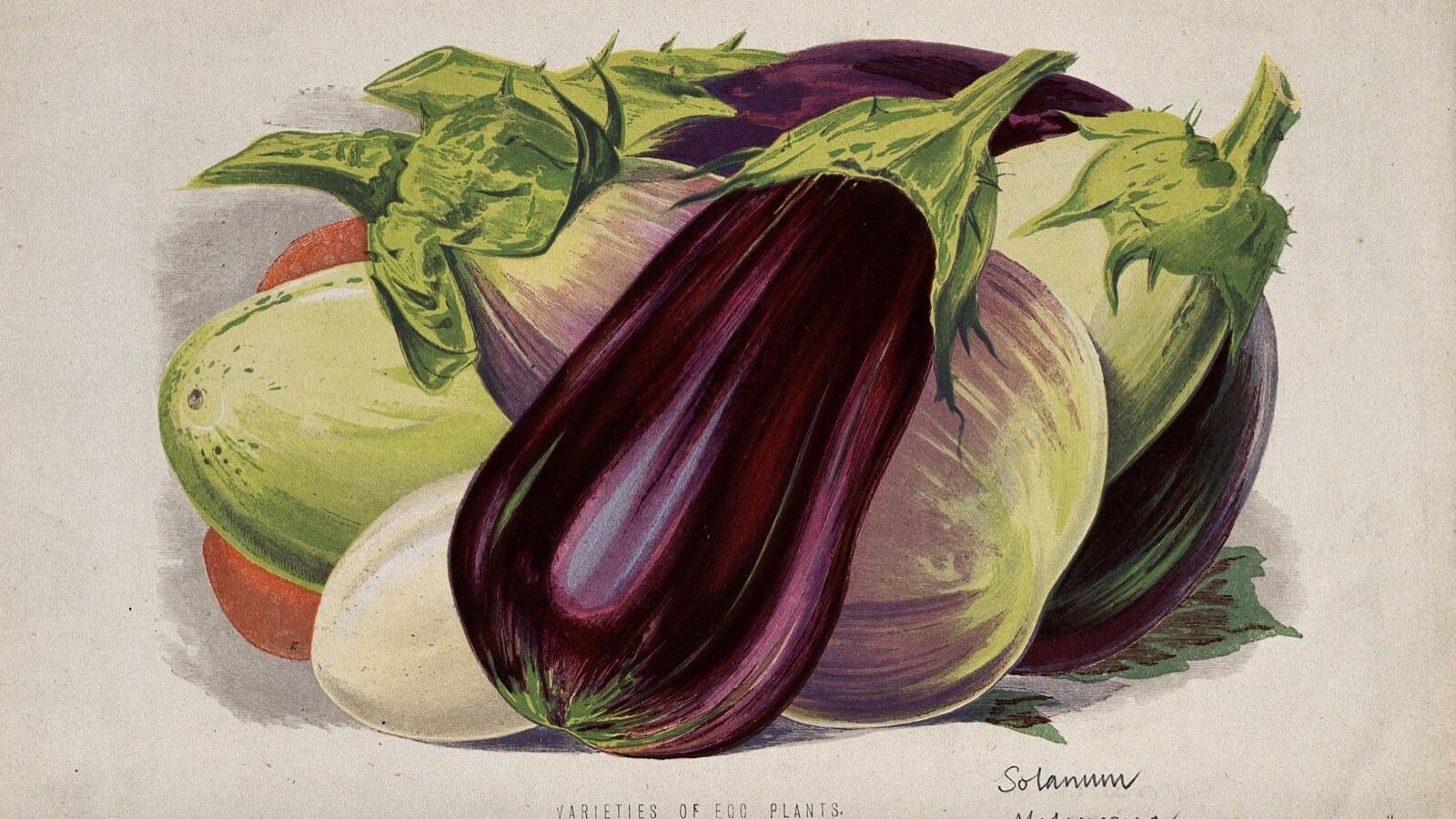
The fruit is botanically a berry, and the familiar large purple type is only one of many — Asian varieties are long and slender, Thai types small and round and green-striped, and the original domesticates were small, round, and white, which is where the name eggplant comes from.
Warmth is the constraint. Aubergines want 21 to 30 C and sulk below about 18 C. Fruit set fails in cool conditions, and plants stop growing altogether in a cold spell.
In cool temperate climates that means a greenhouse or polytunnel, or a very sheltered sunny wall in a good year. See frost protection and espalier and training for the wall-heat principle.
Start early. Sow 8 to 10 weeks before planting out, at 25 to 30 C. Germination is slow and erratic below that.
Pinch the growing tip at around 30 cm to encourage branching, and limit the fruit — four to six per plant in a cool climate. A plant allowed to set a dozen fruits in marginal warmth ripens none of them properly.
Feed and water consistently, as for tomatoes: nitrogen while building, high potassium once fruiting.
Harvest young, while the skin is glossy and springs back from a press. A dull skin means over-ripe, and over-ripe aubergine is bitter and full of hard seeds. Cut rather than pull — the calyx is tough and the stems snap.
The old advice to salt and drain aubergine to remove bitterness is largely obsolete: modern varieties have had the bitterness bred out. Salting still improves texture and reduces oil absorption in frying, which is a different argument.
Problems are the standard glasshouse set — red spider mite, whitefly, and aphids, all worse in the hot dry air aubergines like. See whiteflies and spider mites and aphids. Verticillium wilt is the soil-borne one, and it is another reason aubergines belong in the solanaceae slot of a rotation.
Okra
Grown for its immature seed pods, and the plant is handsome — large lobed leaves and pale hibiscus flowers with a dark centre, since it is a close hibiscus relative.
Even more heat-demanding than aubergine. Okra wants 25 to 35 C and grows very slowly below 20. It is a genuinely difficult crop outside warm-summer regions, and under cover is the only reliable option in a cool climate.
Soak the seed overnight before sowing — the seed coat is hard and germination is otherwise slow and patchy. Sow direct into warm soil, or in deep modules, since okra has a taproot and resents disturbance.
Pick young and pick constantly. This is the whole trick. Pods go woody and inedible fast — typically within a few days of reaching about 8 to 10 cm. Harvest every day or two in warm weather, and any pod left to mature will slow the whole plant, exactly as in peas and beans.
Wear gloves. The plant and pods carry fine spines that irritate skin.
Okra is tall — 1 to 2 m — and can be cut back hard in a long season to produce a second flush.
The mucilage question
Okra's defining characteristic, and the reason people either love it or refuse it.
The pods contain mucilage — soluble polysaccharides that produce a viscous, slippery texture when cooked in liquid.
That is a feature in gumbo, where okra is the thickener, and a fault in a dish where you wanted crisp vegetables.
To minimise it:
Cook fast at high heat — grilling, roasting, or hot frying. Sliminess develops with slow moist cooking.
Keep the pods whole, since cutting releases the mucilage.
Add acid — lemon, tomato, tamarind — which cuts it.
Do not wash the pods before storing; dry them and cut just before cooking.
To maximise it, do the opposite: slice, and stew slowly in liquid. See harvest and storage.
Where they fit
Both belong in the under-cover category in a cool temperate climate, alongside the crops in tomatoes and peppers and chillies — a polytunnel or greenhouse growing the heat crops while the open ground carries brassicas, roots, and legumes.
Both grow well in large containers, which lets them be moved into the warmest position.
Okra flowers are also genuinely good for pollinators, being large open hibiscus-type flowers, and the plant is worth including for that in a warm-climate garden. See pollinator habitat.
Okra seeds can be dried, roasted, and ground as a coffee substitute, and the plant yields a bast fibre — both minor uses, but they explain why it spread so widely.
Saving seed
Both are largely self-pollinating and come reasonably true, though okra crosses more readily via insects, so isolate varieties by distance or bag flowers.
Leave a few pods on the plant to mature fully, dry hard, and split, then extract and dry the seed. Aubergine seed is taken from a fruit left until it goes dull and yellow-brown, well past eating quality. See seed saving.
See also
- Tomatoes the family, feeding regime, and glasshouse problems
- Peppers and Chillies the same warmth requirement
- Frost Protection extending a marginal season
- Container Growing moving heat crops into warmth
- Crop Rotation the solanaceae slot
- Harvest and Storage handling okra's texture
- Tamarillo