What it is
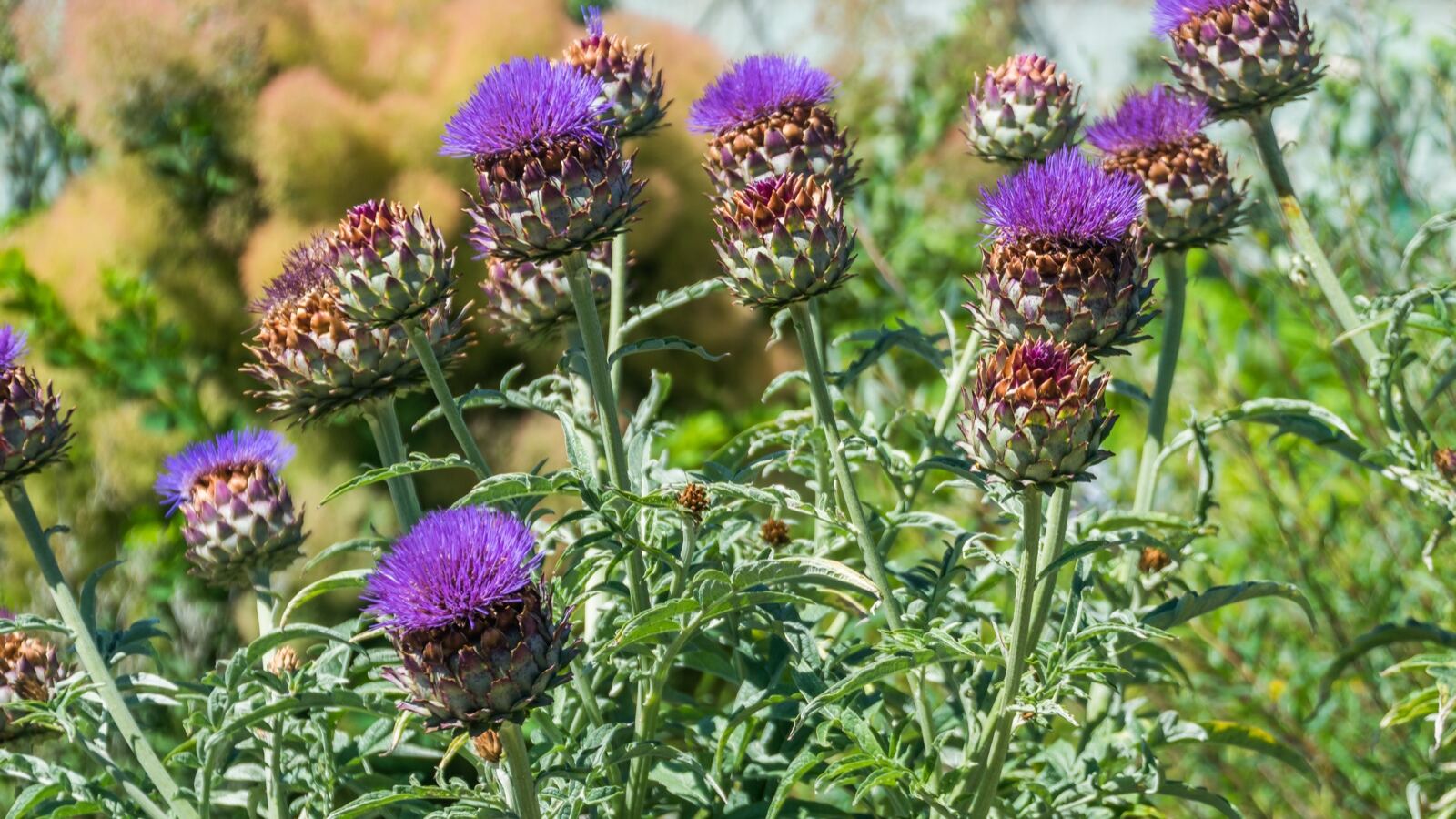
Cynara cardunculus, a Mediterranean thistle, in two cultivated forms:
Globe artichoke (var. scolymus), grown for the immature flower bud — the fleshy bases of the bracts and the receptacle beneath.
Cardoon (var. altilis), the same species selected for its blanched leaf stalks rather than its buds.
What you eat on an artichoke is an unopened flower head. Left alone it opens into a large violet thistle flower that is genuinely spectacular and heavily worked by bees — which is a real option if you have more plants than appetite. See native bees and pollinator habitat.
The choke is the immature florets, and it is inedible and mildly hazardous in large old heads. Small young artichokes have no developed choke and can be eaten whole.
Not related to Jerusalem artichokes, which are sunflowers, or to Chinese artichokes. The name is a coincidence of comparison.
Why water tastes sweet afterwards
An unusual and well-documented effect worth knowing.
Artichokes contain cynarin, which temporarily suppresses sweet receptors on the tongue. When it washes away, the receptors rebound and anything eaten or drunk immediately afterwards — including plain water — tastes noticeably sweet.
This is why artichokes have a reputation for being difficult to pair with wine: they make the wine taste sweet and often flabby. The practical answer is a high-acid wine, or accepting the effect.
Cynarin is also the basis of artichoke leaf extract's traditional use as a digestive and liver tonic, and it is what gives the Italian amaro Cynar its character.
A perennial that crops for a decade
Globe artichoke is a short-lived perennial, productive for 5 to 10 years, and it belongs with asparagus and rhubarb in the plant-once category set out in perennials first.
Year one: little or no crop. Remove any heads that form to build the plant.
Years two to five: full cropping, several heads per plant.
Beyond that: decline, as the crown becomes woody and congested.
Divide every 3 to 4 years. Take rooted offsets from the outside of the clump in spring, each with a piece of root and a growing point, and discard the worn centre. This is also the propagation method, and it keeps a bed going indefinitely.
Grow from offsets, not seed, if you want a known variety — artichokes do not come true from seed, and seedlings are variable, spinier, and often poor. Seed-raised strains exist and are usable but inferior.
Growing it
Full sun, free drainage, shelter. Artichokes are Mediterranean and their principal enemy in a temperate climate is winter wet, not cold. A plant that would survive hard frost on free-draining ground rots in a wet clay winter.
Space generously — 90 cm to 1.2 m apart. They are large, architectural plants reaching 1.5 m with a similar spread, and they are handsome enough to earn a place in an ornamental border.
Rich soil. Heavy feeders; mulch annually with compost or manure.
Water through the growing season, particularly while heads are swelling.
Winter protection in cold areas: mulch the crown thickly with straw or bracken after cutting back, and improve drainage rather than adding warmth. Uncover in spring.
Harvest heads while still tight, before the bracts begin to open. Take the terminal head first — it is the largest — and secondary heads develop afterwards. A head left too long becomes woody and the choke develops.
Cut with a length of stem attached, and eat fresh; artichokes deteriorate quickly. See harvest and storage.
Cardoons
Grown for the stalks, which are blanched by wrapping or earthing up the plant for several weeks before harvest, in the same manner as celery.
Blanched cardoon stalks are cooked rather than eaten raw — they are used in Italian and Spanish cooking, notably in bagna càuda.
Cardoons are also spectacular architectural plants, taller than artichokes at up to 2 m, with deeply cut silver foliage.
Note that cardoon has become a serious invasive weed in parts of Australia, Argentina, and California, where it forms dense impenetrable stands on rangeland. Check local status before planting. See invasive species.
An unexpected use
Cardoon and artichoke flowers contain cardosins, plant proteases that coagulate milk.
Dried cardoon flowers are the traditional vegetable rennet for several Iberian sheep's-milk cheeses — Serra da Estrela, Torta del Casar, Azeitão — giving them their characteristic soft, spreadable texture and slightly bitter finish.
It is one of the few widely used plant rennets, and it makes those cheeses suitable for vegetarians.
Problems
Few, which is part of the appeal.
Blackfly on the flower stems and heads in early summer, sometimes heavily. Usually controlled by ladybirds and hoverflies if the habitat supports them. See aphids and ladybirds.
Slugs on emerging spring growth. See slugs and snails.
Crown rot from winter wet, which is the main killer and a drainage problem.
Petal blight and grey mould in wet summers.
Why it earns space
A large plant for a moderate yield — a few heads per plant — which makes it a poor choice if maximum food per square metre is the goal.
The case for it is different: it is perennial, needs little once established, produces a genuinely expensive vegetable, is drought-tolerant once rooted, doubles as an ornamental, and gives an excellent bee plant if you let a few heads flower.
For a border, a dry sunny corner, or the perennial edge of a vegetable garden, it does more than its yield suggests. See food forest design and drought-tolerant species.
See also
- Perennials First plant once, crop for years
- Asparagus the other long-lived perennial vegetable
- Celery and Celeriac the same blanching technique
- Jerusalem Artichokes the unrelated crop with the same name
- Pollinator Habitat letting heads flower
- Drought-Tolerant Species Mediterranean origins