What it is
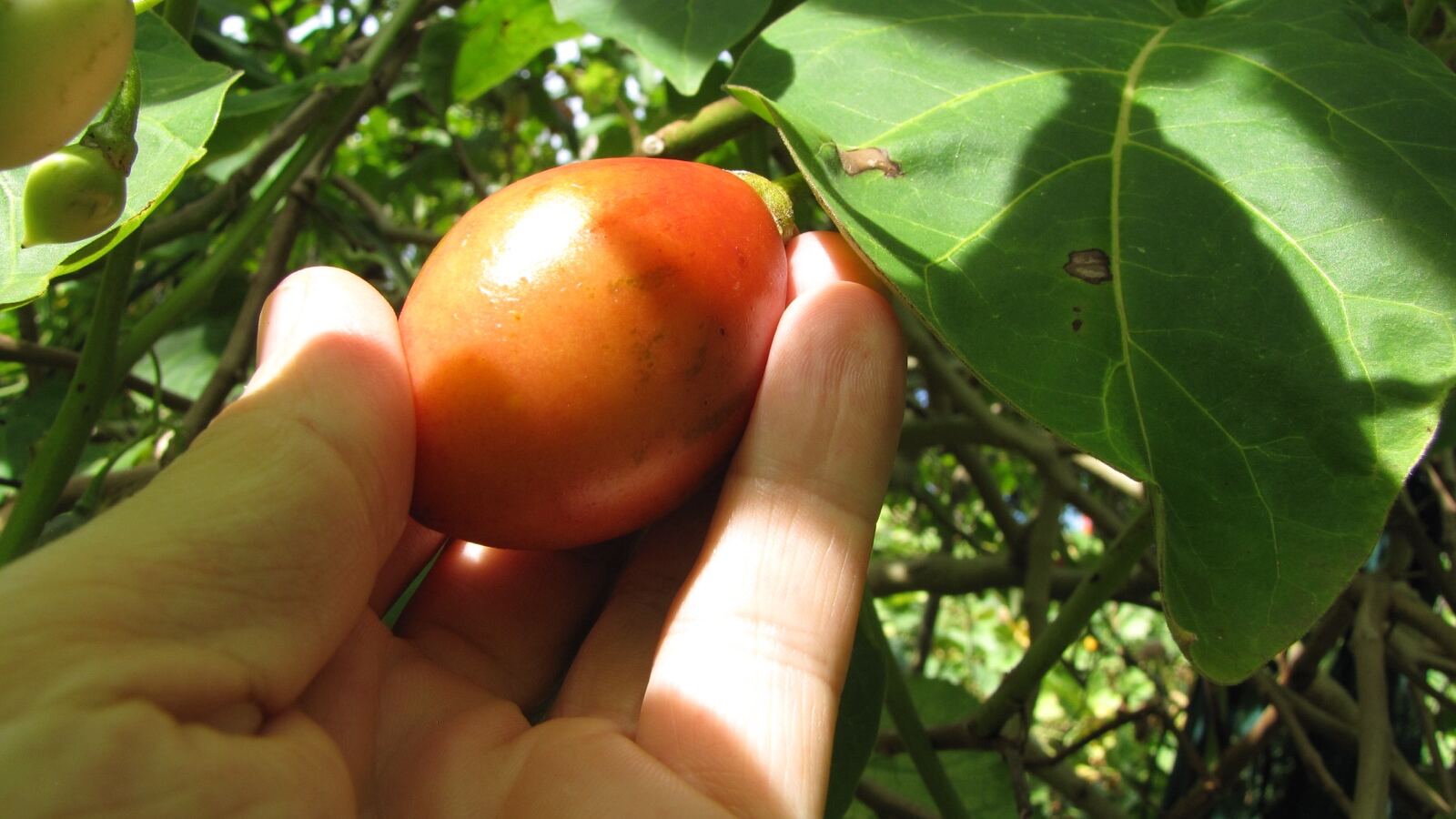
Solanum betaceum, the tamarillo, a small, fast-growing subtropical tree of Andean origin bearing smooth, egg-shaped, red, orange, or yellow fruit — and a member of the nightshade family, Solanaceae, which makes it a close relative of the tomato, potato, aubergine, and pepper.
The fruit hangs in clusters on long stalks and looks like a large, pointed, glossy tomato, which is exactly what it was long called — the tree tomato. Inside, the flesh is firm, tangy, and full of soft edible seeds, with a flavour poised between sweet and savoury: sharper and more aromatic than a tomato, faintly reminiscent of passionfruit and apricot, and used both ways — spooned raw with sugar, blended into juice, or cooked into chutneys, sauces, and savoury dishes.
The name that was invented to sell it
The tamarillo carries one of the best-known stories of fruit marketing. For most of its cultivated history it was simply the "tree tomato" — a plain, accurate, and commercially unhelpful name, since "tomato" made shoppers expect a vegetable and undersold it as an exotic fruit.
In 1967, the New Zealand tree-tomato growers, wanting to distinguish their export crop and give it glamour, coined the name "tamarillo" — reportedly blending a Māori-sounding element with the Spanish amarillo (yellow) — and it stuck completely. The rebrand worked: "tamarillo" now sounds like an established exotic fruit, and few buyers realise it is a recent invention or that they are eating a tree relative of the tomato. It is a neat, well-documented case of a name changing a fruit's fortunes, in the spirit of the "Chinese gooseberry" becoming the kiwifruit.
Fast, soft, and short-lived
The tamarillo suits the impatient grower, because it is one of the quickest of all tree fruits to bear.
It grows very fast — a soft, shrubby little tree of 3 to 5 m with big, soft, heart-shaped leaves — and typically fruits in its second year from seed, cropping heavily thereafter. The trade-off is that it is soft-wooded, shallow-rooted, brittle, frost-tender, and short-lived, usually productive for only some 5 to 12 years before it needs replacing, more a fast perennial than a long-term tree. This quick-return, short-life pattern makes it an ideal early producer in a young food forest, filling the gap while slower trees establish, and easily renewed from seed.
Growing it
Subtropical and frost-tender: the tamarillo wants a frost-free or nearly frost-free, mild climate — it is killed or cut back by hard frost — with warmth and shelter, and it grows well in cool subtropics and mild-temperate gardens against a warm wall or under glass.
Soil and site. Rich, moist, well-drained soil and full sun to light shade; being shallow-rooted and soft, it needs shelter from wind (which snaps the brittle branches) and steady moisture, and benefits from mulch and feeding. Stake young plants.
Propagation. Grown very easily and quickly from seed (which comes reasonably true), and from cuttings — a cutting makes a sturdier, lower-branching, quicker-fruiting plant. See propagation. As a Solanaceae it shares the family's pests and diseases — aphids, whitefly, and the viruses and blights of the tomato tribe — so keep it away from potato and tomato problems and work within integrated pest management. See garden pests overview.
The tamarillo is one of the fastest, easiest routes to home-grown tree fruit in a mild climate — a distinctive, tangy crop from a plant that goes from seed to harvest in a couple of years.
See also
- Tomatoes the close nightshade-family relative
- Aubergine and Okra another Solanaceae fruit
- Peppers and Chillies the family's spice crops
- Food Forest Design the tamarillo as a fast early producer
- Propagation raising tamarillos from seed and cuttings
- Integrated Pest Management handling the nightshade pests
- Papaya