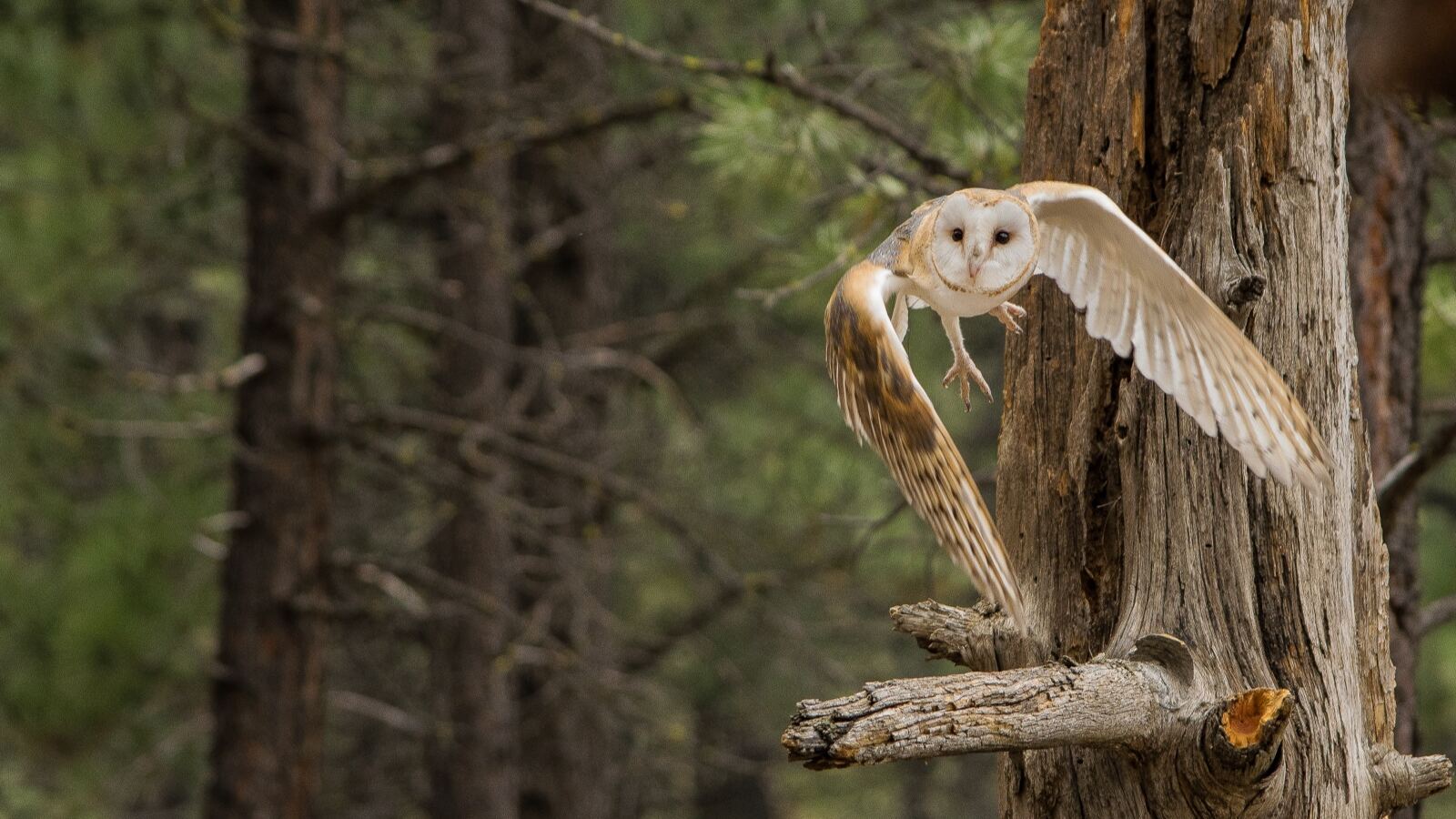
The night shift
Owls are the nocturnal counterparts of the birds of prey — where hawks, falcons, and eagles hunt by day, owls take the night shift, so between them the raptors keep pressure on prey around the clock. And the prey that most owls specialise in is exactly the one that troubles farmers and growers most: rodents.
Owls are supremely adapted for silent night hunting. Their flight is almost soundless — special soft, fringed feathers muffle the air over their wings — so they fall on prey unheard; their hearing is extraordinary, precise enough to locate a mouse under snow or grass by sound alone (a barn owl's asymmetrical ears triangulate the exact spot); and their large forward eyes gather what little light there is. A hunting owl is a precision rodent-detector on silent wings.
A living pest-control service
The numbers make owls one of the most valuable of all garden and farm allies. A single barn owl family, raising a brood, will catch and eat thousands of rodents in a year — voles, mice, rats, and shrews — and a pair with hungry young hunts relentlessly through the nights of the breeding season. Where voles and rodents damage crops, orchards, and stored grain, a resident owl family is a genuine, free, and effective control.
This is why owls, and barn owls especially, are actively encouraged as a pest-management tool. Because their limit is often not food but nest sites — the old hollow trees, barns, and cavities they need are frequently in short supply — putting up owl nest boxes can markedly increase owl numbers on a farm, and studies in vineyards, orchards, and grain regions have shown measurable reductions in rodent damage where boxes are provided. It is biological control on wings, and one of the more satisfying: a box on a pole or in a barn, and a family of owls moves in to work the night.
What owls need — and the poison that kills them
To support owls, provide the two things they most often lack:
- Nest sites — dead and hollow trees, old buildings, and, where those are gone, nest boxes sized and sited for the local owls;
- Hunting habitat — rough, tussocky, unmown grassland, field margins, and meadows where voles and mice thrive, since an owl needs a good prey base within reach of its nest. Tidy, close-mown, chemically-simplified land starves them.
And avoid the one thing that kills them wholesale: rodenticides (rat poison). A poisoned rat does not die at once — it staggers about, slow and easy to catch, for days — so owls and other predators readily eat poisoned rodents and are killed by the accumulated poison. This secondary poisoning is a major and well-documented cause of owl and raptor death, and it is self-defeating, because it destroys the very predators that would control the rodents for free — the same trophic mistake as spraying away your beneficial insects. Controlling rodents by supporting owls, rather than by poison, is both safer and, in the long run, more effective. See trophic cascades.
See also
- Birds of Prey the daytime raptors owls complement
- Voles and Gophers the rodents owls control
- Dead Wood Habitat the hollow trees owls nest in
- Meadow Management the rough grassland owls hunt over
- Integrated Pest Management owl boxes as rodent control
- Trophic Cascades why poisoning predators backfires