The bee everyone means
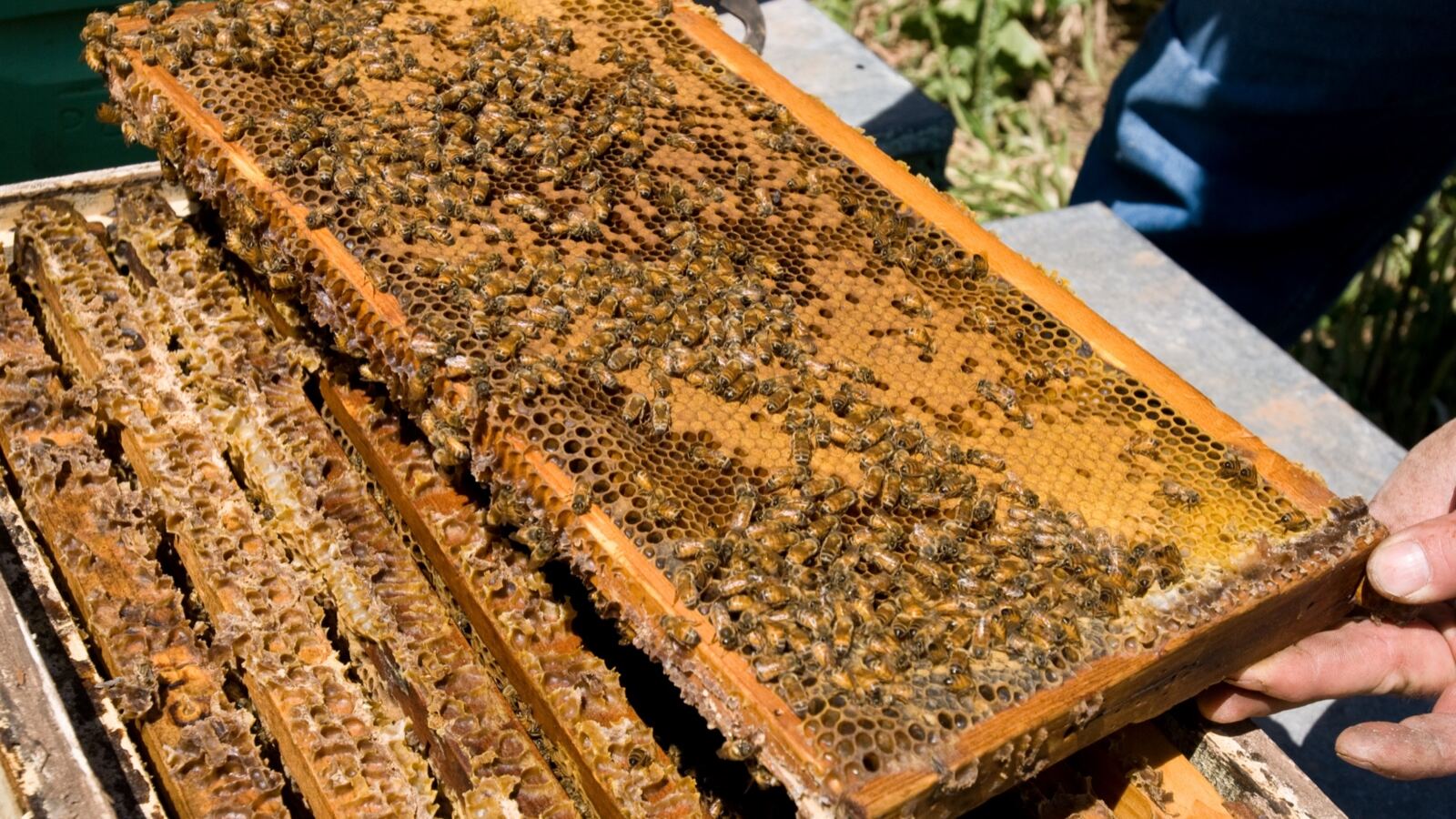
Say "bee" and most people picture the honeybee (Apis mellifera) — the one that lives in a hive, makes honey, and is kept by beekeepers. But it is worth remembering, as native bees makes clear, that the honeybee is a single species among more than 20,000 bees, most of them solitary and wild. The honeybee is exceptional precisely because it is social, managed, and moved around at will — which is what makes it the workhorse of commercial pollination and the subject of beekeeping.
The hive as a superorganism
A honeybee colony is best understood not as a collection of individual bees but as a single superorganism — a body made of thousands of parts. It has three castes:
- a single queen, the colony's only reproductive female, laying up to a couple of thousand eggs a day;
- tens of thousands of sterile female workers, who do everything else — nurse, build, guard, forage;
- and a few hundred male drones, whose only job is to mate.
The colony regulates its own temperature, makes collective decisions (famously, choosing a new home by a kind of democratic dance-off), and communicates the direction and distance of flowers through the waggle dance — one of the few known symbolic languages in the animal world. It stores food against winter as honey (concentrated nectar) and pollen, and builds the whole structure from wax it secretes. This is what the beekeeper manages: not bees, but a colony.
The pollination service
Because a honeybee colony can be boxed, moved, and multiplied, the honeybee has become the backbone of commercial crop pollination. Hives are trucked to crops as they flower and rented out by the beekeeper — most dramatically in the almond orchards of California, where over a million hives, most of the honeybees in the United States, converge each spring for the world's largest managed pollination event.
This makes the honeybee enormously valuable — but also raises a caution that has grown louder in recent years: leaning on one managed species for so much pollination is fragile. Honeybees can compete with and spread disease to wild bees, they are not the best pollinators of many crops (some, like tomatoes, need the buzz-pollination that honeybees cannot do), and a landscape stripped of the habitat that supports diverse wild pollinators is one that has put all its eggs in one basket. The resilient answer is not more honeybees but a landscape that supports both managed and wild pollinators. See mutualism and symbiosis.
The threats
Honeybees have suffered widely-publicised troubles, and while "the bees are dying" is often oversimplified, the pressures are real and mostly human-made:
- the varroa mite, an introduced parasite that weakens colonies and spreads viruses, is the single biggest problem in modern beekeeping;
- pesticides, especially the neonicotinoid seed treatments, which harm bees' navigation and health;
- poor forage — vast monocultures and tidy landscapes with little continuous nectar;
- and diseases spread partly by the movement of hives.
"Colony collapse disorder," the sudden abandonment of hives, is best seen as the result of several of these stresses acting together. The measures that help are the same ones that help all pollinators.
Keeping bees, and keeping them fed
Beekeeping is a rewarding craft, giving honey, wax, and the satisfaction of tending a colony — but it is a commitment (varroa management, disease watch, winter care), and keeping a hive is not a conservation act for wild bees; if anything, a hive adds a large, hungry colony that competes with them. The most useful thing anyone can do for bees of every kind, kept or wild, is to provide what they all need: a long, unbroken season of diverse flowers, nesting habitat, and freedom from pesticides. Feed the pollinators and both the honey crop and the harvest that depends on them follow.
See also
- Native Bees the 20,000 wild bees the honeybee is one of
- Pollinator Habitat the forage all bees need
- Almond the crop behind the world's largest managed pollination event
- Mutualism and Symbiosis the plant-and-pollinator partnership
- Hoverflies and other pollinators beyond the bees
- Integrated Pest Management avoiding the sprays that harm bees