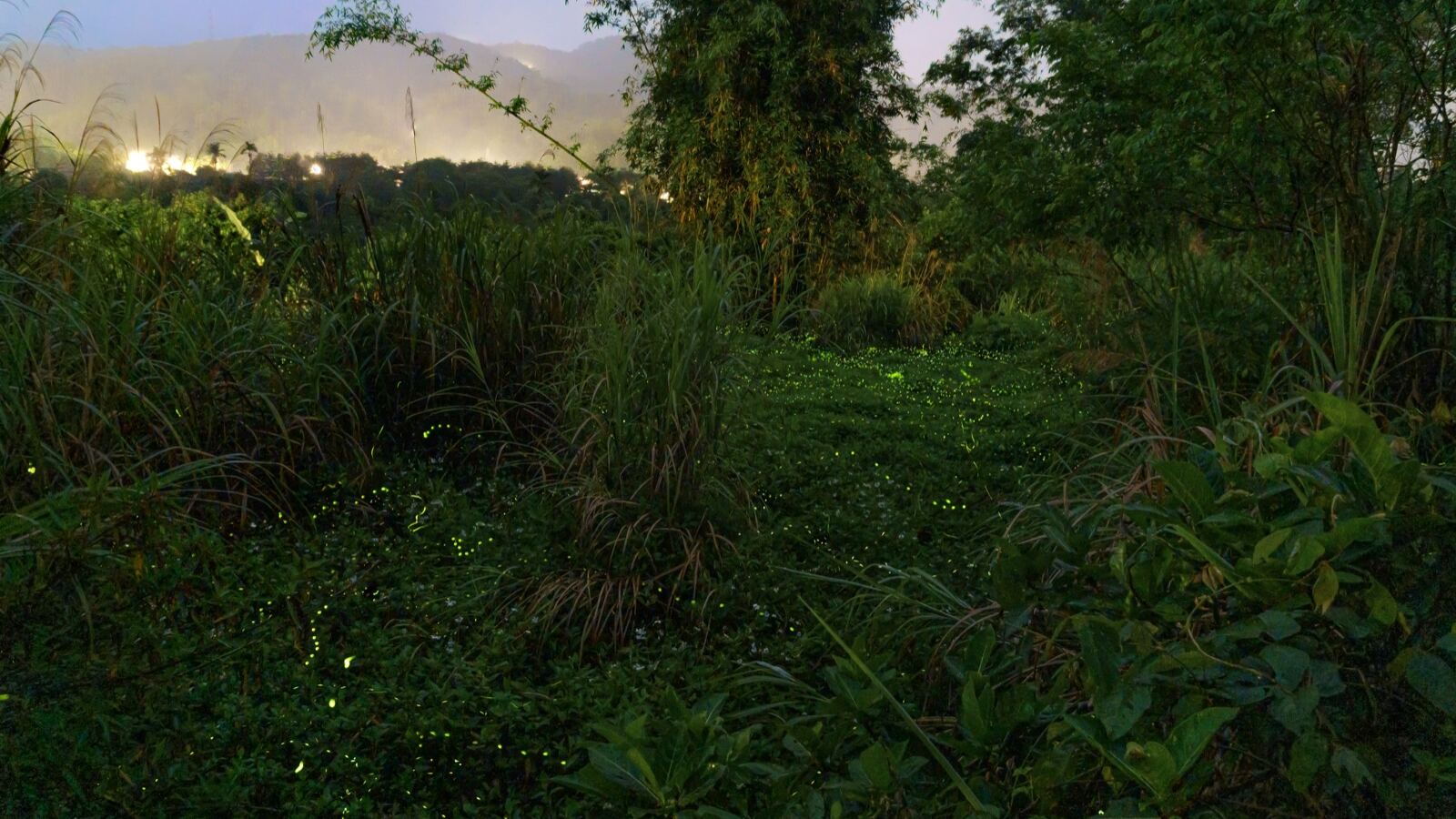
Living light
Glow-worms and fireflies are, despite the names, neither worms nor flies but beetles (the family Lampyridae), and they share one of the most enchanting tricks in nature: they make light. Through a chemical reaction in special organs at the tail (using the compound luciferin), they produce a cool, greenish glow with almost no heat — bioluminescence — and they use it to find one another in the dark.
A summer meadow or wood-edge lit by glow-worms or drifting with firefly flashes is one of the small wonders of the living world, and — as it turns out — a sign of a healthy, dark, undisturbed habitat.
Glow-worms and fireflies
The two names describe slightly different beetles and different signals:
Glow-worms. In the classic European glow-worm, it is the wingless female who glows — she climbs a grass stem on a still summer night and shines a steady, greenish light from her tail to attract the flying males, who home in on her glow. The larvae glow faintly too. The females glow for only a few nights of their short adult lives, racing to mate before their light and their lives run out.
Fireflies. In the fireflies (common in the Americas and Asia), both sexes usually fly and flash, and they communicate in coded patterns of flashes — each species has its own rhythm and colour of flash, a light-language by which males and females of the same kind recognise and find each other across the dark. In some tropical fireflies, whole trees full of males flash in eerie synchrony. (There is even a dark twist: females of the genus Photuris mimic the flash-code of other firefly species to lure in their males — and then eat them, the "femme fatale" firefly.)
The larvae eat slugs and snails
Beneath the magic is a genuinely useful garden animal, because the larvae are voracious predators of slugs and snails. The glow-worm larva is a specialist snail-hunter: it follows a snail's slime trail, attacks the snail (injecting digestive juices to subdue and dissolve it), and eats it — one of the few dedicated predators of the gardener's great enemy, alongside the ground beetles. So a garden with glow-worms or fireflies has, in their larvae, a quiet force of natural pest control working the damp nights, and a reason beyond beauty to encourage them.
Vanishing under our lights
Glow-worms and fireflies are in widespread decline, and the causes point straight at how we treat the land and the night:
- Light pollution. These are creatures that signal with light in the dark — and artificial light at night drowns out their glow and their flashes, so males cannot find females and they fail to breed. A firefly cannot compete with a security light. Reducing outdoor lighting, and keeping habitat dark, is one of the most direct things that helps them.
- Habitat loss. They need undisturbed, unsprayed, damp, grassy and wooded habitat with a good population of the snails their larvae eat — rough grassland, hedge bottoms, wood edges, unlit gardens — all of which tidy, lit, chemically-managed landscapes destroy.
- Pesticides, which kill the larvae and their prey.
This makes glow-worms and fireflies valuable indicator species: their presence signals a dark, undisturbed, chemical-free, snail-rich habitat, and their disappearance is an early warning that a place is being lit up, sprayed, and tidied into sterility. To keep them, the recipe is simple and appealing — leave some grass long and damp, put the pesticides away, and turn the lights off at night — and be rewarded with living light and a little free slug control. See meadow management and rewilding edges.
See also
- Slugs and Snails the prey the larvae specialise in
- Ground Beetles the other great nocturnal slug predators
- Beneficial Predators the natural-enemy workforce
- Indicator Species glow-worms as signs of habitat quality
- Meadow Management the rough grassland they need
- Rewilding Edges the dark, undisturbed margins that support them