What they are
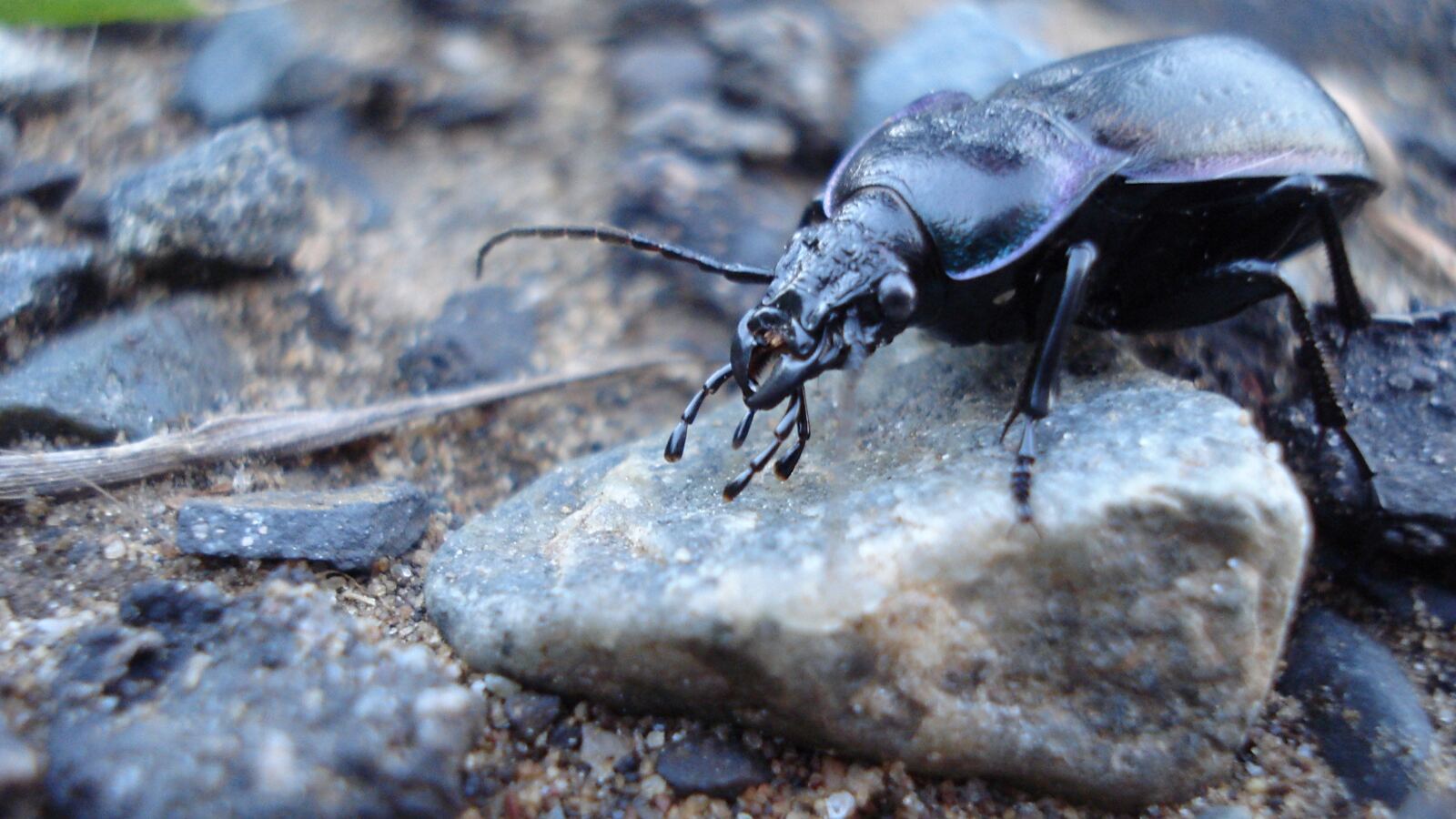
Ground beetles (the carabids) are a huge family of mostly dark, glossy, fast-running beetles that live on and in the soil surface, hunting by night and hiding by day under stones, logs, and leaf litter. They are one of the most important — and most overlooked — groups of predators in the garden and farm, and they work the ground level that flying predators cannot reach.
They are easy to know: hard-shelled, quick, often black or metallic, with long legs built for running (most rarely fly), scurrying for cover when a stone is lifted. Both the adults and their larvae are predators.
What they eat
Ground beetles are voracious and broad in their tastes, which makes them valuable against a wide range of ground-dwelling pests:
- Slugs and snails and their eggs — several ground beetles are important slug predators, hunting them at night when the slugs are active, one of the few natural controls on the gardener's great enemy;
- Soil-dwelling pests — cutworms, leatherjackets, root-fly eggs and larvae, wireworms, and the soil stages of many pests;
- Aphids, caterpillars, and other soft-bodied insects that fall or feed near the ground;
- and — remarkably — many ground beetles also eat weed seeds, consuming large quantities of the seeds of annual weeds off the soil surface, a free and underappreciated form of weed control.
A dense population of ground beetles is a quiet, night-working control on some of the hardest pests to manage, slugs above all.
Why tillage is their enemy
The crucial thing about ground beetles is that they are residents of undisturbed ground — and this is both their strength and their vulnerability. Because most do not fly, they cannot quickly recolonise a cleared, cultivated field; they build up over years in stable, undisturbed soil with permanent cover, and they are devastated by ploughing, digging, and bare fallow, which destroy their shelter, expose them to predators, and kill their larvae.
So the practices that favour ground beetles are exactly those of low-disturbance growing:
- No-dig and reduced tillage — leaving the soil and its predators intact;
- Permanent cover — mulch, ground cover, and undisturbed margins that give shelter by day and overwintering habitat;
- "Beetle banks" — the farm-scale version: raised, grassy, undisturbed strips left through and around fields specifically as a reservoir from which ground beetles (and spiders) spread out to hunt the crop, a well-proven pest-management technique;
- No broad-spectrum insecticides, which kill them along with the pests.
Ground beetles are a textbook case of the resident-predator principle: keep the ground undisturbed and covered, and a standing army of night-hunting predators establishes and stays, dealing with slugs and soil pests before they build up — the opposite of the bare, tilled, sprayed ground that leaves the pests in charge. See food webs.
See also
- Slugs and Snails the pest ground beetles are among the few to control
- Soil-Dwelling Pests the cutworms and grubs they hunt
- Beneficial Predators and Spiders the wider ground-level predator guild
- No-Dig the low-disturbance approach ground beetles need
- Weed Management the weed seeds ground beetles also eat
- Integrated Pest Management beetle banks and resident predators