What it is
Syringa reticulata, the Japanese tree lilac — the member of the lilac genus (Syringa) that, uniquely, grows into a genuine small tree rather than the familiar garden shrub.
It belongs to the olive family, Oleaceae — kin to the olive, ash, fringe tree, and privet — and it brings the lilac's fragrance and flower to tree size, along with a toughness that has made it one of the more useful small street trees of cold climates.
Cream flowers when the lilacs are done
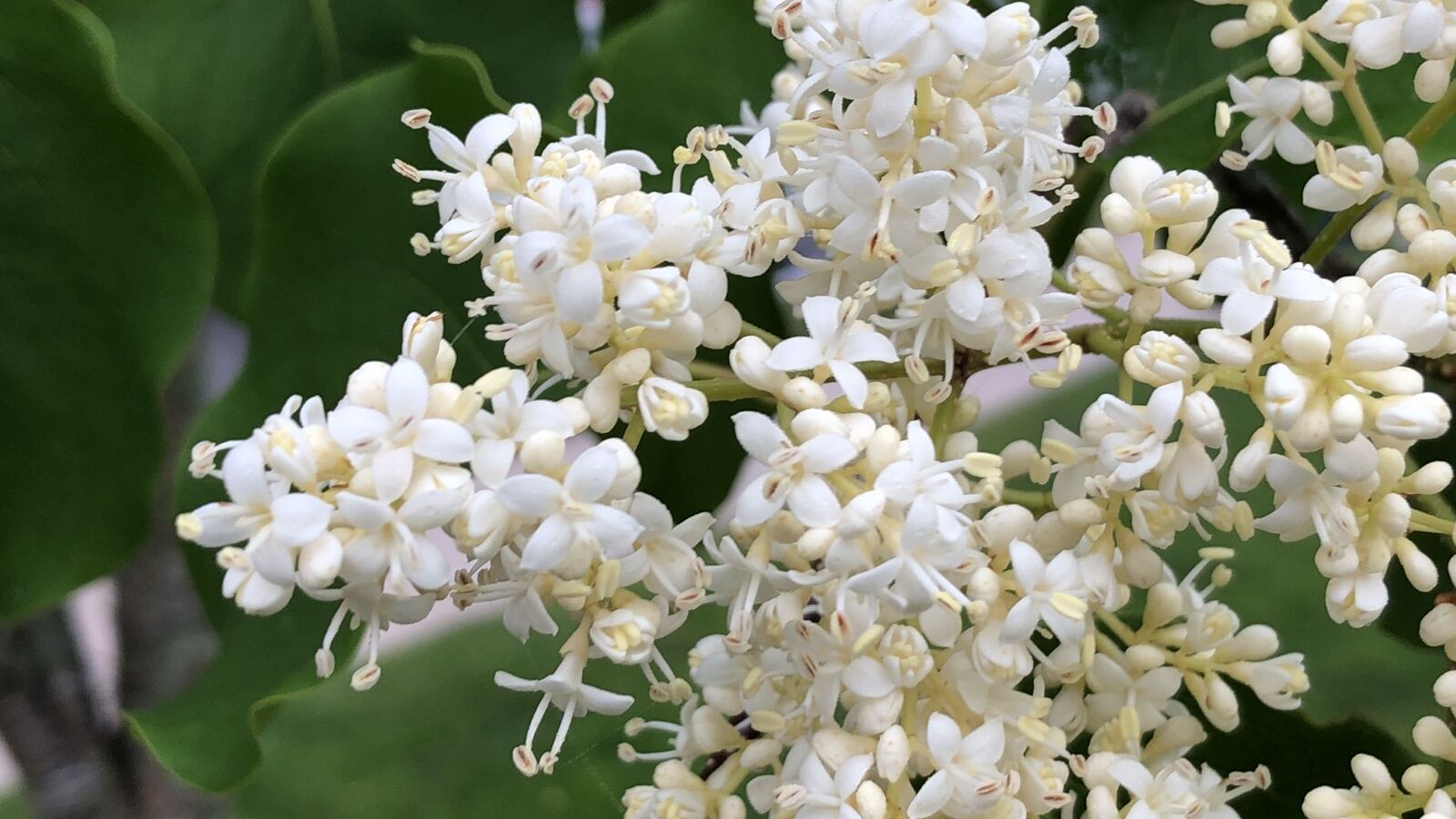
The tree lilac's great virtue is its flowering, in both quality and timing. In early summer — a few weeks after the shrubby lilacs have finished — it covers itself in large, showy, foaming panicles of small, creamy-white flowers, held above the foliage, filling the tree with bloom and a sweet (some find it musky) fragrance at a moment when few trees flower.
Coming in the early-summer gap, this makes the tree lilac a valuable late nectar and pollen source for bees, and a welcome splash of white in the garden and street. The flowers give way to clusters of tan seed capsules that persist into winter, and the bark is smooth, glossy, and reddish-brown with horizontal lenticels, rather like a cherry's, giving some winter interest.
The tough little street tree
Beyond the flowers, the tree lilac earns its place by being exceptionally tough and clean. It is very cold-hardy, tolerant of heat, drought, poor soil, pollution, road salt, and the constrained conditions of a street tree pit, and it stays a small, manageable size (5 to 9 m) with a neat rounded crown — so it fits under power lines and into small spaces where larger trees cannot go.
It is also notably free of the problems that plague many street trees — no messy fruit drop to speak of, few serious pests or diseases (it largely escapes the powdery mildew and borers that trouble shrubby lilacs), and no aggressive roots — which, combined with its hardiness and its flowers, has made it a favourite of city foresters looking for a reliable, small, flowering, low-maintenance tree to diversify the urban canopy, exactly what urban forestry keeps asking for. See climate adaptation.
Growing it
Very hardy and adaptable, the tree lilac wants full sun (it flowers poorly in shade) and tolerates almost any well-drained soil, including alkaline and poor ground, along with cold, heat, drought, and urban stress; it dislikes only waterlogging and deep shade. It is small, slow-to-moderate, and long-lived, needing little care beyond the occasional formative prune to a single or multi-stemmed tree.
It is grown from seed and cuttings, and named cultivars (such as 'Ivory Silk') are selected for heavier flowering and a neat form. For a small garden, a cold city, or a difficult street, the Japanese tree lilac is one of the best small flowering trees available — hardy, clean, and foaming with fragrant bloom in the early-summer lull. See propagation.
See also
- Olive, Ash, and Fringe Tree its olive-family relatives
- Urban Forestry the tree lilac as a tough, clean street tree
- Pollinator Habitat its valuable early-summer nectar
- Pagoda Tree and Maackia other tough small flowering street trees
- Climate Adaptation hardy trees for hard sites
- Crape Myrtle another small flowering tree with attractive bark