What it is
Stewartia (also spelled Stuartia), a small genus of deciduous trees and shrubs of East Asia and the southeastern United States, in the tea family, Theaceae — close relatives of the tea plant, the camellias, and the extinct-in-the-wild franklinia, which they strongly resemble.
Stewartia is one of those trees that quietly offers something in every season, and it is regarded by many gardeners as one of the finest of all small specimen trees for a choice spot.
Four seasons in one tree
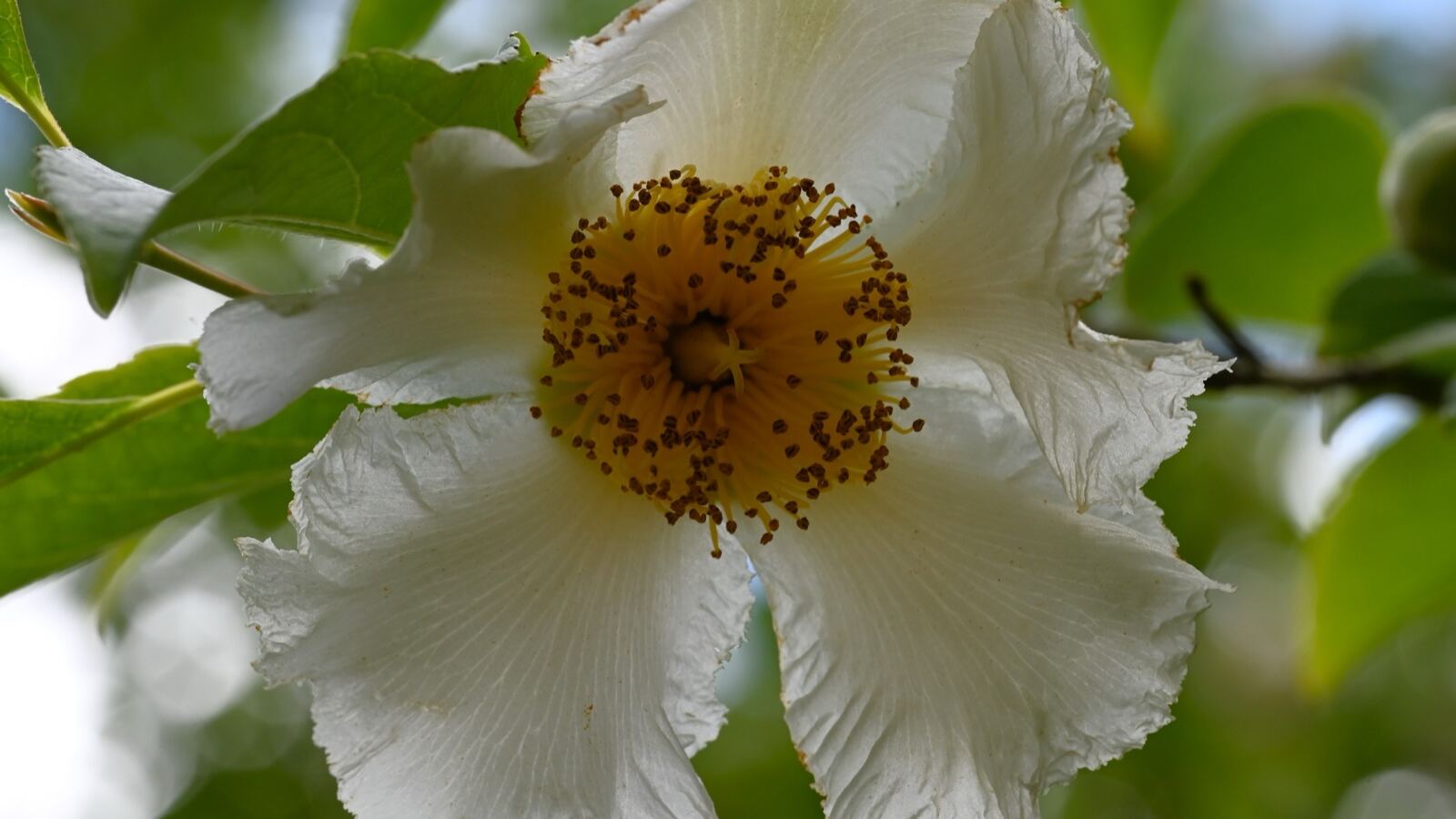
Summer flowers. In mid-summer — later than most flowering trees — stewartia opens a long succession of pure white, cup-shaped flowers with a central boss of orange or purple stamens, looking exactly like single camellias (which are its cousins). The bloom continues over weeks, the flowers dropping whole to carpet the ground beneath, and it comes at a season when tree blossom is scarce.
Autumn colour. The foliage turns brilliant red, orange, and burgundy in autumn, rivalling the maples it is often planted with.
Winter bark. And then, when the leaves fall, the real treasure is revealed: the bark. Mature stewartias develop a stunning flaking, mottled, patchwork trunk in shades of grey, orange, cinnamon, and cream, peeling in irregular plates like a jigsaw — a winter feature to rank with the finest-barked trees, the plane and the crape myrtle. It is the bark, more than the flowers, that makes experienced gardeners covet the tree.
This combination — camellia flowers in summer, fire in autumn, jewelled bark in winter, and a neat, slow, well-behaved habit — makes stewartia an almost ideal small ornamental tree, and it never outgrows its welcome.
Growing it
Stewartia asks for particular conditions, and rewards them.
Like its tea-family relatives it wants moist, humus-rich, sharply-drained, acidic soil — the same conditions as rhododendrons and blueberries — in a position with morning sun and some shelter from hot afternoon sun and cold wind. It dislikes drought, alkaline soil, wet heavy clay, and root disturbance, and it resents being moved, so it should be planted young, in the right spot, and left alone. See soil pH.
It is slow-growing and long-lived, and largely free of the pests and diseases that trouble many ornamentals, which — combined with its modest size and four-season interest — makes it low-maintenance once established. The flowers are good for pollinators in mid-summer.
Grown from seed (slow, and often doubly dormant, taking a year or more) and from cuttings, which can be tricky to overwinter. Patience is the price of one of the loveliest of all garden trees. See propagation.
See also
- Tea the family's most useful member
- Franklinia its extinct-in-the-wild cousin
- Plane Trees another tree grown for spectacular flaking bark
- Crape Myrtle more prized exfoliating bark
- Blueberry and Acid Shrubs the acid-soil conditions it shares
- Maples its companion in brilliant autumn colour
- Seven-Son Flower