What they are
Two related groups of graceful spring-flowering trees in the storax family, Styracaceae:
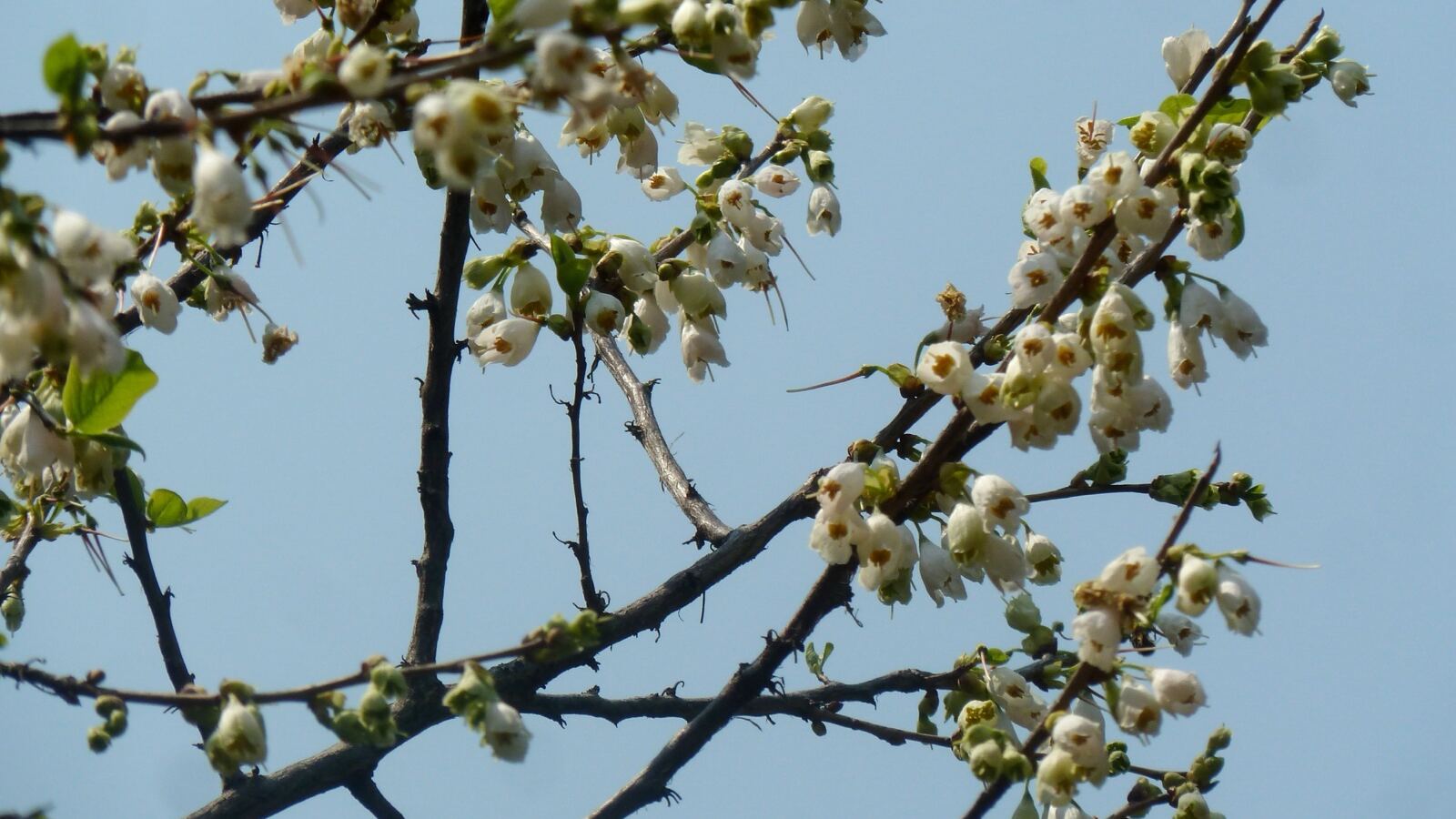
Silverbells, Halesia — small trees of the southeastern United States (and East Asia) that hang their branches with rows of white or pink bell-shaped flowers in spring, followed by curious four-winged seed pods;
Snowbells, Styrax — small trees and shrubs, most famously the Japanese snowbell (Styrax japonicus), that drape themselves in pendulous, faintly-scented white star-shaped flowers.
Both are prized as elegant, well-mannered small ornamental trees, and both are understorey and woodland-edge plants that appreciate the shelter of larger trees.
Bells and stars in spring
The appeal of both is the spring flowering, and the way the flowers hang.
The Carolina silverbell (Halesia carolina) and the larger mountain silverbell open masses of little white bells, usually just before or with the leaves, so the bare or half-clad branches are strung with hanging flowers like rows of tiny lanterns — a soft, understated, very beautiful effect in a woodland garden. Pink-flowered forms exist. The four-winged pods that follow are decorative in their own right and persist into winter.
The Japanese snowbell flowers a little later, once in full leaf, and holds its white (or pink) bell-to-star flowers on short stalks below the spreading branches, so that the display is best appreciated from beneath, looking up — the tree is often planted where a path passes under it or on a bank above eye level for exactly this reason. A weeping form, 'Pendula', drips with flowers.
Both are excellent, gentle small trees for the woodland garden or a sheltered lawn, feeding early pollinators — bees work the bells eagerly — and casting light shade. They sit naturally with the other refined understorey trees, the magnolias, redbud, and flowering dogwoods. See structural diversity.
The resin in the family
The Styracaceae have a claim beyond ornament: some tropical Styrax species are the source of benzoin (gum benjamin, storax) — a fragrant resin tapped from the wounded bark, exactly as frankincense and myrrh are tapped from theirs.
Benzoin has been used for centuries as an incense, a perfume fixative, and a medicine (friar's balsam, the classic steam inhalation for congestion, is a benzoin tincture), and it remains an ingredient in incense, cosmetics, and pharmacy. So the delicate garden snowbell belongs to a family that has supplied one of the world's aromatic resins — a nice link between the ornamental and the useful, and between temperate gardens and the tropical resin trade. The name "storax" (and "styrax") attaches both to the trees and to their resin.
Growing them
Both want moist, humus-rich, well-drained, acidic to neutral soil and a sheltered position in sun or light shade — woodland-edge conditions — and both dislike drought, exposure, alkaline soil, and wet heavy ground. Given the right cool, moist, sheltered spot they are easy and trouble-free; in hot, dry, or exposed sites they struggle. See soil pH.
They are slow to moderate, small (mostly 5 to 10 m), long-lived, and largely free of pests and diseases. Grow them where their hanging flowers can be seen to advantage — silverbells against a dark background, snowbells above eye level. Propagated from seed (slow and doubly dormant) and from cuttings. See propagation and native plant selection.
See also
- Magnolias the other aristocratic spring-flowering small trees
- Redbud and Sassafras companion understorey flowering trees
- Spindle and Dogwood the flowering dogwoods they grow among
- Frankincense and Myrrh the family parallel — trees tapped for aromatic resin
- Pollinator Habitat the early bees the bells feed
- Structural Diversity their role in the woodland understorey