What it is
Maackia amurensis, the Amur maackia — a small, slow-growing deciduous legume of the Amur region of Manchuria, Korea, and northeastern Asia, kin to the pagoda tree, laburnum, and the other pea-flowered trees.
It is not a showy or famous tree, but it is a genuinely valuable one for a specific and demanding job: it is one of the toughest and most cold-hardy of all small ornamental trees, and it does the useful things legumes do, in places where few trees will grow at all.
Built for the hardest sites
The Amur maackia comes from a region of brutally cold winters and difficult conditions, and it brings that toughness to the garden and the street. It is exceptionally cold-hardy (surviving deep continental winters that kill most ornamental trees), and it also tolerates heat, drought, poor and compacted soil, alkaline ground, wind, and urban pollution — close to the full list of what makes a site hostile.
As a legume, it is a nitrogen fixer, so it improves the poor soils it grows on rather than depending on them, which is part of why it thrives where others fail. This combination — extreme hardiness, toughness, small size, and self-fertilising roots — makes maackia a valued street and small-garden tree for cold cities and difficult sites, exactly the kind of tough, underused diversifier that urban forestry keeps calling for. It is slow-growing, which limits its popularity with impatient planters, but the slowness buys a dense, sound, long-lived, low-maintenance tree. See climate adaptation.
Flowers, bark, and season
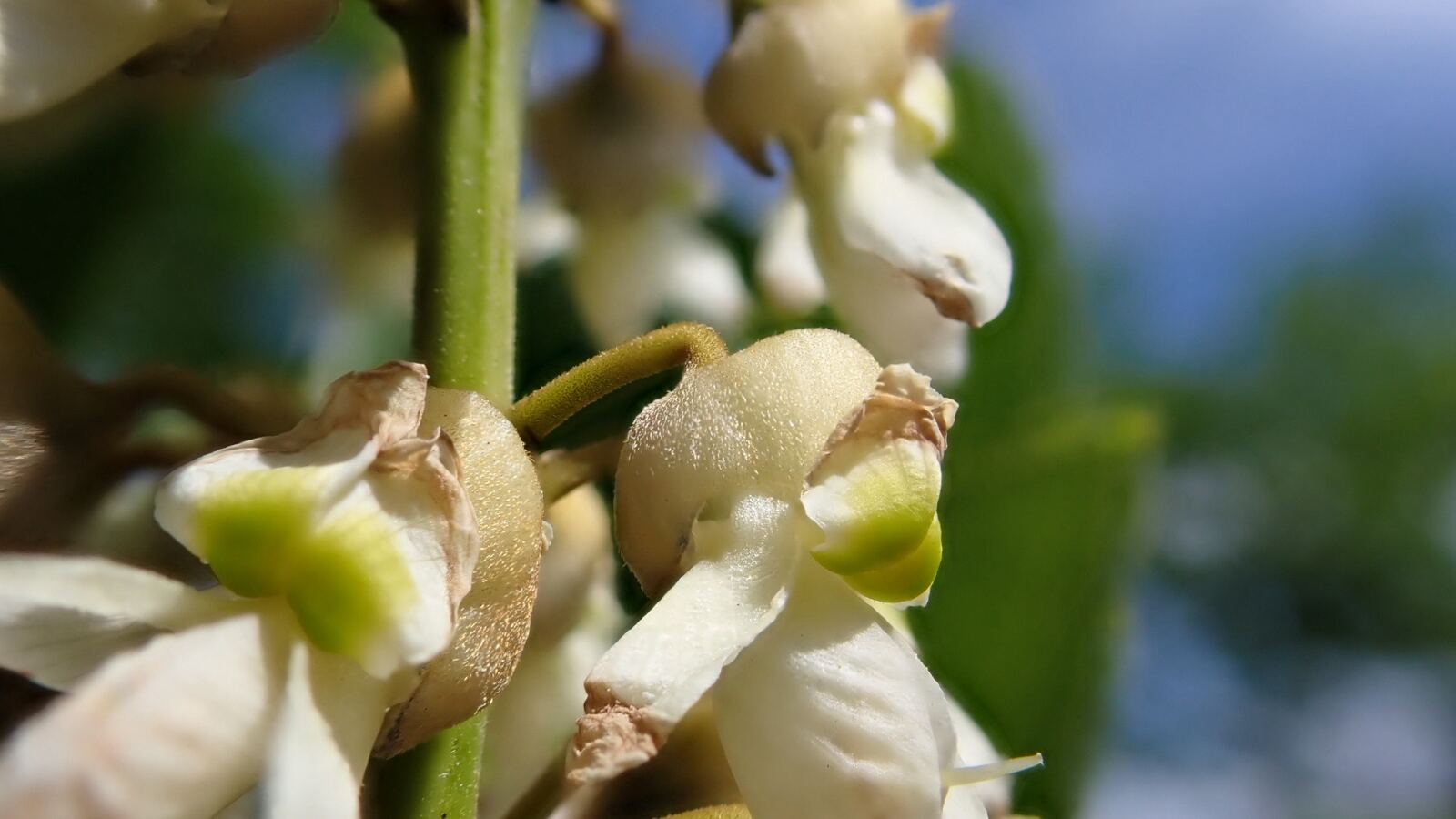
For a modest tree, the maackia offers real ornamental interest. It flowers in mid-to-late summer — the same valuable off-season slot as its cousin the pagoda tree — carrying upright spikes of small, creamy-white pea-flowers above the foliage, a welcome bloom in the high-summer lull and a good late nectar source for bees. The compound leaves emerge a striking silvery, downy grey-green before turning green, and the bark on older trees peels and flakes attractively in shades of amber and bronze, giving winter interest. Being a legume, it follows the flowers with flat pods.
Growing it
Very hardy and very tough, the maackia wants full sun and tolerates almost any well-drained soil — poor, dry, alkaline, or compacted — along with cold, heat, drought, and urban stress; it dislikes only waterlogging and deep shade. It is small (6 to 12 m), rounded, slow-growing, and long-lived, needing little care once established.
It is grown from seed (scarified, like other legumes) and is planted as a resilient small ornamental and street tree for cold and difficult climates, and in shelter and restoration plantings where its nitrogen-fixing and toughness are useful. For a cold city or a hard site that defeats fussier trees, the Amur maackia is one of the most reliable and undemanding of small trees. See propagation and nitrogen fixers.
See also
- Pagoda Tree its close relative, with the same late-summer flowers
- Laburnum and Black Locust other pea-flowered legume trees
- Nitrogen Fixers the soil-improving legume role
- Urban Forestry maackia as a tough street-tree diversifier
- Climate Adaptation hardy trees for hard conditions
- Hackberry another tough, underused urban tree