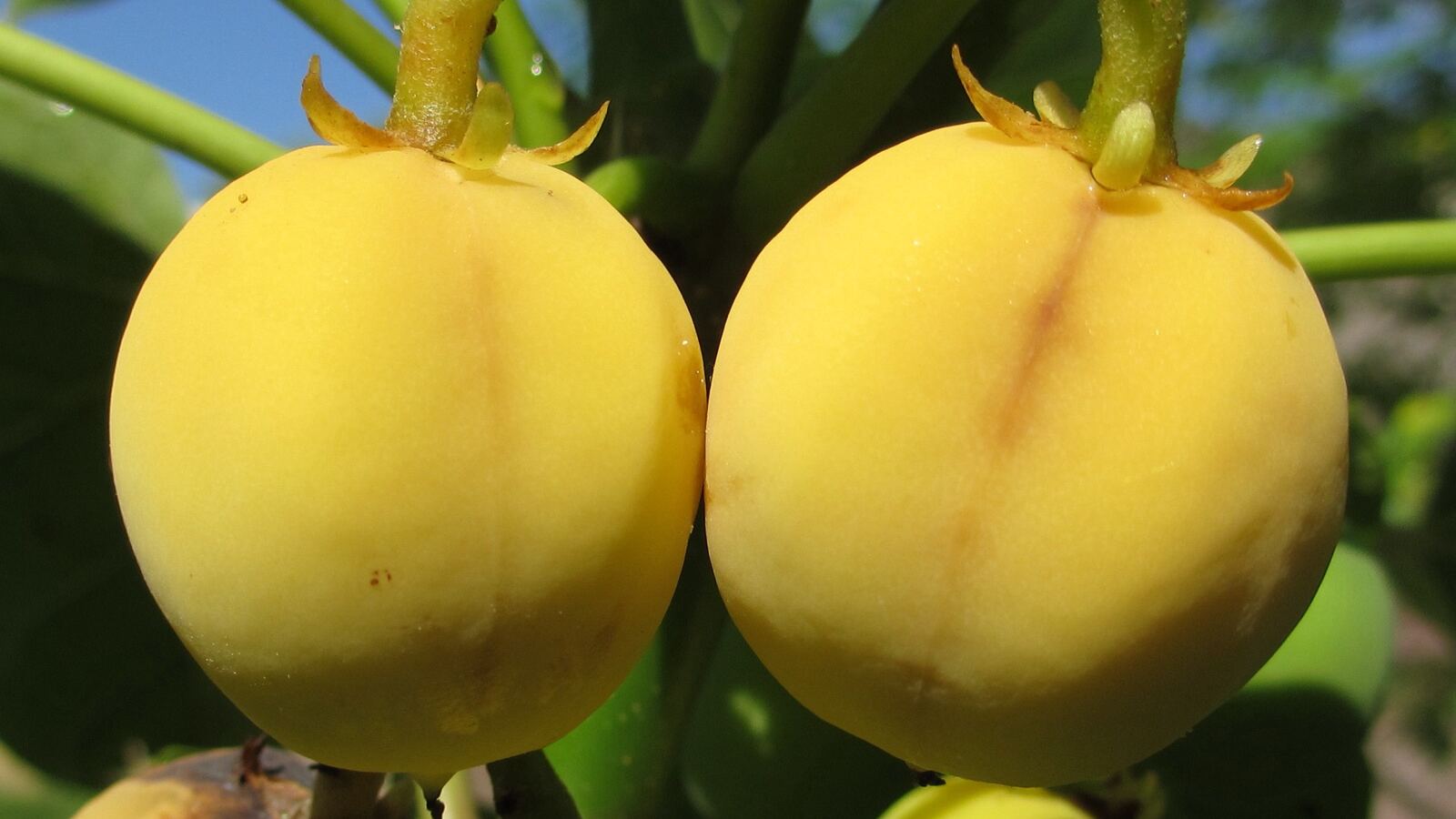
What it is
Jatropha curcas, the physic nut or purging nut — a fast-growing, drought-hardy, poisonous shrub or small tree of tropical American origin, now grown across the tropics, and the subject of one of the most spectacular booms and busts in the recent history of agriculture.
It belongs to the spurge family, Euphorbiaceae — the same family as rubber, tung and candlenut, and cassava — and, like many of them, it stores a great deal of oil in its seeds and a great deal of toxin in its tissues. Long grown as a hardy living fence and a folk medicine, it was, in the 2000s, suddenly promoted as the tree that would fuel the world.
The biofuel bubble
In the mid-2000s, with oil prices high and alarm growing over climate change, jatropha was seized upon as a miracle biofuel crop, and an extraordinary global rush followed.
The pitch was irresistible: jatropha's seeds are rich in oil that can be pressed and processed into biodiesel; the plant is tough and drought-hardy, so — the claim went — it could be grown on marginal, degraded, arid "wasteland" that was no use for food crops, producing fuel without competing with agriculture or clearing forest. Governments, corporations, and development agencies poured billions of dollars into jatropha; vast plantations were established across India, Africa, and Southeast Asia; airlines flew test flights on jatropha biodiesel; and it was hailed as a green fuel for the poor world.
Then it collapsed. The central promise proved false: jatropha grew and survived on poor dry land, but to actually yield well it needed good soil, water, and fertiliser like any other crop — on the marginal wasteland where it was supposed to thrive, yields were dismal and uneconomic. The plants took years to bear, the seeds had to be picked by hand, the economics never worked, and much of the "wasteland" turned out to be land that people were using after all, so the plantations displaced food-growing and grazing. Within a few years the great majority of the jatropha schemes were abandoned, leaving failed plantations and lost investment across three continents. It stands as a classic cautionary tale of an agricultural bubble — of a "miracle crop" promoted far ahead of the evidence, on the seductive but flawed idea that you can get something (fuel) from nothing (wasteland). See restoration economics.
The real, modest plant
Stripped of the hype, jatropha remains a genuinely useful, if humble, plant in its traditional roles.
It is an excellent living fence: cut branches pushed into the ground root readily and grow into a stock-proof hedge that animals will not eat (because it is toxic), in the manner of the gliricidia and coral tree living fences. Its oil, though not an economic transport fuel, is genuinely useful at the village scale — for soap-making, for lamps, and for small local biodiesel and mechanical uses — and the plant has a long history as a hedge, a soil-binder for erosion control, and a folk medicine (the "physic" and "purging" names come from its drastic laxative effect).
The catch running through all of this is that jatropha is poisonous: the seeds contain toxic curcin and purgative oils, and eating even a few of the tempting nut-like seeds causes severe vomiting and diarrhoea, with children regularly poisoned — so despite its many uses it is emphatically not a food, and its toxicity is both a defence (nothing browses it) and a hazard. See invasive species, as jatropha has naturalised and become weedy in some regions.
Growing it
Tropical to subtropical and frost-tender, jatropha is genuinely tough — tolerant of drought, heat, and poor soil, and easy to grow — but, as the biofuel debacle showed, tough survival and good yield are different things: for any real seed crop it wants decent soil, moisture, and care like any other plant.
It is grown extremely easily from seed and from large cuttings (the basis of the living fence), coppices and resprouts readily, and needs little tending to survive. Grow it as a hedge, a soil-binder, and a source of village-scale oil — not as a get-rich biofuel — and keep the poisonous seeds away from children. See propagation and dryland restoration.
See also
- Tung and Candlenut the family's other oil-seed trees
- Rubber the great commercial Euphorbiaceae
- Oil Palm the oil crop that actually delivers the yields jatropha promised
- Leucaena and Gliricidia the living-fence trees jatropha joins
- Restoration Economics the anatomy of an agricultural bubble
- Dryland Restoration jatropha's real role binding poor soils
- Pongamia
- Nipa Palm
- Yellowhorn
- Sandbox Tree