What it is
Firmiana simplex, the Chinese parasol tree, wutong, or phoenix tree — a medium-sized deciduous tree of East Asia, grown for its striking green trunk, its huge shade-giving leaves, and its deep place in Chinese culture.
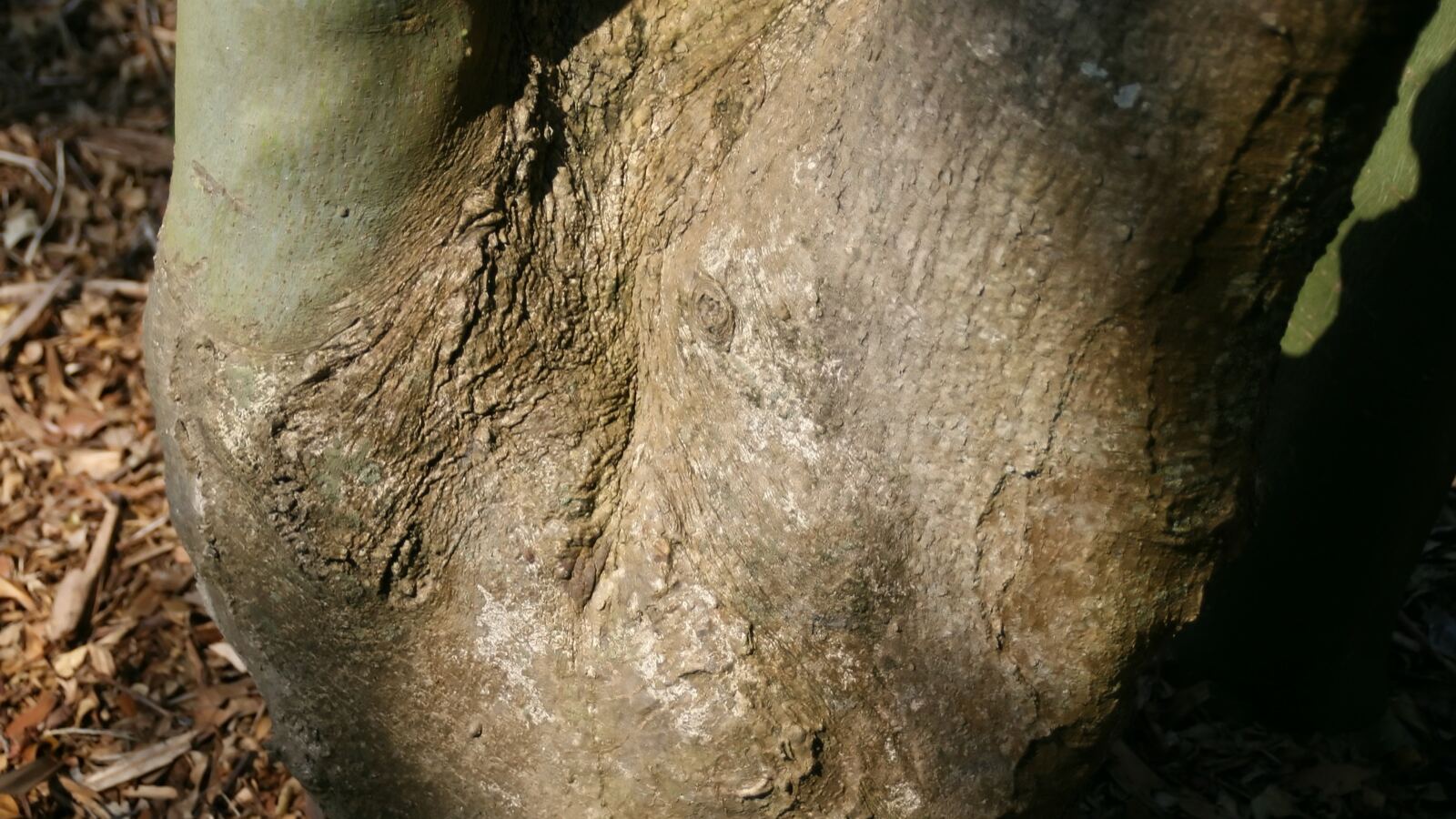
It belongs to the mallow family, Malvaceae — kin to the kapok, silk-floss tree, baobab, kola, and cacao — and it is instantly recognisable by two features: a smooth, unmarked, vivid green bark (photosynthetic, like the palo verde) that stays green even on the trunk, and very large, lobed, maple-like leaves up to 30 cm across that give the dense shade of its "parasol" name.
The tree of the phoenix
The Chinese parasol tree holds a revered place in Chinese legend and literature as the wutong, the tree of the phoenix (the fenghuang). In Chinese mythology, the phoenix — the auspicious bird that appears in times of peace and virtue — will alight and nest only on the wutong tree, and only eat the seeds of the bamboo, so the tree is a symbol of virtue, good fortune, and the coming of a golden age, and it appears throughout Chinese poetry and art (the sound of rain on its broad leaves is a classic poetic image of melancholy). This has made it a beloved tree to plant at homes, temples, and courtyards across China, and its wood is traditionally prized for making the guqin, the classical Chinese zither. See historical ecology. Its cultural weight is echoed in the sacred standing of the banyan and other legend-laden trees.
The boat-shaped pods
The Chinese parasol tree has a botanically curious fruit worth knowing. Its seed pods do something unusual: they split open early, long before the seeds are ripe, into leaf-like, boat- or spoon-shaped valves, and the pea-sized seeds are borne along the edges of these open leafy flaps, like peas stuck to the rim of a leaf. The whole open, seed-fringed pod then acts as a wing, spinning and carrying the seeds on the wind. It is one of the more distinctive and charming seed structures among temperate trees.
The invasive footnote
The now-familiar caution applies. Fast, tough, and prolific-seeding, the Chinese parasol tree has escaped cultivation and become an invasive species in the southeastern United States, where it seeds freely into woodland and disturbed ground and forms thickets, and it is discouraged or listed as a weed in parts of that region — the recurring story of a handsome, tough, widely-planted Asian ornamental turning weedy far from home, like the chinaberry and tree of heaven. So it is best planted where it is not a problem, and its status checked first.
Growing it
Warm-temperate to subtropical and reasonably hardy, the Chinese parasol tree wants full sun and tolerates a range of soils, heat, drought once established, and urban conditions, making it a tough shade and street tree; it dislikes deep cold and waterlogging. It is fast-growing, medium-sized, with a bold, tropical look from its green trunk and huge leaves, and it flowers in loose sprays of small greenish-yellow flowers in summer.
It is grown very easily from seed (the source of its invasiveness) and can be coppiced for even larger leaves. Where it is not invasive, it is a distinctive and culturally rich ornamental — a green-trunked, parasol-leaved tree of the phoenix; where it is, a well-behaved alternative is the better choice. See propagation and urban forestry.
See also
- Kapok and Balsa, Silk-Floss Tree, Baobab, and Kola Nut its mallow-family relatives
- Palo Verde another green-trunked, photosynthetic-barked tree
- Banyan and Strangler Figs another legend-laden sacred tree
- Invasive Species the Chinese parasol tree in the American South
- Chinaberry and Tree of Heaven other Asian ornamentals turned invasive
- Historical Ecology the wutong, tree of the phoenix