What it is
Asparagus officinalis, native to coastal Europe and western Asia — which is why it tolerates salt and demands drainage above almost everything else.
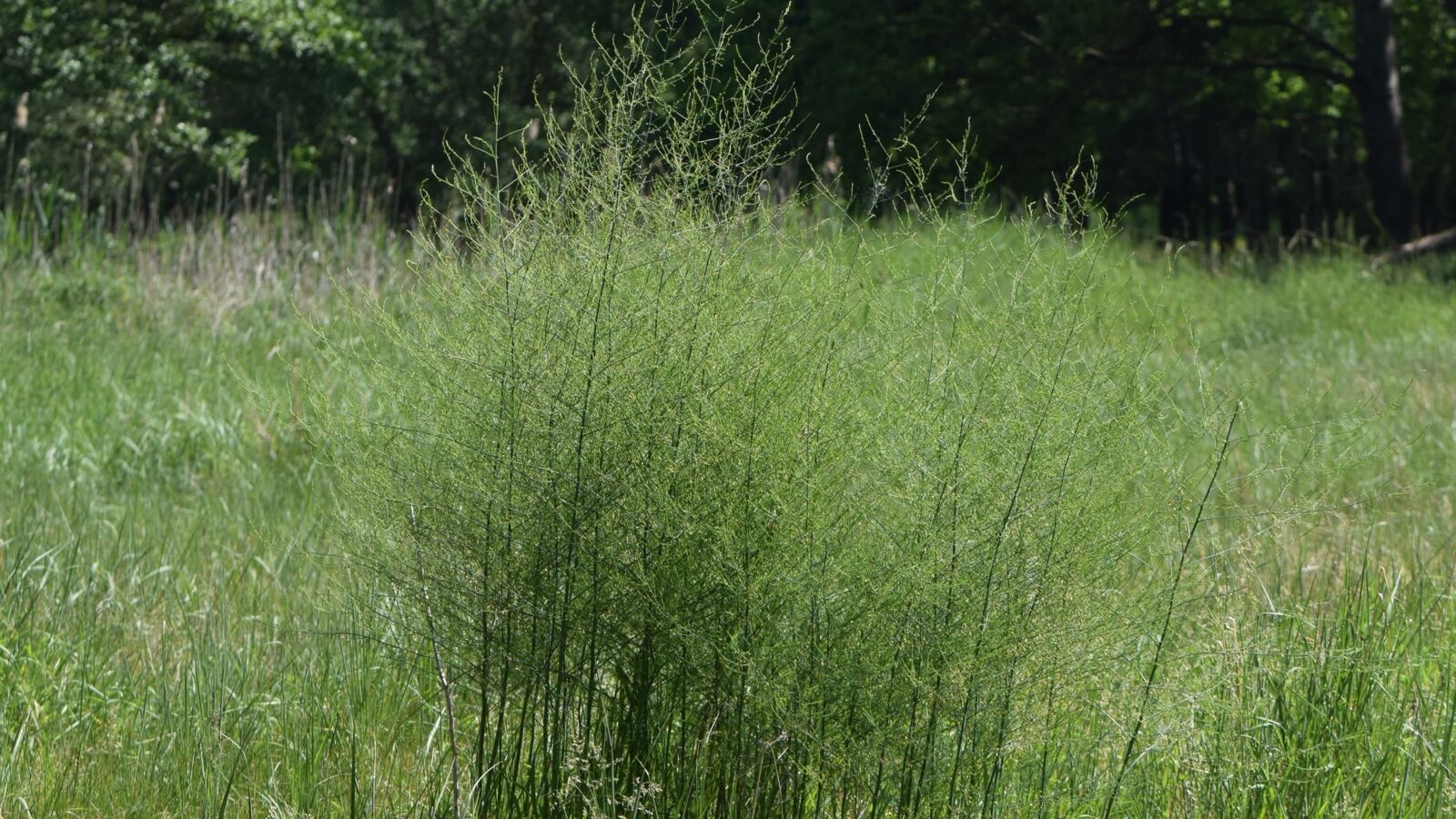
A long-lived herbaceous perennial. The edible spear is a young shoot; left uncut it becomes a tall feathery frond, and that fern is the entire point of the second half of the season.
A well-sited bed crops for 15 to 25 years, and there are beds over 30. That changes the calculation completely: this is not a crop you slot into a rotation, it is a permanent planting you site once and live with.
Asparagus is among the few genuinely perennial vegetables in a temperate garden, alongside rhubarb, globe artichoke, and seakale — the case made in perennials first.
Site it once, properly
Because you cannot move it, the site decision matters more than any subsequent management.
Drainage above all. Asparagus roots rot in wet ground and a waterlogged winter will kill a bed. On heavy soil, build a raised bed. This single factor accounts for most failures.
Full sun, and shelter — the summer fern reaches 1.5 m and blows over.
Perennial weed free. You will not be able to dig the bed again for two decades, so couch grass or bindweed left in place becomes permanent. Clear it completely first, by whatever means, and be thorough. See weed management.
pH 6.5 to 7.5. Asparagus dislikes acidity; lime if needed. See soil pH.
Plenty of organic matter worked in before planting, since this is the last chance to incorporate anything at depth.
Crowns or seed
One-year-old crowns are the normal route: a spidery mass of roots around a central bud. Plant in early spring.
Dig a trench 20 cm deep, make a low ridge along the bottom, sit the crown on the ridge and spread the roots down either side, then cover with 5 to 8 cm of soil, filling the trench gradually as shoots grow.
Space 30 to 45 cm apart in rows 45 cm apart.
Seed is cheaper and slower, adding a year, but produces plants that establish without transplant shock and often outlive bought crowns.
Male or female? Female plants divert energy into berries and seed; male plants put it into spears. All-male F1 varieties yield noticeably more and do not self-seed weedy seedlings into the bed. Older open-pollinated varieties are mixed, and many growers remove the berry-bearing females over time.
The six-week rule
The discipline that decides whether the bed lasts.
Year one: cut nothing. Let everything grow to fern.
Year two: cut nothing, or take a very light picking over a week or two at most.
Year three: cut for about six weeks.
Year four onward: cut for eight weeks, traditionally from mid-spring until around the middle of June, and then stop absolutely.
The reason is simple. Every spear you cut is a shoot the plant would have used to build the fern, and the fern is what photosynthesises the reserves for next year's crop. Cut too long and the crown never recharges — the bed declines and the spears get thinner year on year until it fails.
Stopping while spears are still coming feels wrong and is exactly right. Thin, weedy spears appearing during the cutting season are the crown telling you it has had enough.
Through the year
Spring: cut spears at 15 to 20 cm, with a knife just below soil level, every day or two in warm weather. They grow astonishingly fast — several centimetres a day in heat.
Midsummer, after cutting stops: let the fern grow. Support it on windy sites; a collapsed fern breaks and stops feeding the crown.
Feed after the last cut, when the plant is rebuilding. A mulch of compost or well-rotted manure is ideal, and it suppresses weeds at the same time.
Autumn: once the fern yellows completely — not before — cut it down to about 5 cm and remove it. Cutting green fern robs the crown of the reserves it is still moving downward.
Winter: mulch the bed.
Weed by hand or by mulching, never by digging. Asparagus roots run shallow and wide, and a fork through the bed does real damage. This is a crop that suits no-dig exactly.
Problems
Asparagus beetle — black and cream adults and grey grubs stripping the fern in summer. Damaging because it attacks the very growth that feeds next year's crop. Hand-pick, and clear the old fern in autumn to remove overwintering sites.
Violet root rot, a soil fungus, and fusarium crown rot — both largely consequences of poor drainage and both effectively untreatable, which returns to the site decision.
Slugs on emerging spears in wet springs. See slugs and snails.
Frost blackening emerging spears. They recover, but early spears in a frost pocket are wasted. See frost protection.
Harvest and keeping
Cut in the morning. Asparagus deteriorates faster than almost any vegetable — the sugars convert and the spears toughen within hours, which is why shop asparagus is a different food from asparagus cut twenty minutes ago. The same argument as sweetcorn.
If it must be kept, stand the spears upright in a centimetre of water in the fridge, like cut flowers.
It freezes acceptably after blanching, and pickles well. See harvest and storage.
White asparagus is the same plant blanched — earthed up deeply or covered so spears never see light, and cut below ground. Milder, more tender, considerably more work.
Worth the wait
Three years of doing nothing is a hard sell, and it is the whole reason asparagus is expensive to buy and uncommon in gardens.
The arithmetic is still good. A bed of 20 crowns planted once will produce for two decades with an annual mulch and an autumn tidy — a very low input for a crop that costs a great deal in shops and that tastes best within an hour of cutting.
It is the clearest small-scale illustration of the perennial argument: high establishment cost, then decades of yield from a system that largely maintains itself. See perennials first and food forest design.
See also
- Perennials First the wider case for planting once
- No-Dig Gardening why you never fork an asparagus bed
- Weed Management clearing perennial weeds before planting
- Frost Protection protecting early spears
- Harvest and Storage why it must be eaten fresh
- Soil pH liming an acid site
- Globe Artichoke